 Olivia Miller
World Cup 2026 Golden Boot Race: What Elite Goal Scorers' Bodies Reveal About Sports Medicine
The FIFA World Cup 2026 has already produced some of the most dramatic goal-scoring in tournament history. On 22 June 2026, Lionel Messi, aged 38, became the all-time leading scorer in World Cup history after netting multiple times for Argentina. Erling Haaland leads the Norwegian charge with four goals from two matches. Kylian Mbappé scored a decisive brace as France dismantled Iraq 4-0 in Philadelphia. Jonathan David fired a hat-trick for Canada against Qatar. As the golden boot race takes shape, millions of Australians watching these elite athletes are asking a deceptively simple question: how do they do it?
The answer, sports medicine specialists say, is not purely talent. It is systematic, expert-driven physical management — the same kind available to recreational athletes across Australia.
Messi at 38: Redefining Athletic Longevity
Lionel Messi's record-breaking performances at age 38 have shattered assumptions about when footballers peak and when they decline. Most outfield players at top level retire in their early thirties. Messi's hat-trick against Algeria was scored with the same clinical precision that defined him at 25 — a fact that raises important questions about what elite sports medicine actually achieves.
Athletes over 35 face a set of well-documented physiological challenges: slower muscle recovery, reduced collagen synthesis in tendons and ligaments, and diminished aerobic capacity year-on-year. Yet Messi's medical and conditioning team have navigated each of these through a personalised approach to load management, nutrition timing, and targeted injury prevention work.
According to Sports Medicine Australia, proactive assessment by a qualified sports medicine physician can help adult recreational athletes identify these risks early — not just elite professionals. For the millions of Australians who remain physically active into their forties and beyond, a structured sports medicine plan can be the difference between sustained participation and chronic injury.
Haaland's Explosive Power and What It Costs the Body
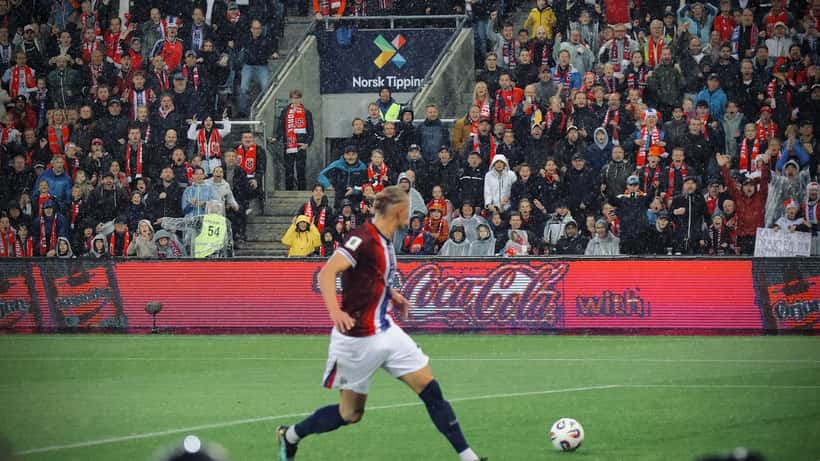
At 25, Erling Haaland represents the opposite end of the athletic spectrum from Messi. His four World Cup goals — including a brace against Senegal on 22 June 2026 — required the kind of explosive sprint acceleration, aerial power, and contact absorption that places extraordinary demands on the musculoskeletal system.
Haaland's 1.94-metre frame is built through a meticulous strength and conditioning programme, but physical gifts alone do not prevent injury. The repetitive stress of high-speed sprinting, jumping, and landing creates cumulative micro-trauma in the hips, knees, and Achilles tendons. Sports medicine teams working with players like Haaland conduct regular biomechanical assessments to detect early warning signs of tendinopathy or stress reactions — injuries that, if undetected, can end seasons or careers.
For Australian athletes in football, basketball, or any explosive sport, the same principle applies: biomechanical assessment catches problems before they become performance-ending.
Mbappé's Return: Managing Soft Tissue Injury Under Pressure
Kylian Mbappé entered the 2026 World Cup managing a hamstring issue from his club season. Despite this, he scored twice against Iraq and has been among France's most dangerous attackers. His ability to perform at full capacity reflects the quality of sports medicine support behind the scenes — and underscores a common mistake among recreational athletes.
Self-managing soft tissue injuries — a hamstring strain, a hip flexor tightening, a calf complaint — is one of the leading causes of re-injury in community sport. Without professional assessment of tissue integrity and loading capacity, athletes return to activity before the injury has genuinely resolved. The result, too often, is a significantly worse second injury that sidelines them for months.
Mbappé's World Cup form is a direct illustration of what expert-supervised recovery looks like when it works — and why the same approach matters for non-professional athletes who rely on their bodies every week.
Jonathan David and the Overlooked Mental Dimension
Canada's Jonathan David made history with a hat-trick against Qatar, instantly becoming one of the tournament's breakout stars. What the television broadcast did not show was the psychological preparation behind that performance — the focus management, pressure tolerance, and mental recovery from earlier misses within the game itself.
Modern sports medicine is explicitly holistic. In Australia, practitioners affiliated with Sports Medicine Australia are trained to address both physical and psychological performance factors. This includes performance anxiety, burnout in youth athletes, and the psychological barriers to returning to sport after injury. Mental readiness is not separate from physical readiness — it is integral to it, and increasingly treated as such by practitioners working in community and elite settings alike.
5 Signs You Should Consult a Sports Medicine Specialist
The World Cup's top scorers do not wait until they are injured to see a sports medicine specialist. Proactive assessment is built into their seasons. Australian athletes — regardless of age or level — should consider a consultation if they experience any of the following:
- Joint or tendon pain lasting more than 48 hours after exercise — this is not normal soreness and warrants professional investigation
- The same injury recurring in the same location — a recurring complaint is a sign of an unresolved biomechanical issue, not bad luck
- Unexplained performance decline — a plateau or regression in speed, endurance, or strength without a clear training explanation
- Preparing to return to sport after injury without a supervised, graduated loading programme in place
- Significantly increasing training load or competition intensity — especially relevant for older athletes returning to structured competition after a period away
This article is for general informational purposes only and does not constitute medical advice. If you are experiencing pain, injury, or any health concerns, please consult a qualified sports medicine specialist.
Watching Messi, Haaland, Mbappé, and David compete for the 2026 World Cup Golden Boot is more than sporting entertainment. It is a window into what evidence-based sports medicine achieves at the highest level — and a compelling prompt for Australian athletes to invest in the same expert-guided approach to their own physical health.
For more on how World Cup performance intersects with sports medicine advice for Australian athletes, see the Algeria World Cup 2026 sports medicine analysis on ExpertZoom and what over-35 athletic performance really demands.
