 Olivia Miller
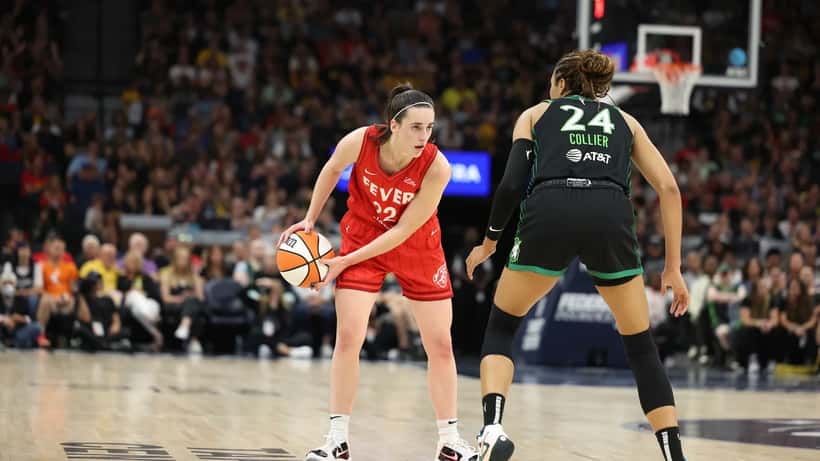
The Indiana Fever hosted the Portland Fire on 20 May 2026 in a WNBA regular season game with unusual historical weight. Portland is returning to the league as an expansion franchise after a 24-year absence, one of two new teams joining the 2026 season. Caitlin Clark is averaging 24.3 points and 9.0 assists per game. Her presence, and the league's visible expansion, is putting a spotlight on a subject that rarely gets enough attention: the specific health needs of women in sport.
The WNBA's Moment and What It Means
The 2026 WNBA season has arrived with a scale that would have been difficult to predict five years ago. Portland's return as an expansion franchise alongside another new team signals genuine commercial growth in women's professional basketball. Clark herself has become one of the most-watched athletes in North America across any sport, and the viewership her presence attracts is drawing new audiences to women's basketball globally, including in Australia.
This visibility matters for reasons beyond entertainment. When elite women athletes perform at the highest level, as Clark's statistics among the league's best demonstrate, they challenge outdated assumptions about women in sport. They also highlight the specific injury risks and health challenges that come with elite athletic competition, particularly for women.
The Physiological Differences That Matter
Sports medicine research has consistently found that female athletes face a distinct injury risk profile compared to their male counterparts, and the gap in dedicated medical support and research has historically been significant.
The most well-documented example is ACL (anterior cruciate ligament) injury. Female athletes across basketball, soccer, netball, and other pivoting sports sustain ACL tears at a rate two to eight times higher than male athletes in equivalent sports. This is not a function of effort or fitness; it reflects a combination of anatomical structure, hormonal influences across the menstrual cycle, and neuromuscular activation patterns that are specific to women's physiology.
For Australian women who play club sport, run recreationally, or compete in any sport involving jumping, cutting, or directional change, this elevated ACL risk is a practical issue. Proper prevention programs, including targeted strength and movement training from a sports physiotherapist, can reduce ACL injury rates by up to 50 per cent according to sports medicine research.
The Training Load Question
A growing area of sports medicine focuses on how the menstrual cycle affects training, recovery, and injury risk across a woman's athletic career. Research indicates that oestrogen levels during certain phases of the menstrual cycle affect joint laxity, and that injury risk — particularly for ACL — may be elevated at specific cycle phases.
Elite WNBA programs now routinely incorporate cycle tracking into their conditioning and load management protocols. This is an evidence-based adjustment to training and recovery programming, not an accommodation or a limitation.
For recreational female athletes in Australia, this research has a practical implication: the timing and intensity of training within a menstrual cycle can be managed in ways that reduce injury risk and optimise recovery. A sports medicine specialist or exercise physiologist with experience in female athlete health can advise on cycle-aware training protocols that are appropriate to an individual's sport, fitness, and health history.
What Australian Women Athletes Should Know
Women's sport participation in Australia is growing steadily. Netball, soccer, basketball, touch football, running events, and multisport fitness competitions all attract significant female participation. The physical demands of these activities are real at every level of competition.
Three areas are worth discussing with a sports medicine specialist or GP with a sports medicine background.
ACL prevention. If you play any sport involving pivoting, jumping, or rapid directional change, a targeted neuromuscular training program can significantly reduce your ACL injury risk. The research base for these programs is strong and applicable across age groups.
Bone health. Female athletes, particularly those in high-impact or endurance sports, face specific risks of stress fractures and conditions affecting bone density. Appropriate nutrition, including adequate calcium and vitamin D, combined with appropriate training loads, is critical. A sports medicine specialist can screen for RED-S (Relative Energy Deficiency in Sport), a condition more common in female athletes that affects bone health, hormonal function, and performance.
Load management. Understanding how training volume, intensity, and recovery interact with individual physiology is important for all athletes. For women, cycle-aware load management adds an additional layer of precision. Tracking and working with your body's natural rhythm rather than against it is a practical approach that leading WNBA programs have already adopted.
Accessing Support in Australia
The Australian Institute of Sport has specific research and program investment in female athlete health, and its resources are accessible to Australian coaches, trainers, and athletes at all levels. Sports physiotherapists and exercise physiologists who specialise in female athlete health practise across most Australian cities.
If you have been pushing through joint pain, or wondering whether your training is optimised for your physiology, a sports medicine consultation offers the kind of assessment that general advice cannot provide.
This article is for general information only and does not constitute medical advice. Consult a qualified health professional for assessment and guidance specific to your circumstances.
The WNBA's growth, and what athletes like Caitlin Clark are demonstrating on the court in 2026, is a reminder that women's sporting potential is extraordinary. Supporting that potential with the right medical and training guidance is a responsibility worth taking seriously at every level of participation.
