 Chloe Wilson
Matildas defender Kaitlyn Torpey delivered an emotional emergency performance in the AFC Women's Asian Cup quarterfinal against North Korea in March 2026, stepping in for captain Steph Catley after a concussion forced the veteran off the pitch. The 23-year-old's breakthrough moment highlights a critical issue in women's football: the growing recognition that head injuries require specialist medical attention and gender-specific recovery protocols.
Torpey's Emergency Call-Up: When Preparation Meets Opportunity
"I literally started crying after the final whistle. I've never felt that way after a game before," Torpey told reporters after Australia's 2-1 victory secured their qualification for the FIFA Women's World Cup Brazil 2027. The Melbourne Victory defender was thrust into an unfamiliar left-back position at international level, a role she'd never played for the Matildas before that night.
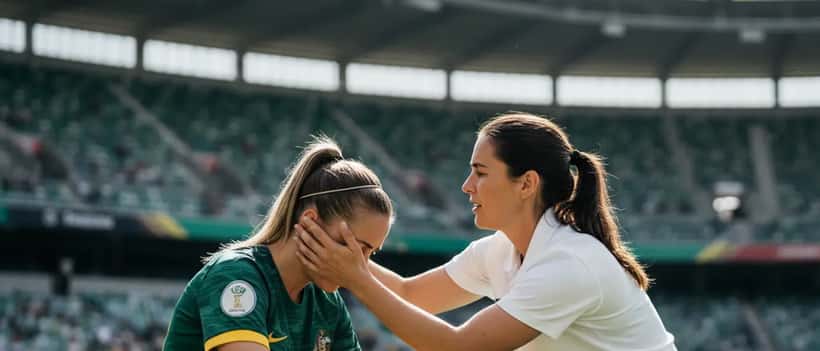
Catley's sudden departure from the match wasn't a tactical substitution. The Arsenal defender took a collision that left her showing visible signs of concussion, forcing medical staff to remove her immediately under the sport's evolving head injury protocols. For Torpey, the moment represented both personal triumph and a stark reminder of the physical risks elite female athletes face.
The Matildas' medical team followed strict concussion assessment procedures before allowing Catley's substitution. These protocols have become increasingly rigorous across women's football, with governing bodies implementing mandatory head injury assessments and extended return-to-play timelines. The AFC Women's Asian Cup Australia 2026 has seen several such incidents, reflecting both improved detection and the sport's growing intensity.
The Concussion Crisis in Women's Football
Research published by sports medicine specialists reveals a troubling pattern: female athletes experience longer recovery times from concussions compared to their male counterparts. Studies conducted across multiple sports show women report symptoms for an average of 7-14 days longer than men after similar head impacts, yet they're often held to identical return-to-play standards.
Dr. Michael Collins, director of the University of Pittsburgh Medical Centre Sports Medicine Concussion Program, has documented that women experience different symptom profiles after concussions. Female athletes report higher rates of headaches, dizziness, and cognitive difficulties, whilst male athletes tend to report more amnesia and confusion.
The intensity of modern women's football compounds these risks. The 2026 AFC Women's Asian Cup schedule demonstrates this challenge: teams playing knockout matches every three to four days, leaving little margin for proper concussion recovery.
Catley's injury occurred during a tournament crucial for Australia's World Cup hopes, creating immense pressure on medical staff to balance player safety against competitive demands. The decision to remove her immediately, despite the high-stakes quarterfinal situation, reflects growing awareness that concussion management cannot be compromised for sporting outcomes.
Warning Signs Every Player Should Recognise
Concussions don't always present with dramatic symptoms. Many athletes continue playing after head impacts, unaware they've sustained an injury requiring immediate attention. Sports medicine specialists emphasise that recognising early warning signs can prevent more serious complications.
Immediate red flags include headache or pressure in the head, dizziness or balance problems, nausea or vomiting, sensitivity to light or noise, and feeling mentally foggy or confused. Symptoms can appear hours or even days after the initial impact, making ongoing monitoring essential.
Amateur athletes often lack access to the medical teams available at professional matches. Research shows that sustaining a second concussion before the first has fully healed dramatically increases the risk of long-term neurological damage.
Dr. Nathan Gibbs, chief medical officer for the Australian Institute of Sport, stresses that "any suspected concussion should be treated as serious until proven otherwise." His guidance, developed specifically for Australian sporting contexts, recommends immediate removal from play and assessment by a qualified health professional before considering return to sport.
The Recovery Timeline: Why Rushing Back Is Dangerous
The standard "rest until symptoms resolve" approach has evolved into a more structured, graduated return-to-play protocol. Modern concussion management requires athletes to progress through distinct stages, each taking a minimum of 24 hours, with any symptom recurrence triggering a return to the previous stage.
For Steph Catley, the timeline for return will depend on symptom resolution and successful completion of exertion testing. Professional players undergo computerised cognitive testing, balance assessments, and cardiovascular stress tests before receiving medical clearance. Research indicates female athletes may require 10-14 days minimum for uncomplicated concussions, compared to 7-10 days often cited in male-dominated studies.
The pressure to return quickly can be intense, particularly for national team captains during major tournaments. However, specialists warn that premature return risks second-impact syndrome, a rare but potentially fatal condition where the brain swells rapidly after a second concussion before the first has healed.
Australia's sporting culture has historically prided itself on toughness and playing through injury. This attitude, whilst admirable in some contexts, becomes dangerous with head injuries. The Matildas' medical staff demonstrated appropriate caution by prioritising Catley's long-term health over her availability for subsequent matches.
When to Seek Specialist Sports Medicine Care
Not every head impact requires emergency department attention, but knowing when to escalate care is crucial. General practitioners can assess concussions, but sports medicine specialists offer expertise in return-to-play decisions, particularly for athletes hoping to resume competition safely.
Sports medicine physicians understand the specific demands of different sports and can tailor recovery programs accordingly. For footballers like Torpey and Catley, this means testing balance, reaction time, and decision-making under match-like conditions before clearance. A specialist assessment becomes essential when symptoms persist beyond expected timelines or when athletes experience recurrent concussions.
Physiotherapists with sports medicine training provide crucial support during recovery, addressing neck issues that often accompany concussions and guiding graduated exercise programs. Exercise physiologists can design cardiovascular programs that challenge recovering athletes without triggering symptom recurrence.
For amateur athletes concerned about costs, bulk-billing sports medicine clinics exist throughout Australia, and many private health insurance policies cover specialist consultations. The Australian Sports Medicine Federation maintains a directory of qualified practitioners, searchable by location and specialisation.
Finding the Right Care Through ExpertZoom
Kaitlyn Torpey's emotional response to her unexpected opportunity reflects the passion Australian athletes bring to their sport. Protecting that passion requires recognising when injuries need specialist attention. Concussions may be invisible, but their effects on athletes' lives and careers are very real.
Whether you're a professional footballer, weekend amateur, or parent of a junior athlete, understanding concussion management empowers you to make informed decisions about when specialist care is necessary. Australia's sports medicine community continues advancing research specific to female athletes, but individual athletes must advocate for their own health.
ExpertZoom connects Australian athletes with qualified sports medicine specialists who understand the unique demands of your sport and the latest evidence on concussion management. Don't wait for symptoms to worsen—early specialist intervention provides the best outcomes for safe return to the sports you love.
