 Mark Taylor
Australia's winter solstice falls on Sunday 21 June 2026, at precisely 6:24 PM AEST — the moment the South Pole reaches its maximum tilt away from the Sun and the shortest day of the year officially begins. Sydney receives just 9 hours and 54 minutes of daylight; Hobart drops to around 9 hours; Darwin fares better at roughly 11 hours and 20 minutes.
From tonight, days gradually lengthen until the summer solstice in December. But the coldest weeks are still ahead — and for millions of Australian homeowners, the solstice is arriving with energy bills that already exceed what their homes' thermal performance justifies.
According to energy.gov.au, installing appropriate insulation across roof, walls and floors can cut heating and cooling costs by more than 50 per cent. Yet a large portion of Australia's housing stock remains under-insulated — a legacy of building traditions designed for heat management, not cold retention.
Here are five home improvements every Australian should consider before the coldest weeks of 2026 pass.
Why Australian Homes Struggle With Winter Cold
Most Australian homes were built for a warm climate. Brick veneer homes constructed before the 1990s typically feature minimal wall insulation, single-pane windows, and gaps that let cold air stream through unimpeded — making them expensive to heat regardless of how powerful the heater is.
The good news is that targeted improvements deliver rapid returns, particularly in 2026, when federal and state governments have introduced enhanced rebates to help households reduce energy costs.
1. Install or Upgrade Your Ceiling Insulation
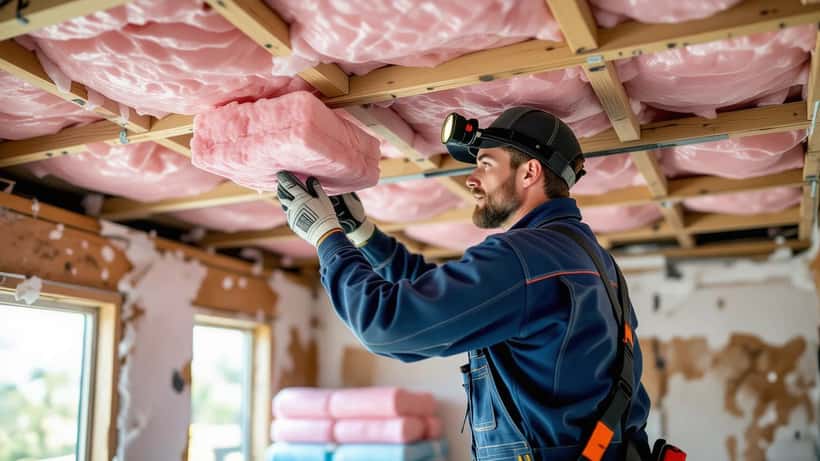
Heat rises — which means an uninsulated ceiling is a constant drain on your heating system. Ceiling insulation is the single highest-impact thermal upgrade available to most Australian homeowners, saving up to 20 per cent on annual energy bills.
For Victorian residents, 2026 brought new incentives: discounts on ceiling insulation are now available through the Victorian Energy Upgrades program. In the ACT, eligible homeowners can access rebates of up to $2,500 through the Home Energy Support Program.
A licensed installer will assess the correct R-value (thermal resistance rating) for your climate zone. A Hobart home needs a considerably higher R-value than a Brisbane property, and incorrect installation can trap moisture and create long-term structural problems.
2. Draught-Proof Doors and Windows
Up to 25 per cent of winter heat loss occurs through gaps around doors and windows — making draught-proofing one of the most cost-effective improvements available. Common solutions include self-adhesive foam or rubber strips around door frames, weather stripping for sliding window sashes, and silicone sealant for gaps around fixed frames. A door snake at the base of each external door delivers an immediate difference.
A home improvement professional can identify less obvious draught sources: gaps around exhaust fans, unsealed power points on external walls, and ceiling penetrations where pipes pass through. These invisible leaks collectively account for a surprising share of total heat loss.
3. Service Your Heating System Before the July Peak
Australia's coldest weeks typically arrive in July and August. A reverse-cycle air conditioner or gas heater that was barely coping in May will work harder still — and systems that haven't been serviced tend to fail at the worst possible time.
Dirty filters on ducted systems reduce efficiency by up to 15 per cent. Gas heaters with blocked flues or cracked heat exchangers pose carbon monoxide risks that are rarely visible without professional inspection. Booking a heating service now — before peak demand locks out technicians — is straightforward preventive maintenance.
A qualified tradesperson can clean heat exchangers, test gas pressure, inspect ducting for leaks, and verify thermostats are operating correctly. If your system is more than 15 years old, an efficiency assessment may reveal that a modern inverter unit would pay for itself within three to five years.
After recent severe cold snaps across southeastern Australia, demand for heating service technicians has already risen sharply — booking early is advisable.
4. Check Your Hot Water System
Hot water accounts for around 20 per cent of household energy use — and winter intensifies the load. Storage systems work harder when cold inlet water brings the tank temperature down, and older units often operate at reduced efficiency without the homeowner being aware.
Heat pump hot water systems use approximately 70 per cent less energy than conventional electric storage units and attract significant rebates in most states in 2026. A licensed plumber can assess whether your current system's age and efficiency justify an upgrade, and advise on the best technology for your household size and climate zone.
5. Add Thermal Curtains or Reassess Your Windows
Single-pane windows remain common in Australian homes built before the 2000s and contribute substantially to heat loss. Full double-glazing replacement is the most effective long-term solution, but thermal-lined curtains or honeycomb blinds offer a practical interim measure — reducing window heat loss by up to 40 per cent.
The technique matters: thermal curtains should be closed from sunset to sunrise and opened fully during daylight to capture passive solar heat. A home improvement consultant can also advise on interior window film that provides some thermal benefit of double-glazing without full frame replacement — a useful option for rental properties or homes preparing for storm season.
The Shortest Day as a Home Audit Prompt
The solstice marks the turning point, not the end of winter. The six weeks between today and mid-August deliver Australia's most sustained cold, and a home that isn't thermally prepared will generate higher bills with each passing week.
The improvements above range from inexpensive draught-proofing that homeowners can start today, to longer-term upgrades in insulation, glazing, and heating systems that benefit from professional assessment. A home improvement expert can audit your specific property, identify the highest-return upgrades for your climate zone, and point you toward government rebates that substantially reduce upfront costs in 2026.
On the shortest day of the year, the most practical thing you can do is plan to make next winter cheaper and warmer.
