 Emily Turner
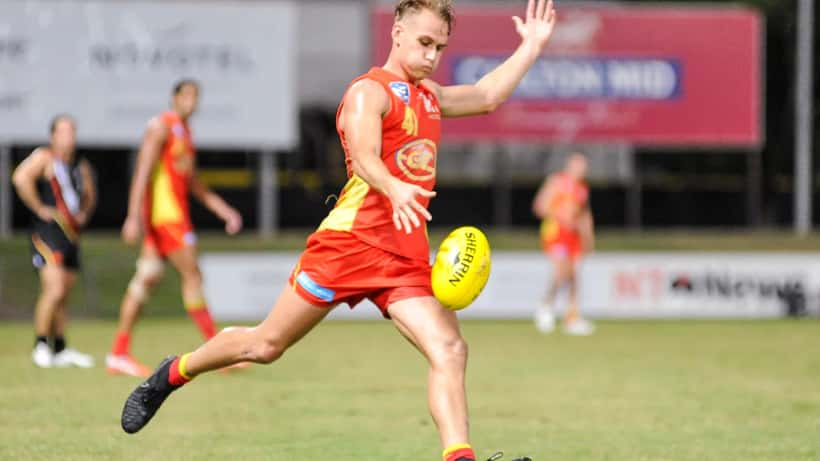
Will Brodie, the former No.9 draft pick who played 56 AFL games across Gold Coast, Fremantle and Port Adelaide, has retired at 28 after a decade in the AFL system. Port Adelaide and AFL.com.au confirmed the news this week, along with the club's decision not to offer 2027 contracts to Ollie Lord and Tom Anastasopoulos.
What Brodie's announcement actually says
Brodie was taken with pick 9 in the 2016 national draft by Gold Coast, where he spent five seasons. He then moved to Fremantle for four seasons, and joined Port Adelaide ahead of 2026. His best year came in 2022 at Fremantle, when he played 24 games and averaged 26.8 disposals, 12 contested possessions and 5.7 clearances, according to Port Adelaide's own release.
This season he managed only two senior games for the Power. He still won the Max Porter Memorial Trophy as the runner-up best and fairest in the SANFL. "After a decade in the AFL, now feels like the right time to hang up the boots," Brodie said, thanking all three clubs, his partner Kate and daughter Mila.
Neither the club statement nor AFL.com.au mentions an injury behind the decision. This article is therefore not about Brodie's health. It is about what happens to any body that has trained at an elite level for ten years and then suddenly stops.
Why the question matters: what readers are really asking
Search interest in Brodie's retirement comes from footy fans. But the practical question sits underneath it, and it applies to every weekend player, ex-rep athlete and gym regular who stops training hard: what does the body need once the structure disappears?
Does the body "reset" when elite training stops?
No. Sports physicians generally describe the first 12 to 24 months after elite sport as a transition period with its own risks. The daily load of running, contact, recovery sessions and club-supervised eating falls away quickly. Appetite and habits often do not.
Three issues come up most often in clinics:
- Energy balance. Eating patterns built for a heavy training week can lead to steady weight gain once training volume drops.
- Old joints and tendons. A decade of high-impact running and tackling can leave knees, hips, ankles and the lower back with wear that was masked by constant rehab and strength work.
- Mood and identity. Leaving a team environment, a daily routine and a professional identity can affect sleep and mental health, even when the decision to retire was voluntary and positive.
Brodie's own transition is likely smoother than most, since he says he is looking forward to the next phase of life and has family support. But the pattern is common enough that clinicians plan for it.
The guideline every ex-athlete should check
Australia's physical activity guidelines for adults aged 18 to 64 recommend 150 to 300 minutes of moderate activity, or 75 to 150 minutes of vigorous activity, or an equivalent mix, each week. They also recommend muscle-strengthening activities on at least two days a week and limiting long periods of sitting. Australian Bureau of Statistics data on adult physical activity shows that many Australians fall short of those targets, so a recently retired player who drops to near zero is not an exception.
The point for ex-athletes is that the guideline is a floor for the general population, not a replacement for what their body is used to. The goal is to taper down, not stop.
A worked example: the first year after a decade of full-time training
Consider a composite 28-year-old midfielder, not Brodie, who retires after ten seasons. These numbers are illustrative only, and the thresholds are the ones a sports physician or dietitian would typically discuss with a patient.
During his last season he trained around 18 hours a week across running, gym, skills and recovery. After retiring he takes a desk job and drops to 3 hours of activity a week, mostly casual.
If he keeps eating roughly the same amount, then a surplus of even 300 calories a day adds up to about 110,000 calories over a year. That equates to roughly 14 kilograms of body mass at the commonly used 7,700 calories per kilogram rule of thumb. In practice the gain is rarely that linear, because appetite and metabolism adjust. But the direction is clear, and a gain of 5 to 8 kilograms in the first twelve months is common enough that dietitians plan for it.
If, instead, he steps down gradually, for example 10 hours a week in month one, 6 hours by month six and a steady 4 to 5 hours by month twelve, with two strength sessions a week and a review of portion sizes, then the weight gain is usually much smaller. His joints also get a managed reduction in load rather than a sudden one.
If at any point he notices recurring knee swelling, a sore lower back that does not settle in two weeks, or poor sleep for more than a month, then that is the point to book a GP or sports medicine appointment rather than wait for the next pre-season. The earlier a joint problem is assessed, the more options there are, from physiotherapy to imaging to a specialist referral.
Which experts help, and what they do
A retired athlete, or anyone stepping back from heavy training, typically draws on a small team:
- A GP, to review the full picture, order blood tests and coordinate referrals under a chronic condition plan if one applies.
- A sports and exercise physician, for persistent joint, tendon or back problems that began in playing years.
- An accredited exercise physiologist or physiotherapist, to design the taper and a strength program that suits an older, more worn body.
- An accredited practising dietitian, to reset energy intake and protein for a lower-volume life.
- A psychologist, if the loss of routine or identity is affecting mood, motivation or sleep.
None of this is specific to elite footballers. A former weekend rugby player, a masters swimmer who stops competing or a tradie who moves to an office job faces a smaller version of the same transition.
What to do now
Brodie's retirement is a reminder that sport careers end, often earlier than the rest of working life, and that the health plan should not end with them. If you are winding down from heavy training, or you carry old injuries from years of contact sport, a short list of steps helps:
- Book a general health check and mention your training history, including past injuries.
- Ask for a graded plan that reduces training volume over months, not weeks.
- Keep two strength sessions a week, which protects joints and bone.
- Review your food intake against your new activity level.
- Treat low mood or poor sleep that lasts more than a few weeks as a health issue, not a weakness.
Expert Zoom connects you with Australian health professionals, including doctors and allied health practitioners who can assess your situation and build a plan that fits your body and routine. This article is general information, not medical advice, and you should consult a qualified health professional about your own circumstances.
For related reading on how other AFL veterans are handling the transition, see Steele Sidebottom's retirement and the health specialists veterans need and Taylor Walker's retirement and the three health checks to book.
