 Olivia Miller
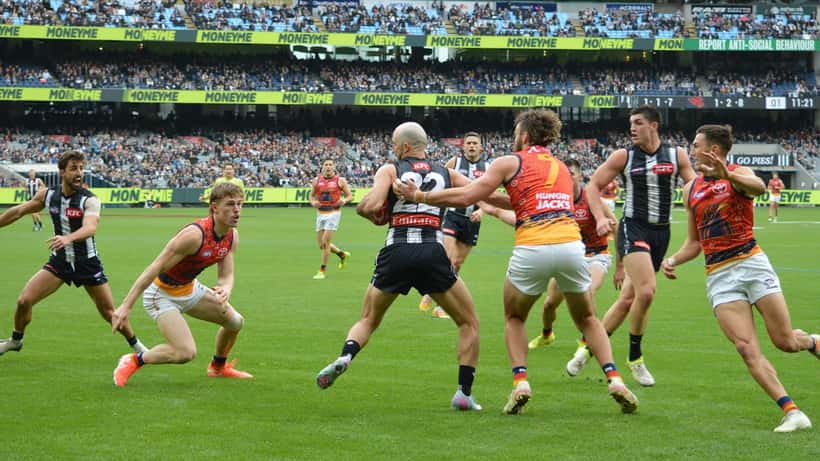
On 13 August 2026, Steele Sidebottom walked into Collingwood's rooms and told his teammates he was done. Eighteen seasons. 373 AFL games. Two premierships. The farewell was greeted with tributes from around the competition — but his announcement raises an urgent question that goes far beyond football: what happens to the body after nearly two decades of elite contact sport?
For the average Australian watching from the couch, the answer feels distant. But for the estimated 1.7 million Australians who participate in contact sport each year — including AFL, rugby union, league, and various contact codes — Sidebottom's retirement is a timely reminder that the cumulative cost of elite sport is not always visible on the day you hang up the boots.
Sidebottom's Farewell Marks an Era's End
Sidebottom, 33, is one of the most decorated players of his generation. Drafted by Collingwood with pick 27 in 2008, he went on to play 373 senior AFL games — second only to Scott Pendlebury in Collingwood's all-time record list. He won the club's Copeland Trophy in 2017 and 2018 and earned All-Australian recognition. His 2026 season will end whenever Collingwood's finals campaign does.
"I wouldn't change anything," Sidebottom said in his retirement announcement, as quoted by the AFL's official media. It is a sentiment shared by many long-serving players who describe football as the defining experience of their lives.
But behind the celebrations, Australia's sporting medical community has been raising alarm bells — quietly at first, and now with increasing urgency — about what extended contact sport careers do to the brain. Not in the immediate aftermath of a violent collision, but slowly, over hundreds of games, even in the absence of a single formally diagnosed concussion.
The Science That Changes Everything: CTE and the Long-Career AFL Player
In June 2026, a landmark ABC News investigation revealed that 33 Australian Rules footballers had been formally diagnosed with chronic traumatic encephalopathy (CTE), a degenerative brain disease caused by repeated head trauma. The findings sent a shockwave through the AFL community and accelerated calls for stricter protocols at every level of the code.
CTE cannot be diagnosed during a player's lifetime — it is identified only through post-mortem brain analysis. But its symptoms, which include mood disturbances, memory loss, impaired decision-making, and depression, can begin to emerge years or even decades after a career ends. The condition is not driven solely by the concussions a player can remember. Research increasingly points to subconcussive impacts — head collisions that fall below the threshold of a formal concussion diagnosis — as a primary and often underestimated driver of cumulative brain injury.
According to guidance from the Australian Sports Commission, any athlete who has experienced repeated head impacts should be assessed by a qualified health specialist if they develop symptoms such as persistent headaches, changes in memory or concentration, uncharacteristic mood shifts, or sleep disruption — regardless of whether they ever received a formal concussion diagnosis during their playing career.
The AFL's updated concussion guidelines, released in May 2026, introduced an independent Concussion Panel with the authority to medically retire any player presenting with symptoms indicative of cumulative brain injury. West Coast Eagles defender Jeremy McGovern became the most prominent casualty of this system in 2026, unable to return to play after a Round 8 concussion against Melbourne. His situation underscored how seriously the AFL is now treating the long-term picture — and how quickly circumstances can change for players who appear fit.
What Expert Analysis Tells Us About an 18-Season Career
Health professionals who specialise in contact sport medicine point to a straightforward but frequently overlooked reality: the risk profile of a long-career AFL player is substantially different from that of someone who played five seasons in their early twenties.
Sidebottom's 373-game career spans an era before many of the current concussion safeguards existed. The AFL's systematic approach to head injury assessment — formally introduced with the HIA (Head Injury Assessment) protocols in 2016 and substantially strengthened in the years since — was not available for much of his career. Players of his era routinely returned to the field under conditions that would now trigger mandatory sideline removal and a staged return-to-play protocol.
This matters not because Sidebottom's legacy should be questioned — it absolutely should not — but because it means he, like many of his contemporaries, accumulated head exposure under frameworks that did not capture the full picture. As the AFL's own concussion education for community players notes, even relatively minor and untreated subconcussive events across a long career carry a measurable cumulative burden.
The AFL estimates a senior player receives between 500 and 800 head impacts per season across full-contact training and match play. Over 18 seasons, that represents a potential exposure of 9,000 to 14,400 cumulative head impacts — long before any formal concussion is diagnosed, counted, or managed.
The Concrete Case: A Former Footballer Doing the Maths
Take a 36-year-old former suburban footballer who played 14 seasons across under-18s, reserves, and senior VFL competition, accumulating 240 games between 2008 and 2023. He received three formal concussions during his career — each managed with rest — and has not sought any medical follow-up because he "feels fine."
Under current health guidance, that profile carries specific implications. Three or more formal concussions over a career increases the risk of developing persistent mood and cognitive changes in middle age by a clinically significant margin. But the more telling figure is the cumulative exposure: at conservative AFL estimates, 14 seasons of full-contact training and competition likely produced 7,000 to 11,200 subconcussive impacts across his body of work — the very mechanism now associated with CTE in post-mortem studies.
If this former player has experienced three or more formal concussions, current specialist guidance recommends a baseline neurological assessment before age 45, even in the absence of current symptoms. The reason is not alarmism — it is the logic of early detection. Cognitive changes linked to cumulative head impacts are frequently present for years before a person notices them disrupting daily life.
If he is also experiencing any of the following — persistent difficulty concentrating, uncharacteristic irritability, sleep disturbances, or gaps in short-term memory — then the threshold for specialist consultation drops further. Health professionals are increasingly recommending that former contact sport athletes seek assessment within 12 to 18 months of career end, not years later when symptoms have compounded.
A baseline neurological assessment is typically a 30-to-45-minute cognitive evaluation that establishes a measurable starting point. It does not diagnose CTE, which remains undetectable during life. But it identifies early indicators that may respond to targeted intervention, lifestyle adjustment, or monitored follow-up. Identifying changes at 36 or 38 rather than 55 dramatically affects the range of responses available to a person and their specialist.
Practical Implications: The Wider Community of Former Players
Sidebottom's career is exceptional in scale. But the health dynamics of repeated head contact apply at every level of Australian football — and at every point in a person's career timeline, including decades after retirement.
An estimated 500,000 Australians play Australian Rules football each year. Hundreds of thousands more played the game for years at community level and moved on to other activities, often decades ago. Many of these former players — particularly those who competed through the 1980s, 1990s, and 2000s — played under no formal concussion protocols whatsoever. A hard knock was commonly "walked off." A dazed player was routinely sent back onto the field.
The pattern that concerns neurological health specialists is not the single dramatic collision that ends up on the evening news. It is the consistent physical exposure across seasons and decades — the pack marking contest, the accidental elbow in a ruck, the training drill where a shoulder meets the side of a head — that accumulates without a name or a diagnosis attached to it.
The AFL's commitment to limiting physical contact in training from the 2027 pre-season is a structural acknowledgement of what the science now says. But for everyone who played before those safeguards existed, the responsibility for monitoring and follow-up falls to the individual — and to access to informed health professionals who understand contact sport histories.
What to Do If You Have a Long Contact Sport History
Start with your GP. A standard appointment in which you discuss your contact sport history, the number and approximate timing of any concussions you experienced, and any current symptoms is the appropriate first step. Most GPs with sports medicine interest can refer to a sports medicine physician or neurologist if your history warrants further review.
Consider a baseline cognitive assessment, particularly if you played more than 150 matches at any level, experienced multiple formal concussions, or are now in your late 30s or 40s. Expert Zoom connects Australians with qualified health specialists across the country who can help guide you toward the right assessment pathway and interpret results in the context of your personal sporting history.
Do not wait for obvious symptoms. The most important finding from the CTE research is also the most actionable one: by the time symptoms are disruptive enough to prompt a GP visit on their own, they have often been developing for a long time.
Steele Sidebottom would not change anything. That is a sentiment worth celebrating — and the most respectful way to honour it is to take the long-term health of a career like his seriously. If you played the game you love for years, a conversation with a health expert is not a medical alarm. It is good stewardship of the body that gave you those years on the field.
This article is intended for general information purposes only. If you are experiencing symptoms related to head injury or neurological health, consult a qualified medical professional for personalised advice specific to your circumstances.
