 Fred Rivers
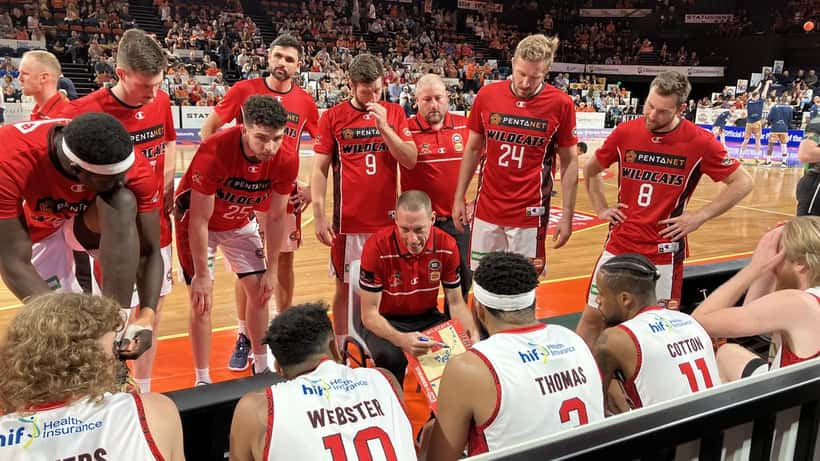
Perth Wildcats fans pack RAC Arena tonight as the South East Melbourne Phoenix arrive for Round 3 of the 2026-27 NBL season — a clash that is already trending across Australia. But behind the tip-off lies a legal architecture most supporters never see: a salary cap worth $2,167,358.92, a Collective Bargaining Agreement negotiated by the players' association, and a set of employment rights that every NBL athlete, from marquee star to development squad player, can invoke when contracts go wrong.
The Round 3 Wildcat-Phoenix Rivalry and What It Costs to Build a Roster
The Wildcats host SEM Phoenix at RAC Arena on 2 October 2026 in what is shaping up as one of the most anticipated early-season fixtures on the 2026-27 NBL calendar. Both clubs arrive with reshuffled rosters after a busy off-season of signings, releases, and marquee designations. The Phoenix, who dominated the 2025-26 Finals series against the Wildcats, are carrying high expectations into the new season. Perth, meanwhile, have moved quickly to rebuild their core.
According to the NBL, the salary cap for the 2026-27 season has risen 7% to $2,167,358.92 — the maximum increase permitted under the league's Collective Bargaining Agreement. The salary floor, the minimum each club must spend in player wages, is set at $1,950,642.53. Individual minimums range from $24,070.33 for development players to $82,948.37 for standard roster spots, while marquee designations — available exclusively to Australian and New Zealand players — allow clubs to pay elite local talent significantly above market rates. A club's first marquee player hits the cap at $267,560.09; a second at $356,748.34; a third at $445,935.03; and a fourth at $535,121.73.
These are not abstract figures. They represent the actual wage entitlements — and potential legal exposure — of players who suit up in tonight's game.
The Legal Framework Behind Every NBL Contract
The Standard Player Contract (SPC) governing every NBL athlete was significantly overhauled in 2023, when the Australian Basketball Players' Association (ABPA) secured a new Collective Bargaining Agreement with the league. The revised CBA introduced stronger protections around injury entitlements, termination procedures, and player wellbeing services, funded jointly by clubs and the NBL.
What many players — and their families — do not fully appreciate is that NBL employment rights sit on top of Australian national employment law. Professional basketball players classified as employees are covered by the Fair Work Act 2009, which establishes the National Employment Standards (NES). These standards cannot be contracted away: no matter what a club writes into a player's contract, the statutory minimums apply. That includes protections against unfair dismissal, notice entitlements, and rights to dispute wage reductions made without proper contractual authority.
When a high-profile game like Wildcats vs SEM Phoenix draws national attention and puts players' futures under a spotlight, it is exactly the kind of moment that triggers contract reviews, trade discussions, and, in some cases, disputes.
What Changes When a Club Wins or Loses Big
NBL history shows that roster decisions accelerate after high-stakes fixtures. A strong performance tonight — particularly from a player in the final year of their contract — can trigger immediate negotiations over a new deal or marquee designation upgrade. Conversely, a coach's decision to bench a player after a loss can have downstream financial consequences if the club later uses "poor performance" to justify a contract variation or non-renewal.
The introduction of a fourth marquee designation for 2026-27 means Australian clubs are now making salary commitments of up to $535,000 per player at the top of the market. The cap hit mechanism — where the marquee salary hits the cap at a fixed, discounted figure — is unique to Australian basketball and creates a specific legal grey zone: the player's actual wages and the club's reported cap commitment are two different numbers, and disputes can arise when a club attempts to restructure a deal mid-season using cap calculations the player has not independently verified.
Sports and employment lawyers in Australia have reported a rise in NBL-related inquiries since the CBA was expanded, with players and their families seeking advice on matters ranging from guaranteed contract clauses to dispute resolution procedures under the ABPA's grievance framework.
A Concrete Scenario: The Marquee Deal That Became a Dispute
Consider this realistic situation: an Australian-born guard has a breakout 2025-26 season and is offered his club's first marquee designation for 2026-27 — a total contract worth $320,000, hitting the cap at $267,560. His manager, focused on the headline number, reviews the deal quickly and advises him to sign within 48 hours before another club enters the picture.
What the manager misses is a "performance standard" clause in the contract: if the player records below-par statistics across five consecutive games, as assessed by the head coach, the club can reduce his salary to the standard NBL minimum of $82,948.37 for the remainder of the season. Three weeks into the season — including a difficult Round 3 fixture — the player has struggled to find form in a new system. The club invokes the clause and notifies him his pay is being cut from $320,000 to $82,948.
Under Australian employment law, the critical question is whether that clause is enforceable. A unilateral pay reduction is permissible only if the employment contract expressly and clearly authorises it with objective, measurable criteria. A clause that allows a coach's subjective assessment to trigger a $237,000 pay cut, without defining what "below-par" means in statistical terms, may not meet that standard.
If a performance-reduction clause does not define objective, measurable thresholds — for example, shooting below 40% from the field across five games, or averaging fewer than 12 minutes per game — then the player may have grounds to dispute the reduction under the Fair Work Act's provisions against unlawful unilateral variation of employment terms. The Fair Work Commission can order reinstatement of the original wage pending a full hearing, and the club may face an adverse action claim if the reduction is found to have been applied for improper reasons.
At $237,000 in disputed wages, the legal cost of getting independent advice before signing would have been a fraction of the potential recovery.
What Players, Families, and Agents Should Do Before Signing
Whether you are a development player on $24,070 or a marquee designate earning $445,000, the checklist for protecting your legal position is the same:
Before signing any NBL contract:
- Have an independent sports and employment lawyer — not just your agent — review the termination, performance, and salary variation clauses in full.
- Confirm what "guaranteed" actually means: some guarantees are conditional on fitness or roster status, others are unconditional obligations the club cannot walk back.
- Check that any performance criteria are defined in objective, measurable terms, not subjective coach's assessments.
During the season:
- Document all communications with coaching and management staff about your role and expectations — contemporaneous records become critical evidence in disputes.
- If your club proposes any contract variation mid-season, seek legal advice before agreeing. A verbal reassurance from a coach is not legally binding.
If a dispute arises:
- The ABPA provides grievance support and player services. Contact them first.
- For claims under the Fair Work Act — unfair dismissal, unlawful variation, general protections — the Fair Work Commission has strict time limits: 21 days from dismissal for an unfair dismissal application.
Tonight's game between Perth Wildcats and SEM Phoenix will be decided in seconds. Contracts, by contrast, bind players for months or years — and understanding what yours actually says could be worth more than any single result at RAC Arena.
Expert Zoom connects Australians with qualified sports and employment lawyers who can review professional sports contracts, assess salary entitlements, and advise on Fair Work claims before they become expensive disputes. If a recent signing, roster change, or contract offer has raised questions you cannot answer alone, speaking with a legal expert is the clearest next step.
As NBL clubs continue reshaping their rosters around marquee talent — including Perth Wildcats' recent signings that have changed the club's salary architecture — the stakes for getting contractual advice right have never been higher.
Disclaimer: This article is for informational purposes only and does not constitute legal advice. Employment and contract law matters are fact-specific. If you have a specific employment or contractual concern, consult a qualified legal professional.
