 Mia Jones
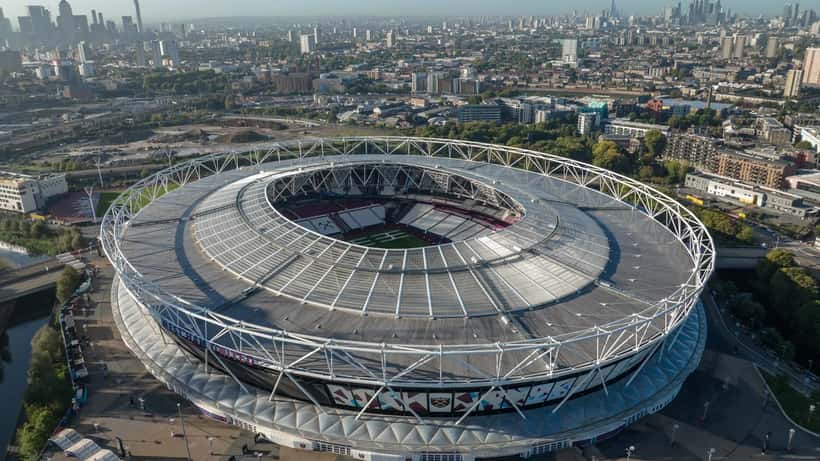
When West Ham United host Wrexham AFC at London Stadium this Friday evening in the EFL Championship, two clubs with radically different trajectories collide on the same pitch. West Ham — a Premier League stalwart that reached a European final just three years ago — are now fighting for promotion after last season's relegation. Wrexham — the Hollywood-backed Welsh club owned by Ryan Reynolds and Rob McElhenney — arrive as Championship debutants after a staggering four-season ascent from non-league football. Both stories are remarkable. But beneath the headlines lies a financial and legal architecture that governs the careers of every professional athlete in the world, including in Australia.
The Numbers Behind the Fall
The data from West Ham's relegation is instructive. The club's annual revenue is projected to drop from approximately £200 million to under £120 million — a 40% contraction in a single year, according to analysis published by TheeESK in May 2026. The largest single cause is the loss of Premier League broadcast distributions, which accounted for roughly £110 million per year.
Parachute payments from the Premier League cushion the impact. Relegated clubs receive approximately £100 million over three seasons — around £45 million in year one, £30 million in year two, and £15 million in year three. These payments prevent immediate financial collapse but create a structural competitive imbalance against clubs like Wrexham that climbed through the divisions without that safety net.
On the player side, the wage implications were immediate and severe:
- West Ham players saw 50% wage reduction clauses triggered automatically upon relegation, per reporting from Goal.com
- Star players including Jarrod Bowen, Lucas Paquetá, and Crysencio Summerville had exit clauses embedded in their contracts allowing them to negotiate departures rather than accept halved wages
- Sponsorship contracts containing Premier League "warranty clauses" triggered 30–50% commercial revenue reductions as major partners activated step-down provisions
These figures are industry-standard in professional football and reflect a contract structure that Australian professional athletes — and their advisers — should understand thoroughly before signing anything.
The Expert Angle: What Contract Architecture Means for Athletes
In Australian professional sport, there is no precise equivalent of the "relegation clause" — the AFL, NRL, and A-League operate different league formats. But the underlying legal mechanism is identical: performance-contingent contract conditions, where an athlete's remuneration, tenure, or mobility rights shift based on outcomes outside their direct control.
The Fair Work Act 2009 (Cth) governs the employment relationship between Australian professional athletes and their clubs. The Act does not prohibit performance-contingent clauses — it does not prevent a contract from containing salary reductions or early termination triggers. What it does require is that any reduced payment cannot fall below the applicable Modern Award rate or enterprise agreement minimum, and that employees retain the National Employment Standards entitlements.
In practice, Australian sports contracts commonly include:
- Conditional salary reduction triggers if a club is demoted, loses its licence, or fails to meet participation thresholds (particularly relevant in the A-League and NBL)
- Restraint of trade clauses that restrict a player from joining competing clubs for a defined period after the contract ends — clauses which Australian courts assess for "reasonableness" on a case-by-case basis
- Minimum performance criteria that entitle the club to reduce payment or terminate the agreement if the athlete fails to maintain fitness or playing standards
These clauses are legally enforceable when properly drafted. They are also, frequently, negotiable — but only before the contract is signed.
When the Club's Fortunes Change: A Concrete Scenario
Consider a specific situation built directly from the mechanics the West Ham case reveals.
A 26-year-old central midfielder signs a two-year A-League contract in July 2026 at $180,000 per year. The contract includes a clause stating that if the club finishes in the bottom two and fails to retain its A-League licence for the following season, wages for any remaining contract period will be reduced to $90,000. There is no mutual release clause permitting the player to exit early.
Twelve months later, the club loses its licence following financial collapse. The player is now bound by a $90,000 salary for the remaining year of the contract — and also faces a restraint of trade clause preventing them from signing with any other A-League club for 12 months.
The financial arithmetic is stark:
- Annual income lost: $90,000 (the difference between contracted wage and reduced rate)
- Career impact: 12 months of potential income foregone if the restraint is enforced and no alternative competition is available
- Total financial exposure: $90,000–$180,000, depending on whether the restraint survives a court challenge
Under the Fair Work Act 2009, the $90,000 rate must be assessed against the applicable Modern Award. If it falls below that threshold, the reduction cannot be enforced. But the restraint of trade clause could still stand independently, and challenging it requires legal action.
Had the player sought advice from a sports law specialist before signing, a lawyer could have negotiated:
- A floor on the wage reduction — for example, no reduction below 80% of base salary regardless of competition outcome
- A mutual release mechanism triggered automatically if the club loses its licence or ceases to compete at the contracted level
- A carve-out from the restraint if the club's failure is the trigger event — it is unreasonable to bind an athlete to a non-compete when the club itself has ceased operating
The difference between a reviewed and an unreviewed contract in this scenario: $90,000 or more in protected income, plus preserved career mobility. Those figures are not hypothetical — they track directly to the kind of wage-cut and exit-clause mechanics that West Ham players experienced in 2026 when their club's status changed overnight.
What Wrexham's Rise Also Reveals
Wrexham's journey in the opposite direction — from National League to Championship in four seasons — creates a mirror image of the same problem. Players who signed on non-league wages before the Hollywood transformation received no automatic uplift from their club's promotion, unless their contracts contained explicit promotion bonus clauses or salary ratchets.
This detail gets lost in the broader narrative about Ryan Reynolds' social media presence and the Disney+ documentary series Welcome to Wrexham. But for Australian athletes and sports agents, it matters. A contract negotiated when a club is at one level of competition may expose both athlete and employer to unintended consequences as the club's fortunes shift — upward or downward.
This is why the West Ham and Wrexham stories together illustrate the same principle: contract architecture is not a formality. The clause that determines your financial outcome may be the one you did not ask about before signing. For any Australian athlete being offered a first professional contract — in A-League, NBL, cricket, or rugby union — independent legal review before signing is the single most cost-effective step available. As covered in earlier analysis of Championship fan legal rights, the legal implications of football's new landscape extend well beyond the pitch.
What Australian Athletes Should Do Before Signing
A sports law specialist can review any professional contract for the following risk factors before the ink dries:
- Performance-contingent salary clauses and whether their triggers are defined clearly enough to be enforceable
- Restraint of trade provisions — their duration, geographic scope, and likely enforceability before an Australian court
- Club licence and competition status clauses — what happens if the club's tier changes, loses its licence, or is acquired
- Promotion and relegation bonuses that should be negotiated upfront, not pursued after the fact
- Dispute resolution pathways and whether any arbitration clause removes your access to the Fair Work Commission
- Injury and compensation provisions — as explored in sports injury compensation in professional contracts, financial protections do not end with salary clauses
Today's match at London Stadium between West Ham and Wrexham is a snapshot of two clubs at opposite ends of a sporting arc. Both arrived there partly because of forces beyond any individual player's control. The athletes who were protected were the ones whose advisers had done their work before the season started — and before the contract was signed.
YMYL disclaimer: This article provides general legal information only. It does not constitute legal advice. Australian athletes should consult a qualified sports lawyer regarding their specific contractual circumstances before signing any professional agreement.
