 Fred Rivers
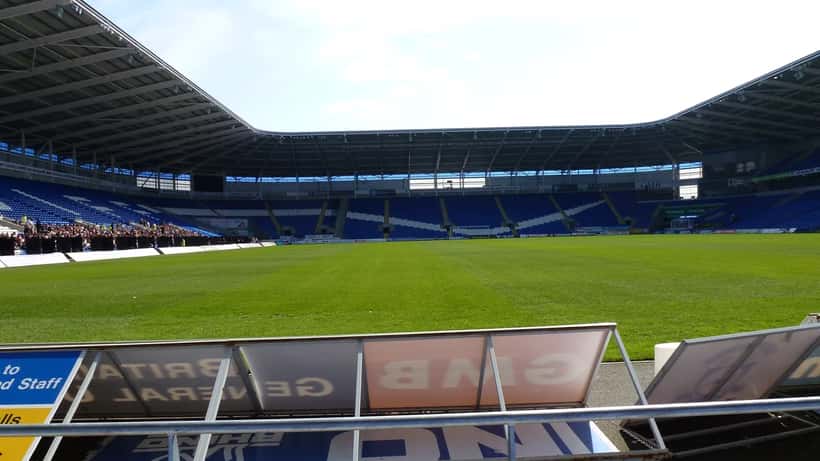
The final whistle sounded at Cardiff City Stadium at the 98th minute on the night of 17 August 2026, with Rubin Colwill's stunning free-kick sending the first Welsh Championship derby in 24 years to a 1-1 draw. Kieffer Moore had given Wrexham the lead just three minutes in, and Cardiff looked set for a bruising return to the second tier — until Colwill's dead-ball brilliance rewrote the story. For the thousands of supporters who made the journey to Cardiff, and for the growing number of Australians who now regularly travel to the UK to watch English football, the match delivered exactly the emotional rollercoaster that only a genuine derby can. But what happens when the match doesn't go to plan in ways that can't be resolved on the scoresheet?
Australian Football Tourism in the UK Is at a Record High
More than 280,000 Australians visited the United Kingdom for sports-related purposes in 2025, with association football accounting for the largest single category, according to VisitBritain research. The EFL Championship — the second tier of English football — has become an increasingly popular destination for Australian supporters priced out of Premier League hospitality packages, which routinely exceed $600 AUD per seat for high-profile fixtures.
Wrexham's rise through the English football pyramid under the ownership of Ryan Reynolds and Rob McElhenney has accelerated this trend considerably. The Hollywood-owned club's Disney+ documentary Welcome to Wrexham attracted a global fanbase of supporters who had never previously watched lower-league English football. Now in their second Championship season following three consecutive promotions from 2021 to 2024, Wrexham regularly draws Australian supporters to the Racecourse Ground in North Wales. Cardiff City's dramatic return to the Championship after a two-season absence has added another destination to Australian fans' UK football itineraries.
This surge in attendance matters legally. Package tourism — a return flight, pre-booked accommodation, and a match ticket purchased together — carries specific statutory protections under UK law that most Australian visitors are entirely unaware of. Understanding those protections before you book is significantly cheaper than discovering their limits after a match is cancelled or abandoned.
What UK Law Protects You — and Where It Stops
The central piece of legislation governing package holiday purchases in the United Kingdom is the Package Travel and Linked Travel Arrangements Regulations 2018. These regulations implement the EU Package Travel Directive into UK domestic law and apply to any package booked through a UK-registered operator that includes at least two of the following components: transport, accommodation, or other tourist services such as match tickets.
Under the 2018 Regulations, if a match is cancelled or significantly rescheduled — specifically, moved by more than four hours or to a different venue — the organiser must treat this as a "significant change" to the package. In that case, they are legally obliged to offer you either a substitute package of equivalent quality and price, or a full cash refund within 14 days.
Critically, this protection does not apply if you booked each component separately: flights through one platform, accommodation through another, and tickets directly through the football club. In that scenario — the way the overwhelming majority of independent Australian travellers book — you are subject to each individual provider's cancellation and refund terms, with no aggregate statutory protection.
The situation is further complicated by the fact that Australian Consumer Law does not extend to purchases made from overseas suppliers. The Australian Competition and Consumer Commission is explicit on this point: overseas purchases are governed by the consumer laws of the country in which the transaction occurred, not by Australian legislation. This gap leaves many Australian football tourists with far fewer rights than they would expect when something goes wrong at an English football ground.
Every EFL Championship club's ticketing terms contain either a force majeure or abandoned-match clause. EFL standard terms permit clubs to issue credit vouchers rather than cash refunds for matches abandoned after play has commenced. Whether a specific match qualifies as "abandoned" under a particular club's definition — and at what point in the game that threshold is met — is a question of contractual interpretation, not common sense.
What a Cancelled Match Actually Cost One Brisbane Fan
The real-world consequences of this legal gap become clear when you look at a concrete scenario. Consider a 34-year-old Brisbane-based construction manager — call him Jake — who faced exactly this problem during a League One fixture in January 2026 when a match at Plymouth Argyle was abandoned at half-time due to a waterlogged pitch.
Jake had booked each component separately. His return flight from Brisbane to London cost $2,850 AUD on a Qantas Flex fare. He paid $840 AUD for three nights in an Airbnb in Plymouth, booked on non-refundable terms to access the lower nightly rate. Two Category B match tickets purchased directly from Plymouth Argyle FC's official website cost $88 AUD in total. His total outlay was approximately $3,778 AUD.
Plymouth Argyle's ticketing policy, consistent with EFL standard terms, specifies that abandoned matches where play has commenced do not trigger an automatic cash refund; instead, a credit voucher for a future home fixture is issued. Jake's Airbnb was non-refundable by agreement. His Qantas Flex fare entitled him to one free fare change but not a refund.
The if/then outcome: because Jake booked each element independently, he recovered exactly $88 AUD in match ticket credit, applicable only to a future Plymouth Argyle home game, and a flight change credit worth approximately $200 AUD toward a future Qantas booking. His unrecovered cash loss was approximately $3,490 AUD.
Had Jake instead booked through a UK-registered tour operator — combining flights, accommodation near Cardiff City Stadium, and a Championship match ticket — the Package Travel Regulations 2018 would have applied directly. He could have demanded either a replacement package of equivalent quality or a full cash refund within 14 days of the organiser acknowledging the abandonment as a significant change. The price premium for that package compared to Jake's self-assembled components is typically in the range of $300–$500 AUD. For Jake, that premium would have protected $3,490 AUD in sunk costs.
A specialist travel law solicitor — or an Australian legal professional familiar with UK consumer protection legislation — can assess whether the package-travel threshold applies to your specific booking before you commit $3,000–$5,000. They can also identify what dispute resolution pathway is available if something goes wrong.
Three Things a Legal Expert Can Help You Get Right Before You Fly
The Cardiff vs Wrexham derby tonight was a reminder that English football's drama cannot be scripted. Rubin Colwill's 98th-minute equaliser was proof of that. But the legal framework governing your rights as an Australian football tourist can be understood in advance, and should be, before you book the flights to the 2026-27 Championship season.
Package or not? This is the foundational question. A qualified legal expert can assess whether your specific combination of bookings — including any loyalty credit purchases or split-carrier itineraries — meets the threshold for Package Travel Regulations coverage under UK law. The definitions are more technical than the plain-English label "package" suggests.
What does the match ticket contract actually say? EFL club ticketing terms vary in how they define abandonment, rescheduling, and force majeure events. Some define a match as "completed" once 45 minutes of play have elapsed; others require 70 minutes or more. A legal adviser can identify the operative clause for your specific ticket purchase and explain what it means for a potential refund claim.
Do you have a viable dispute resolution pathway? UK small claims procedures (Money Claim Online, for claims up to £10,000) are available to non-UK residents but require a UK correspondence address for the proceedings. Alternative dispute resolution schemes, including those operated by the European Consumers Centre Australia programme, may offer faster outcomes for small-value claims. A legal professional can identify the most cost-effective pathway for your specific situation.
For Australian fans planning trips around Wrexham's second Championship campaign, Cardiff City's season, or any other EFL fixture in 2026-27, a brief pre-booking consultation with a legal specialist in consumer and travel law is considerably less expensive than discovering these gaps at the check-in counter. Australian football supporters navigating international fan rights in other competitions may also find the analysis of FIFA tournament travel rights relevant to their planning.
This article is for general informational purposes only and does not constitute legal advice. Consult a licensed legal professional before making decisions based on your specific circumstances.
