 Fred Rivers
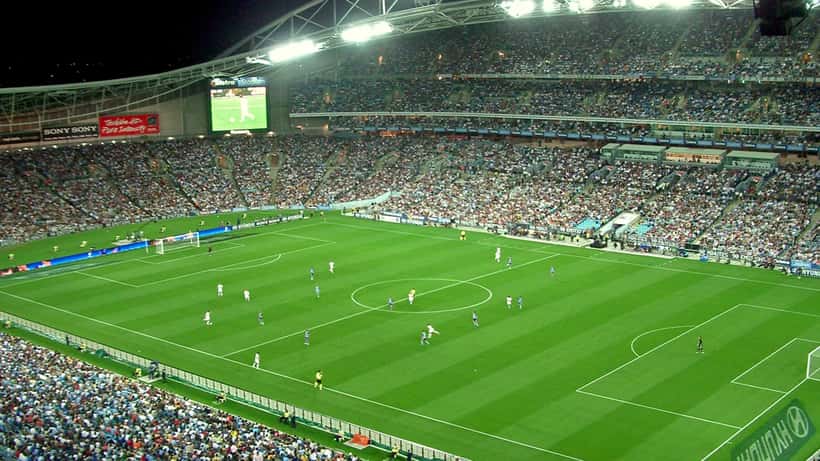
Tens of thousands of Australian football fans are heading to Accor Stadium tonight for the Sydney Super Cup clash between Chelsea and Tottenham Hotspur — the first time these two London clubs have met on the pitch outside the United Kingdom. With tickets starting from $136 through authorised sellers, and many supporters having booked interstate flights and hotels around the event, what happens if something goes wrong deserves a clear answer before kick-off.
The Sydney Super Cup and What Fans Have Spent
The 2026 Sydney Super Cup is the centrepiece of a major pre-season Australian tour by Chelsea FC and Tottenham Hotspur. Tonight's fixture at Accor Stadium — kick-off 7:45pm AEST — brings two of England's most storied clubs to Australian soil for what has been marketed as a historic first: a London Derby played outside the United Kingdom for the first time in the men's competition. Chelsea have already featured in Sydney this tour, defeating Western Sydney Wanderers 6–4 earlier in the week before tonight's headline clash.
Tickets were available through Ticketek and Ticketmaster Australia, with categories ranging from general admission to Category A hospitality packages at significantly higher price points. For fans travelling from interstate — Brisbane, Melbourne, Perth — or from New Zealand and Southeast Asia, the total cost of attending often includes return flights, overnight accommodation, transport to the stadium, and hospitality add-ons. A family of four can easily have $1,000 to $2,000 at stake in total event-related spending.
That level of financial exposure is exactly why understanding your rights under Australian Consumer Law matters now, before any issue arises — not after.
Expert Reaction: What the ACL Actually Guarantees for Event Tickets
Under the Australian Consumer Law (ACL), consumer guarantees extend to services as well as goods. An event ticket is a contract for a service — the service being the event itself, delivered at the advertised time, location, and in the format that was sold. As the Australian Competition and Consumer Commission has confirmed, if a service is not provided as advertised, consumers are entitled to a remedy regardless of what a ticketing platform's terms and conditions state.
For live events, the ACL framework provides three main protections:
If the event is cancelled: You are generally entitled to a full refund from the authorised seller. A "no refunds" clause printed on your ticket or embedded in the booking terms does not override your statutory consumer guarantee rights. State and federal consumer protection bodies — including the ACCC and Fair Trading offices around the country — have confirmed repeatedly that printed exclusion clauses cannot strip ACL guarantees from consumers. According to Consumer Protection WA, organers must run events as advertised and deliver them with due care and skill.
If the event is significantly changed: A material change to a major element — venue, date, start time, or in extreme cases the fundamental nature of the lineup — may entitle you to a refund. The legal test is whether you would have purchased the ticket had you known the change would occur. Consumer lawyers call this the "but for" test: but for the change, would you have bought?
If you incurred consequential losses: The ACL also allows recovery of additional financial losses — flights, accommodation, non-refundable transport bookings — where those losses flow directly from a cancellation or material change that was within the event organiser's reasonable control.
These protections exist independently of what any ticketing platform says. You cannot be contracted out of them by a website's terms and conditions page.
Where the Legal Line Falls: Minor Variation vs Major Failure
Not every problem with an event triggers ACL remedies, and this is where specialist legal advice makes a genuine difference. Understanding the threshold before you spend money is considerably cheaper than litigating it afterwards.
For a Premier League pre-season match like Chelsea vs Tottenham Sydney, situations that would likely constitute a major failure under the ACL include:
- Complete cancellation of the fixture
- A venue relocation away from Accor Stadium — particularly without adequate notice
- A rescheduling to a different date that makes attendance impossible for ticket holders
- In extreme circumstances, both clubs substituting their advertised senior squads with exclusively youth or reserve teams for the entire match
Situations that would not typically cross the major failure threshold:
- A star player missing through injury (you purchase a ticket to the match itself, not to a specific individual's participation — player availability is standard excluded in event terms)
- A change to the starting XI announced on match day
- Weather-related delays of under approximately two to three hours
- Changes to the broadcast or streaming arrangement
The reason this line matters so much right now: Bluesfest 2026, one of Australia's flagship music festivals, was cancelled in May of this year, leaving thousands of ticketholders uncertain about whether flight and accommodation losses were recoverable. As reported by Rolling Stone Australia, confusion has surrounded refund eligibility, and calls for a class action are now mounting. The Bluesfest situation is a live illustration of exactly how consequential a cancelled event scenario can be — and how damaging it is to learn your rights for the first time during the dispute rather than before.
Previously covered on this platform, the Birmingham vs Barcelona ticket fraud case highlighted how secondary market purchases of sports event tickets carry distinct risks; the ACL protections discussed here apply specifically to purchases made through authorised sellers.
Concrete Case: A Family of Four from Brisbane at Tonight's Match
Consider this specific, realistic scenario grounded in tonight's event:
A family of four travels from Brisbane to Sydney specifically for the Chelsea vs Tottenham Sydney Super Cup. Their total spend breaks down as follows:
- Four Category B tickets via Ticketek: $580 ($145 per ticket)
- Return Jetstar flights for four: $420 (booked one month ago, non-refundable)
- One-night hotel near Accor Stadium: $280
- Total financial outlay: $1,280
At 5:45pm this evening — just under two hours before kick-off — the event organisers announce that due to a sudden partial closure of Accor Stadium's upper tier following a structural inspection, the Chelsea vs Tottenham match will be relocated to a 20,000-capacity suburban ground in Western Sydney, with a changed kick-off of 9:30pm.
What the ACL analysis looks like in this scenario:
The venue relocation is a material change. Accor Stadium was specifically advertised as the venue; the family selected accommodation near Accor Stadium in anticipation. A change to a smaller, distant venue announced less than two hours before kick-off would, for most reasonable consumers, constitute something they would not have accepted at the time of purchase.
The $580 ticket refund: strong entitlement. The organiser has altered a fundamental term of the ticket (venue), and the change is material. Under ACL section 267, where a major failure occurs, consumers are entitled to reject the service and receive a full refund.
The $420 in flights: recoverable as consequential loss if the venue change was within the organiser's control rather than an unforeseeable act of third parties. The key question is foreseeability and control. A structural inspection outcome announced two hours before the event — rather than, say, an unexpected natural disaster — would likely be regarded as within the organiser's risk to manage.
The $280 hotel: potentially recoverable on the same basis, though accommodation losses are harder to substantiate in full if the event itself still proceeds in the same city on the same night.
The if/then rule: If the change is material — venue, cancellation, multi-hour delay — the ticket cost is almost certainly recoverable under the ACL, and consequential losses have a reasonable legal basis. If the change is minor — lineup adjustment, brief delay, support act substitution — no ACL entitlement applies, and the buyer bears all costs. The $1,280 a Brisbane family has spent on tonight's match is real money; knowing which side of the line a given scenario falls on is exactly the kind of question a consumer law specialist can answer in a free initial consultation.
What to Do If Your Rights Are Engaged
If you believe a cancelled or materially changed event has triggered your ACL consumer guarantees, the escalation process is straightforward:
Step 1 — Contact the authorised seller in writing. Reach out to Ticketek or Ticketmaster by email immediately. State clearly that you are asserting your Australian Consumer Law consumer guarantee rights and requesting a full refund. Written records are essential if the matter escalates.
Step 2 — Request a credit card chargeback. If the seller does not resolve the issue within a reasonable time — around 10 business days is a standard expectation — contact your bank or credit card provider. Chargebacks under Visa and Mastercard dispute frameworks typically resolve within 30 to 45 days.
Step 3 — Lodge a complaint with NSW Fair Trading or the ACCC. Both bodies operate free online complaint portals and can facilitate mediation without legal cost. NSW Fair Trading is the relevant body for events held in Sydney.
Step 4 — Seek specialist consumer law advice. When consequential losses are involved — particularly non-refundable flights and accommodation representing several hundred dollars or more — a consumer law solicitor can assess whether the ACL threshold has been met and what compensation is realistically recoverable. Many offer a free or low-cost initial consultation.
For scenarios affecting large numbers of purchasers simultaneously — as with Bluesfest 2026 — a class action may deliver a better outcome than individual complaints. An Expert Zoom legal specialist can advise on whether your situation has the hallmarks of a viable group claim and what documentation to preserve in the interim.
This article provides general information only and does not constitute legal advice. If you have a specific concern about your event ticket rights, consult a qualified consumer law solicitor.
