 David Kelly
Severe thunderstorms swept through western Sydney this week, pelting cars with golf-ball-sized hail and dumping 32 millimetres of rain in just 30 minutes across suburbs including St Clair and North Richmond, according to the NSW State Emergency Service. With 175 SES assistance requests logged in a single afternoon — and streets across the greater Sydney basin transformed into fast-moving channels — tens of thousands of vehicles now carry cracked windscreens, dented panels, and in some cases hidden mechanical damage that could prove more expensive than the visible dents suggest.
What most car owners do not realise is that the decisions made in the 48 hours after a hailstorm can determine whether an insurance claim succeeds or gets partly rejected. A qualified mechanic's assessment, taken before the insurer's assessor arrives, can make the difference between a full payout and a contested shortfall.
What the Storms Actually Did to Sydney's Roads and Vehicles
The storm cells that struck western Sydney this week were exceptional in both speed and intensity. The SES recorded golf-ball-sized hailstones — measuring approximately 40 millimetres in diameter — striking the St Clair area, with 32 mm of total rainfall at North Richmond in just 30 minutes and a further 20 mm falling at Erskine Park in a 10-minute window. The downpour was severe enough that Katoomba Hospital required partial patient evacuation after its roof began leaking under the sustained rainfall.
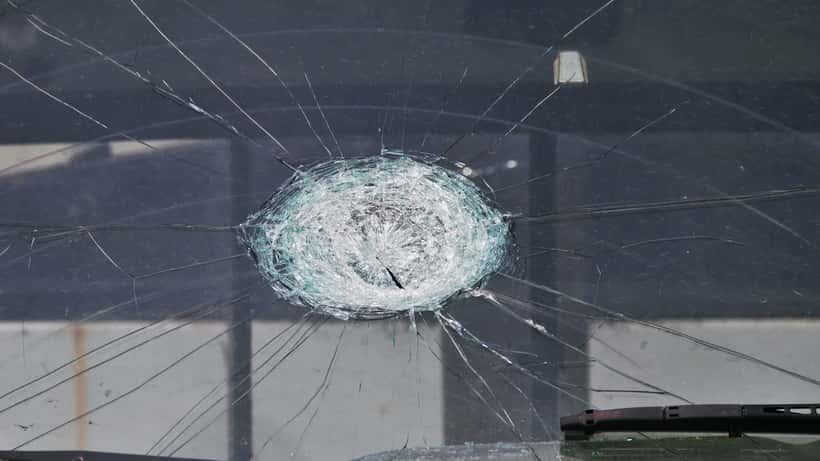
For vehicles caught outdoors — in driveways, on streets, and in open car parks across western Sydney and the Blue Mountains — hail damage operates on a scale that matters for insurance assessment. Small-diameter hailstones, under 10 mm, typically leave surface dents that qualify for paintless dent repair (PDR), a process that works from behind the panel using specialised tools to push out deformation without disturbing the factory paint. Golf-ball-sized hailstones are different: at 40 mm or more, they exert enough force to cause deep structural deformation in panel sections, crack laminated glass, strip paint from impact points, and — in the most severe cases — render a vehicle a total write-off where the cost of repair exceeds its market value.
Australia's recent history underlines the scale of what Sydney-area hailstorms can generate. Following storm events across Queensland and parts of New South Wales in late 2025, approximately 40,000 motor vehicle insurance claims were lodged in the aftermath, with damage ranging from windscreen chips to vehicles written off entirely. Sydney's worst recorded hailstorm, in 1999, caused losses later assessed at over $1.7 billion — still among the costliest natural disaster events in Australian insurance history. The current storms may not reach that scale, but the insurance principles apply the same way.
Why a Mechanic's Eyes Matter Before the Insurer's Assessor Arrives
When hail strikes, most car owners reach first for their insurer's phone number. Mechanics and panel beaters who specialise in post-storm assessment say the order of those calls matters more than most owners expect.
An insurer's assessor has one role: to quantify damage and determine the insurer's liability. They are not there to advocate for the vehicle owner. A qualified mechanic, by contrast, can identify damage that an assessor might classify ambiguously — or differently — to reduce the claim value. This includes deformation in panel sections that appears minor from a surface view but structurally requires full panel replacement rather than the cheaper PDR approach; storm-induced dents that visually overlap with minor pre-existing marks; and, critically, evidence of water ingress that the owner may not yet be aware of.
"Hydrolocking" is a lesser-known but serious risk for any vehicle driven through flooded roads in the aftermath of a storm. If water enters a petrol or diesel engine's air intake while the engine is running — even briefly — the incompressible water can cause catastrophic internal mechanical failure: bent connecting rods, shattered pistons, or a seized engine block. The external signs can be subtle at first: a slight rough idle, a misfire, or an engine that takes longer to start the day after a flood event. Mechanics who routinely inspect vehicles after weather events know to check for water lines in the engine bay, contamination in the oil (a milky, cream-coloured appearance where water has mixed with oil), and electrical faults in modules located under the bonnet or under the cabin floor.
Getting an independent assessment from a trusted mechanic or accredited panel beater before accepting your insurer's valuation creates a documented baseline — every item of damage, every concern, in writing — that you can use if the insurer's assessor's report differs from your own evidence.
The Western Sydney Case: When a Single Step Cost $620
Consider a vehicle owner in St Clair — one of the suburbs hit directly by golf-ball hail in this week's storm event — who had a 2021 Toyota Corolla parked on the street during the worst of the downpour. After the storm passed, they counted approximately 45 dents across the bonnet, roof, and boot lid, plus a star crack in the windscreen. They drove the vehicle immediately to their panel beater for an assessment.
The quote came back at $4,800: paintless dent repair across the bonnet and roof ($2,200), windscreen replacement ($680), and a full boot-lid panel replacement where the impact depth exceeded what PDR could address ($1,920). Under their comprehensive policy, the standard excess was $800. However, they had not checked a second clause: their policy also carried a separate storm excess of $250, bringing the total out-of-pocket excess to $1,050. Net expected payout from the insurer: $3,750.
Here is the if/then logic that changed the outcome: because the vehicle had been driven to the workshop before the owner photographed the damage thoroughly, the insurer's assessor disputed four dents on the front passenger door, arguing these could not be confirmed as storm-related versus pre-existing. The insurer reduced the payout by $620.
Had the owner photographed every dent — from multiple angles, with GPS-enabled timestamps — before moving the car, those four dents would have been unambiguously documented as storm-event damage. The $620 reduction was the direct, avoidable cost of skipping one step.
The stakes escalate further when repair costs approach a vehicle's market value. If a car is assessed at $14,000 in market value and hail repairs are estimated at $11,500, the insurer may declare it a total loss (write-off) and offer market value rather than the repair cost. Knowing your vehicle's current market value — not the purchase price, but today's value — before a storm season means you are prepared to contest a write-off assessment if you believe the market value figure is understated.
Your Step-by-Step Plan for the Next 48 Hours
The steps taken immediately after a hailstorm have the greatest effect on a claim's outcome. For car owners across western Sydney who experienced this week's storms, here is what to do now.
Document before you move the vehicle. Photograph every panel, every section of glass, and the area immediately around the car — hailstones still on the ground, water lines, storm debris in the vicinity. Use your phone's camera with location and timestamp enabled. This creates time-stamped evidence of storm-event damage that cannot be disputed after the fact.
Check your policy for dual excesses. Some comprehensive car insurance policies carry both a standard excess and a separate storm or weather excess. The combined total can range from $700 to well over $1,200. Understanding your total out-of-pocket cost before lodging a claim helps you decide whether claiming is financially worthwhile — if the combined excess approaches the repair cost, self-funding may protect your no-claims discount more effectively.
Notify your insurer within the required window. Most Australian comprehensive car insurance policies require you to notify your insurer within a reasonable timeframe — many policies specify 30 days from the date of the event. Delaying beyond this window can give an insurer grounds to reduce or reject a valid claim.
Seek an independent mechanic or panel beater assessment first. You are entitled to obtain your own repair quote before agreeing to use an insurer's approved repairer. If an insurer's approved repairer recommends PDR when an independent panel beater says a panel requires full replacement, your documented independent assessment gives you grounds to request review.
Know your right to independent dispute resolution. If your claim is denied or the payout is unreasonably reduced, you can lodge a complaint with the Australian Financial Complaints Authority (AFCA) — the independent, government-authorised body that resolves insurance disputes at no cost to consumers. AFCA handled over 100,000 complaints in 2024–25, with general insurance among the highest-volume categories. Before escalating to AFCA, you must first raise your complaint directly with your insurer; AFCA requires evidence that the internal dispute resolution process has been exhausted.
If you are also dealing with property damage from this week's storms, the same documentation principles apply: detailed records of how storm damage insurance claims work for NSW homeowners can inform your approach across both vehicle and property claims. For earlier Sydney-specific flooding context, what Sydney homeowners needed to know after heavy February rainfall covers the same documentation-first logic.
A qualified mechanic or motor vehicle expert can be particularly valuable when navigating disputes between your own assessment and an insurer's report — Expert Zoom connects vehicle owners with mechanics and repair specialists who can provide independent assessments and documentation.
This article provides general information only and does not constitute financial or legal advice. Insurance policy terms and excesses vary between providers. Always read your Product Disclosure Statement carefully and consult a licensed adviser if you are uncertain about your coverage.
format_used: News brief
