 Mark Taylor
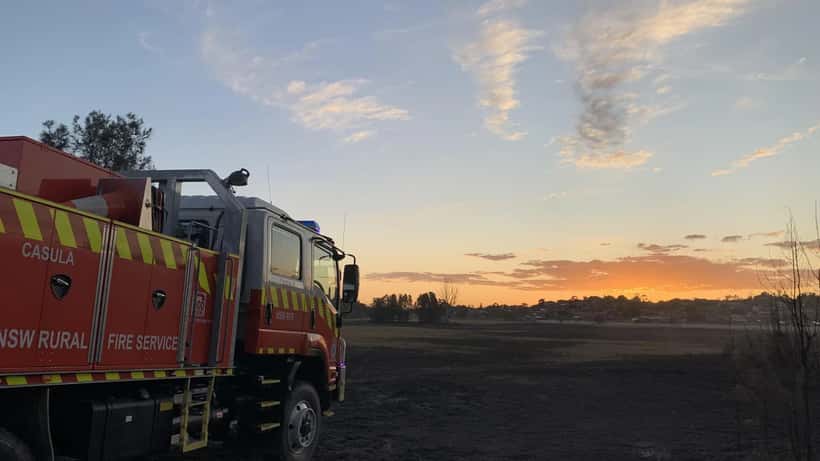
NSW Rural Fire Service Commissioner Trent Curtin confirmed on 14 August 2026 that hazard reduction burns across New South Wales have been accelerated by 21 per cent since July, as officials warn Sydney-area homeowners of an elevated fire season with above-average temperatures and below-average rainfall forecast through to March 2027. For homeowners on Sydney's fringe suburbs — Hornsby, Ku-ring-gai, Sutherland Shire, the Hills District and areas bordering the Blue Mountains — the warning is more than a seasonal reminder. It is a deadline.
What the Elevated Fire Season Warning Means for Sydney
The NSW RFS declared the 2026–27 bush fire season officially open with a stark assessment: drought conditions across much of inland NSW have left fuel loads unusually high. Commissioner Curtin stated the service had conducted more than 1,200 hazard reduction burns covering 180,000 hectares by mid-August — up from the equivalent period in 2025 — but acknowledged that no level of government preparation substitutes for individual property readiness.
Sydney's western and northern fringes have consistently featured among the highest-risk corridors in NSW. In January 2026, fire crews raced to contain blazes near Penrith and Campbelltown as temperatures exceeded 40°C, with ABC News reporting that local air quality warnings were triggered across suburbs as far east as Parramatta and Chatswood. Smoke from those fires pushed north and east within 48 hours, affecting millions of residents who had no direct contact with the flame front.
For homeowners in these corridors, the 2026–27 season arrives with a property landscape that carries risk most are unaware of.
The 10/50 Scheme Most Sydney Homeowners Have Forgotten About
Under NSW law, the 10/50 Vegetation Clearing Scheme gives landholders in designated bush fire prone land the right to clear, without a development approval:
- All trees within 10 metres of the external wall of a home or farm shed
- All underlying vegetation (shrubs and groundcover, not trees) within 50 metres of those same structures
According to the NSW Rural Fire Service, this scheme has been in place since 2014 — yet surveys consistently show that fewer than a third of eligible homeowners have ever used it. The most common reason: they simply did not know they were eligible, or assumed the clearing would require council sign-off.
Checking eligibility takes minutes via the NSW RFS bush fire hazard property tool. If your property is mapped as bush fire prone land, the 10/50 entitlement applies automatically. What it does not provide is guidance on what, specifically, to remove first — and that is where the technical detail matters.
What a Home Improvement Professional Would Flag First
When a qualified home improvement specialist conducts a pre-season fire assessment, they work through a priority hierarchy that most homeowners overlook when doing self-checks.
Gutters and roof valleys are consistently the number-one ember trap. A single burning leaf settling in a clogged gutter can ignite roof timbers within minutes of a fire front passing. Mesh gutter guards — not plastic foam inserts — rated to the Australian Standard AS 3959 bushfire construction requirements are the recommended solution for BAL-rated properties.
Roof voids and sub-floor spaces are the second-most common ignition point. Embers enter through unscreened vents during ember attack, which often precedes the fire front by up to 30 minutes in extreme conditions. Steel mesh screens with a maximum 2 mm aperture are the standard fix — a two-to-four-hour job that many homeowners defer indefinitely.
Timber decks and pergolas within 10 metres of the home function as accelerant platforms in a fire event. Hardwood decking may be treated or replaced with composite materials rated for bushfire zones. The decision depends on the property's Bushfire Attack Level (BAL) rating — a classification that governs what building materials are legally required in your zone.
Flammable items stored within the 10-metre zone — potted plants in plastic, cane outdoor furniture, timber wood stacks, mulch beds against walls, and LPG cylinders — are routinely identified as ignition contributors in post-fire surveys conducted by the Insurance Council of Australia.
Concrete Case: A Hornsby Homeowner in a BAL-19 Zone
Take a homeowner in Hornsby Heights, whose property was classified BAL-19 when they bought in 2021. BAL-19 means the property is assessed to receive a medium-level ember attack combined with radiant heat exposure of up to 19 kilowatts per square metre — roughly equivalent to standing 10 metres from a roaring campfire sustained for 60 minutes.
Under the NSW Building Code (AS 3959-2018), a BAL-19 property requires:
- Bushfire-resistant glazing (minimum 6 mm toughened glass or equivalent)
- Ember-proofed roof vents and subfloor vents
- No unprotected openings in wall cladding or roof lining within 2 metres of the ground
This homeowner's property, built in 2004, predates the 2010 adoption of modern BAL construction standards. Their windows are standard 4 mm float glass; their roof vents are plastic louvres, not steel mesh. Their timber deck extends 4 metres from the dining room sliding door.
If a fire front with an ember attack radius of 500 metres reached their street in northerly wind conditions — as modelled in the 2013 Blue Mountains fires scenario — the unprotected vent and single-glazed glass combination could produce interior ignition within 12 minutes of ember arrival, before any direct flame contact occurred.
The retrofit cost to bring this property to current BAL-19 standard — window replacement, vent screening, deck material upgrade — is estimated by the Australian Institute of Building at between $8,000 and $22,000 depending on house size and existing cladding type. That figure is substantial but stands against the median Sydney rebuild cost, which the Housing Industry Association placed at $3,800 per square metre in mid-2026 — or approximately $760,000 for a 200 m² home.
For this same homeowner, a professional fire assessment would also confirm whether their BAL rating has been correctly recorded, since council mapping errors have been identified in several Sydney LGAs following the 2019–20 Black Summer fire season.
The BAL Rating You Probably Have But Haven't Checked
Bushfire Attack Level ratings run from BAL-LOW (negligible risk) to BAL-FZ (flame zone — direct flame contact likely). The middle categories — BAL-12.5, BAL-19, BAL-29, BAL-40 — apply to the majority of bushfire prone properties across greater Sydney and progressively require more robust construction and retrofit standards.
The critical point: your BAL rating was set when your home was approved, not when you moved in. Vegetation changes, neighbouring land clearing, and updated RFS mapping can all shift a property's effective fire exposure — upward or downward — without any formal notification to the owner. A home that was BAL-LOW in 2010 may now carry a BAL-12.5 or BAL-19 classification under current fuel load modelling.
A qualified home improvement or bushfire consultant can conduct a formal BAL assessment under Australian Standard AS 3959 in two to four hours. The assessment produces a documented report that can also be used to support insurance claims, building upgrade applications, or sale documentation — a point of increasing relevance as major home insurers in NSW have begun requesting BAL confirmation before renewing policies in designated high-risk postcodes.
See also: Victoria Bushfires 2026: How to Assess and Protect Your Home — findings from that assessment season that directly apply to NSW fringe properties.
What Sydney Homeowners Should Do Before October 2026
The official NSW bush fire danger period begins on 1 October across Greater Sydney. That gives homeowners roughly six weeks from today to complete pre-season work.
This week:
- Check whether your property is mapped as bush fire prone land via the NSW RFS online tool
- Clean gutters and fit steel ember guards if you are in a BAL zone
- Remove flammable items from within 10 metres of the home
Before 1 October:
- Book a home improvement or bushfire consultant for a formal BAL-AS 3959 assessment
- Review and seal any gaps in eaves, roof vents, and sub-floor vents with steel mesh
- Prepare your bush fire survival plan and register with the NSW Emergency Alert system
Sydney's bush fire risk is not a fringe suburb problem any more. The 2026 season warnings, combined with the fuel load conditions left by the recent dry winter, mean the preparation window is shorter than in most recent years. The practical and financial case for a professional assessment before the danger period begins has not been stronger since the Black Summer of 2019–20.
YMYL disclaimer: This article provides general information about bush fire preparedness. For formal property risk assessments, building compliance advice, or decisions involving structural modifications, consult a qualified home improvement professional registered with your state licensing authority.
