 Olivia Thompson
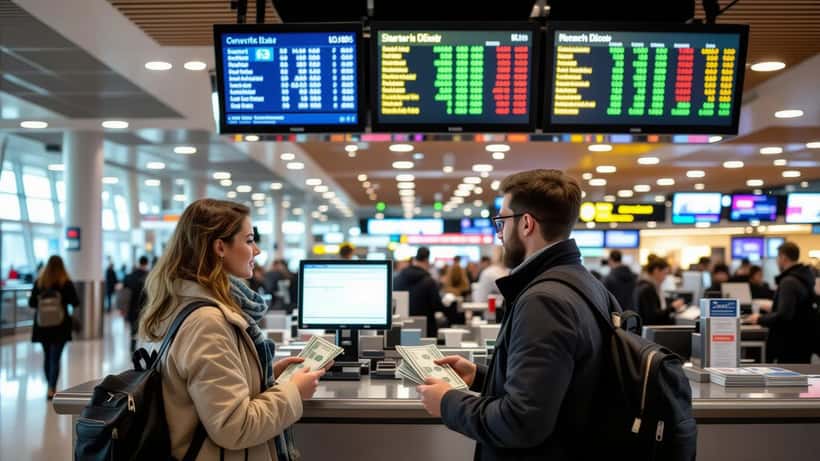
Sydney Airport switched on a new travel-money operator on 1 July 2026, and the change will put a currency counter in front of almost every departing traveller this summer. Travelex became the airport's foreign exchange provider from that date, opening an initial 10 currency stores in Terminal 1 International and installing more than 20 ATMs across the terminals, according to aviation trade reporting. The rollout lands just as Western Sydney International Airport prepares to welcome its first Jetstar passenger flights on 25 October 2026 — meaning two Sydney gateways will soon be competing for your holiday spending.
For most passengers the new counters look convenient. For a financial adviser, they are a classic spot where travellers quietly hand over money they never needed to lose. Airport currency exchange is one of the most expensive ways to buy foreign cash, and understanding why can save a family several hundred dollars on a single overseas trip.
Why airport exchange rates cost you more
The rate on the board is rarely the rate that matters. Every currency booth quotes two numbers — one to buy a currency, one to sell it — and the gap between them is called the spread. At an airport counter that spread is typically far wider than the "mid-market" rate that banks trade at wholesale. The Reserve Bank of Australia publishes official reference exchange rates that show where the Australian dollar actually sits against major currencies; comparing the board rate against that benchmark reveals the true cost.
On top of the spread, many counters add a service or "commission-free" fee that is simply baked into a worse rate. A rate that looks only a few cents off might represent a 6% to 10% cost once fees are included. On a $2,000 holiday cash budget, that is $120 to $200 gone before you have bought a single coffee overseas.
Convenience is the product airport operators sell, and they price it accordingly. That is not a scandal — it is a business model. The job of the traveller is to decide, in advance, how much of that convenience they actually want to pay for.
The trap most travellers walk into
The single most expensive mistake happens overseas, not in Sydney: it is called dynamic currency conversion. When you pay by card abroad, the terminal often asks whether you want to be charged in Australian dollars or the local currency. Choosing Australian dollars feels safer because you see a familiar number — but the overseas merchant then sets the exchange rate, usually a poor one, and pockets the margin.
The rule from anyone who manages money for a living is simple: always choose to be charged in the local currency and let your own bank or card do the conversion. That one habit routinely beats the airport counter and the overseas terminal alike.
What a wealth adviser would actually do
A financial planner does not tell clients to avoid holiday spending — they tell them to structure it. Before your flight, the questions worth answering are practical.
First, how much physical cash do you genuinely need? Many destinations are now card-first, and carrying large sums invites both theft and poor exchange rates. A modest amount of local cash for taxis, tips and small vendors is usually enough.
Second, which card travels well? Several Australian banks and app-based accounts now offer debit or prepaid cards with low or zero foreign transaction fees and near mid-market rates. A prepaid travel card lets you lock in a rate before you leave, which can be reassuring if the Australian dollar is volatile, though it removes the upside if the currency later moves in your favour.
Third, when should you buy? Watching the RBA reference rate for a week or two before travel gives a sense of whether the dollar is strong or weak against your destination's currency. You cannot time the market perfectly, but you can avoid buying on an obviously bad day.
Sydney's two airports change the maths
With Western Sydney International opening to passengers from late October 2026, some travellers will soon depart from an airport closer to home in the city's west. New terminals mean new retail contracts and, eventually, new currency counters. Competition between the two Sydney airports could nudge rates over time, but travellers should not assume a new airport automatically means a better deal. The same spread-and-fee model applies wherever the counter sits.
Currency is only one part of a smooth trip — if a flight is delayed or cancelled, your rights as a passenger are a separate matter worth knowing before you travel. The practical takeaway is unchanged: treat any airport currency booth — Travelex at Kingsford Smith or whoever operates at Western Sydney — as a last resort for a small top-up, not your main source of holiday money.
A quick pre-flight checklist
Before you fly this year, a five-minute routine protects your budget. Check the RBA reference rate for your destination currency so you know the real benchmark. Order any bulk foreign cash online or through your bank in advance rather than at the gate. Pack a low-fee travel or debit card and know your PIN for overseas ATMs. Overseas, always pay in the local currency and decline dynamic currency conversion. Keep only a small cash buffer and rely on cards where they are widely accepted.
None of this requires financial expertise — just a decision made before you reach the terminal rather than in the queue. If your trip is large, involves moving significant sums, or ties into bigger plans such as an overseas property purchase, a working holiday or an extended stay, a short conversation with a licensed financial adviser can help you structure currency, insurance and card choices sensibly. On expertzoom, you can connect with wealth-management specialists who deal with exactly these travel-money and cross-border questions.
The new counters at Sydney Airport are not the villain of the story. They are simply a reminder that the most expensive place to think about money is the one where you have run out of time to think. Sort your travel money before you pack, and the board rates at the gate become someone else's problem.
