 Emie Wang
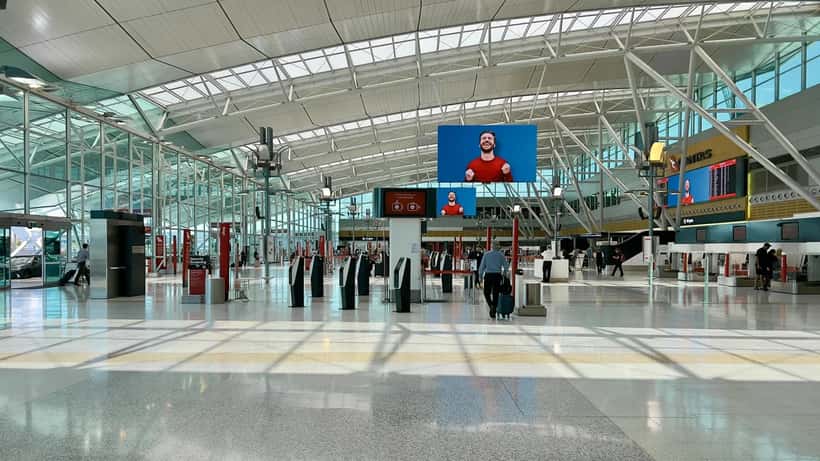
Over 30,000 Australians were stranded across the country's major airports on Easter Sunday and Monday, 6–7 April 2026, as a wave of flight cancellations and delays brought Sydney, Melbourne, Brisbane, and Canberra airports to a near standstill. On Easter Monday alone, Sydney Airport recorded 57 delays and 11 cancellations, with on-time performance falling below 25% for much of the day. Airlines affected included Qantas, Jetstar, Virgin Australia, Air New Zealand, and Singapore Airlines.
If you were one of those passengers left stranded in a terminal this Easter, you may be entitled to more than just an apology and a food voucher — and knowing your rights can make a significant difference.
What Caused the Easter Airport Chaos?
The disruption was a perfect storm of factors, according to aviation analysts. Low cloud ceilings and adverse weather conditions, simultaneous runway maintenance works in Melbourne, pilot and cabin crew shortages, and system-wide capacity constraints combined to create cascading delays across the entire domestic and international network during one of Australia's busiest travel periods.
The result: hundreds of flights cancelled or delayed, passengers sleeping on terminal floors, and frustrating hours spent on hold with airline call centres.
What Australian Law Says About Your Rights
Australia's aviation passenger rights framework has been evolving. Under the Australian Consumer Law (ACL), passengers are entitled to a replacement service or refund when flights are cancelled or delayed beyond a reasonable period — but the framework has historically been less prescriptive than its European equivalent (EU261/2004), which guarantees automatic cash compensation.
In 2026, Australia introduced a new Aviation Consumer Protection Scheme that provides greater clarity. Under this scheme:
- For delays over 3 hours: Airlines must provide meals and refreshments, and communicate reasons and timelines clearly.
- For delays causing an overnight stay: You are entitled to hotel accommodation and transport to and from the hotel.
- For cancellations: You are entitled to a full refund or rebooking on the next available flight, including with a competitor airline if that's the soonest option.
- For cancellations within 14 days of travel: If the airline caused the disruption (not weather), additional compensation may apply.
Critically, the Australian scheme still does not mandate automatic cash compensation in the European style. However, the ACCC (Australian Competition and Consumer Commission) has been increasingly active in holding airlines accountable for misleading passengers about their entitlements.
What Airlines Are (and Aren't) Telling You
One of the most common complaints from stranded Easter passengers was the gap between what airlines communicated and what passengers were actually entitled to. Reports emerged of travellers being offered vouchers — redeemable only for future flights — rather than the cash refunds they were legally entitled to under the ACL.
According to the ACCC, if an airline refuses a refund and offers only a voucher, you can reject that offer and demand a cash refund. You are also entitled to documented reasons for the cancellation or delay, which is relevant if you need to claim on travel insurance.
Key actions to take immediately when your flight is cancelled or significantly delayed:
- Request written confirmation of the cancellation/delay and its stated reason from the airline.
- Do not accept a voucher if you want a refund — you can insist on cash or a credit card reversal.
- Keep all receipts for meals, accommodation, and transport you pay out of pocket during the disruption.
- File a complaint with CASA or the ACCC if the airline fails to provide required assistance.
According to the ACCC's guidance on travel delays and cancellations, passengers can pursue compensation through the airline's internal dispute resolution process, then escalate to the Airline Customer Advocate (ACA) if unsatisfied.
When Does Travel Insurance Actually Help?
Travel insurance is often marketed as the solution to disruption, but the reality is more nuanced. Most policies cover accommodation and meals only when the delay is caused by events outside the airline's control — such as weather. If the delay is caused by crew shortages or maintenance issues, many insurers classify it as an "airline fault," which may fall under the ACL rather than the insurance policy.
This distinction matters enormously during a multi-factor disruption like Easter 2026, where weather and operational failures were intertwined. A legal adviser or consumer rights specialist can help you identify the right avenue to pursue — insurance claim, ACL refund, or both.
When Should You Consult a Lawyer?
Most flight disruptions can be resolved through the airline's own process or the Airline Customer Advocate. But there are situations where legal advice becomes genuinely valuable:
- You suffered significant financial loss due to a missed connection, cancelled hotel booking, or lost business deal.
- The airline is stonewalling your refund beyond 30 days.
- Your compensation claim was denied and you believe you have a strong case.
- You were travelling for a high-stakes purpose (wedding, medical appointment, contract signing) and the disruption caused measurable damages.
In these scenarios, an Australian consumer law specialist or travel litigation lawyer can assess whether you have grounds for a claim beyond standard refund rights, including potential claims for consequential loss.
Consumer law in Australia offers meaningful protections for airline passengers — but they require active assertion. The Easter 2026 disruptions were a reminder that many Australians don't know what they're owed, and that airlines don't always volunteer that information.
Whether you're seeking a refund, reimbursement for expenses, or considering a formal complaint, Expert Zoom connects you with qualified Australian lawyers who specialise in consumer rights and travel disputes — available online and on your schedule.
See also: Qantas QF7 Emergency — What Passengers Are Owed
Disclaimer: This article provides general information about Australian consumer rights in the context of flight disruptions. It does not constitute legal advice. For advice specific to your situation, consult a qualified lawyer.
