 Sophie Roberts
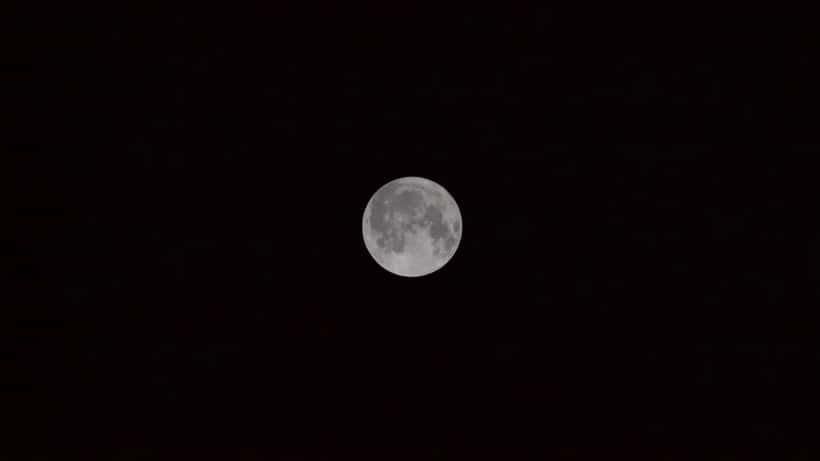
Australia's full moon of June — the Strawberry Moon — peaks on Tuesday 30 June 2026 at 9:56 am AEST, making Monday night and Tuesday night the best windows to step outside with the kids and look up. For Australians in the Southern Hemisphere, this is the highest full moon of the entire year, climbing furthest above the horizon and flooding night skies with light. It is also 2026's second micromoon, sitting at its greatest distance from Earth, which means it will appear roughly six per cent smaller and ten per cent dimmer than a typical full moon — still spectacular, but a subtle difference only a sharp-eyed observer will notice.
Why Is It Called the Strawberry Moon?
The name has nothing to do with the moon's colour. It comes from the Algonquin, Ojibwe, and other Indigenous peoples of North America, for whom late June marked the brief annual window when wild strawberries ripened in the fields. Tribes including the Dakota, Lakota, and Oneida used the full moon as a practical calendar — a reminder that harvest season had arrived. European settlers adopted the name wholesale, and it has appeared in almanacs ever since. Other cultures gave June's moon equally evocative labels: the Creek people called it the Blackberry Moon, the Shawnee named it the Raspberry Moon, and the Haida of Alaska used Berries Ripen Moon. None of these moons have anything to do with the colour red; if the moon does appear orange or pinkish as it rises, that is caused entirely by Earth's atmosphere scattering shorter wavelengths of light — the same reason sunsets look golden.
As the Perth Observatory explains, this is one of the few Indigenous moon names that crossed directly into mainstream usage without translation or modification, a small but enduring reminder of how Indigenous knowledge systems shaped everyday language.
What Makes the 2026 Strawberry Moon Special for Australians?
In the Southern Hemisphere, winter full moons ride high in the sky. While the Northern Hemisphere experiences June's full moon low on the horizon — producing those dramatic amber tones — Australian observers get the opposite effect: the Strawberry Moon arcs high overhead, appearing bright white against a dark winter sky. This year's moon also coincides with a perigee-apogee cycle that places it at apogee (furthest point from Earth), officially classifying it as a micromoon. The difference from an average full moon is subtle to the naked eye, but comparing photographs taken tonight with last month's full moon can itself become a worthwhile family science activity.
Best viewing times for Australian states:
- AEST (NSW, VIC, QLD, TAS, ACT): Moonrise around 5:20 pm on Monday 29 June; peak brightness Tuesday 30 June at 9:56 am
- ACST (SA, NT): Peak at 9:26 am ACST on Tuesday 30 June
- AWST (WA): Peak at 7:56 am AWST on Tuesday 30 June
The moon will be fully lit on both Monday and Tuesday nights, so there is no need to stay up late or wake up early — just look east after sunset.
5 Science Questions the Strawberry Moon Can Spark at Home
The full moon is one of astronomy's most accessible entry points for young learners. Rather than simply pointing up and saying "that's a full moon," parents and tutors can turn tonight's sky into an interactive science lesson. Here are five questions worth asking:
1. Why does the moon appear to change shape each month? The moon does not actually change shape — we see different amounts of its sunlit surface depending on where it sits relative to Earth and the sun. Drawing the Earth-Moon-Sun triangle is a classic Year 5 activity aligned with the Australian Curriculum's Earth and Space Sciences strand.
2. Why does the moon look bigger near the horizon? This is the "moon illusion" — a genuine perceptual puzzle that neuroscientists still debate. It is a perfect starting point for conversations about how the brain processes visual information, bridging science and psychology for older students.
3. If the moon has no light of its own, why is it so bright? Reflected light, albedo, and the concept of luminosity versus reflectivity are all wrapped up in this single observation. Even a Year 3 student can grasp the basics with the right explanation.
4. How do we know the distance from Earth to the moon? The answer — laser ranging using retroreflectors left by Apollo astronauts — opens a discussion about measurement, the speed of light, and the history of space exploration that links directly to the Year 9-10 curriculum.
5. What is a micromoon, and how is it different from a supermoon? This year's Strawberry Moon is a micromoon. Understanding why requires grasping elliptical orbits, which ties neatly into Kepler's laws for senior students and basic "oval vs circle" discussions for younger children.
A science or STEM tutor can turn any of these questions into a structured learning session — working from a child's curiosity about a real event rather than a textbook exercise. Students who connect classroom concepts to real-world observations tend to retain them significantly longer, according to educational research on contextualised learning.
How to Observe the Strawberry Moon as a Family
No telescope is required. Find an elevated spot with a clear eastern horizon — a park, a hill, or even a second-floor balcony — and watch the moon rise shortly after 5:00 pm local time. Binoculars will reveal the large dark patches called maria (ancient lava plains) and the bright ray systems surrounding younger craters. A sketchbook and pencil encourages children to record what they see, practising scientific observation skills in the process.
If you want to go deeper, platforms like Stellarium (free, browser-based) let children identify craters and lunar features by name in real time as they observe. Pairing this with the STEM science tutoring resources available at ExpertZoom gives students a way to channel tonight's curiosity into ongoing structured learning.
An astronomy-savvy private tutor can design a short unit around tonight's moon — covering phases, tides, orbital mechanics, and Indigenous sky knowledge — ensuring the lesson aligns with your child's current year level and learning style. ExpertZoom connects Australian families with qualified science and STEM tutors who can turn one spectacular night into a genuine learning milestone.
