 Chloe Kelly
The Lyrid meteor shower peaks on the night of 22–23 April 2026, offering Australians a rare free science lesson written across the night sky. With up to 20 meteors per hour expected, science educators and tutoring specialists say this is one of the best opportunities of the year to ignite a genuine love of STEM learning in children — without a textbook in sight.
What Is the Lyrid Meteor Shower?
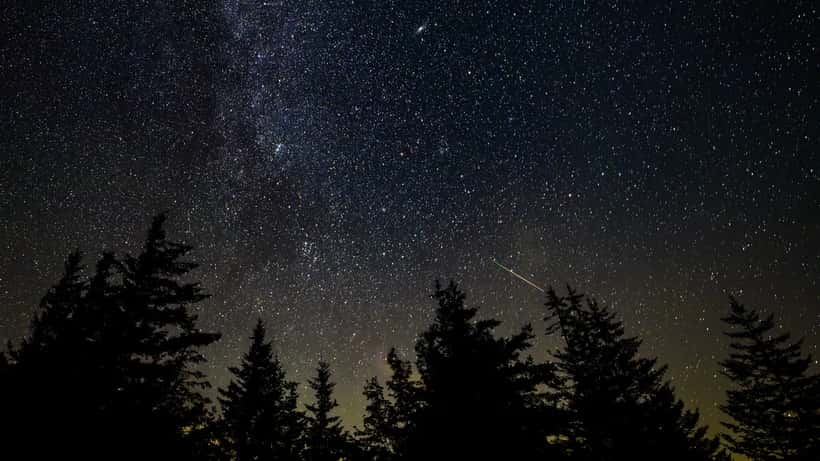
The Lyrids are among the oldest recorded meteor showers in human history, with observations dating back to 687 BCE in China. Each year in mid-to-late April, Earth passes through the debris trail left by Comet Thatcher, and the resulting meteors appear to radiate from the constellation Lyra.
The active period runs from 16 to 25 April 2026, with peak activity in the early hours of 22 April — after 2:00 AM local time — and continuing into the pre-dawn hours of 23 April. A new moon on 17 April means darker skies this year, making fainter meteors easier to spot.
Expected rates are 10 to 20 meteors per hour under ideal conditions. Viewing from northern Australia — Queensland, the Northern Territory and northern Western Australia — will be slightly better than from southern cities, as the radiant point (the constellation Lyra) sits lower in the sky from Sydney and Melbourne. No telescope or binoculars are required: the naked eye is best.
Why Astronomers Are Excited This Year
The 2026 Lyrids come at a particularly significant moment for Australian astronomy. The Australian Academy of Science published its Astronomy Decadal Plan 2026–2035 earlier this year, for the first time formally incorporating Aboriginal and Torres Strait Islander astronomy into the national science research agenda.
Indigenous Australians have observed and mapped the night sky for more than 65,000 years — the longest continuous astronomical tradition in human history. Watching the Lyrids with children is an ideal opportunity to introduce this heritage alongside conventional physics and chemistry. Explaining that the streaks across the sky are fragments of a comet burning up at around 49 kilometres per second offers a natural gateway to conversations about orbital mechanics, atmospheric science and the scale of the solar system.
How to Watch the Lyrids: A Family Guide
When: 22 April after 10:00 PM, best after 2:00 AM on 23 April
Where: Away from city lights — even driving 30–40 minutes from an urban centre dramatically improves visibility
What to do: Lie flat on a blanket facing east or northeast. Allow at least 30 minutes for your eyes to fully adapt to the darkness. Avoid looking at your phone screen; if you need a light, use red-light mode.
What to bring: Warm layers (autumn nights get cold), a thermos, and a star map app such as Sky Map or Stellarium — downloaded and set to offline mode before you leave.
Turning a Meteor Shower Into a Learning Moment
Science tutors and primary educators consistently find that tangible, real-world events produce better retention than abstract classroom instruction. The Lyrids offer a natural hook for several curriculum areas:
Physics and chemistry (Years 5–10): Meteors are not "shooting stars" but meteoroids — fragments of space rock or comet debris — that superheat and vaporise as they collide with Earth's atmosphere at extreme speeds. The streak of light is plasma. Asking children to predict what colours they might see (different minerals burn at different colours) turns observation into inquiry.
History and geography (Years 3–8): The Lyrids have been observed for nearly 2,700 years. Cross-referencing ancient Chinese, Greek and Indigenous Australian records of the same phenomena teaches source analysis and the idea that scientific knowledge is cumulative.
Mathematics (Years 4–9): Timing meteor frequency — counting streaks over ten minutes and multiplying to estimate hourly rates — introduces sampling, estimation and unit conversion in a memorable context.
Indigenous studies (all year levels): The stars of Lyra, from whose direction the meteors appear to radiate, are part of astronomical knowledge systems maintained across Australia for tens of thousands of years. Exploring this heritage alongside Western astronomy demonstrates that there are multiple valid ways of understanding the natural world.
When to Consider a Science Tutor
Many children find science captivating when it connects to something they have seen or experienced directly. If your child is struggling with science subjects at school, or if you notice their curiosity sparked by events like the Lyrids but frustration in the classroom, a specialist science tutor can help bridge that gap.
A good tutor does not just reteach what was covered in class. They identify the specific points where a student's understanding breaks down, rebuild foundational concepts, and connect curriculum content to the student's existing interests — whether that is sport, gaming, cooking, or the night sky.
The Astronomical Society of Australia notes that STEM engagement in early secondary school years (Years 7 to 10) is a critical window: students who develop a working understanding of physics and chemistry in this period are significantly better positioned for senior years and university pathways.
Expert Zoom connects Australian families with experienced science and maths tutors who offer one-on-one sessions online or in person. Whether your child needs help with a specific topic or is looking to extend their abilities beyond the standard curriculum, a brief consultation is the first step.
The Lyrids happen every year. A spark of genuine curiosity, caught at the right moment and supported by the right guidance, can last a lifetime.
This article references the Astronomical Society of Australia's education resources and current curriculum frameworks.
