 Chloe Wilson
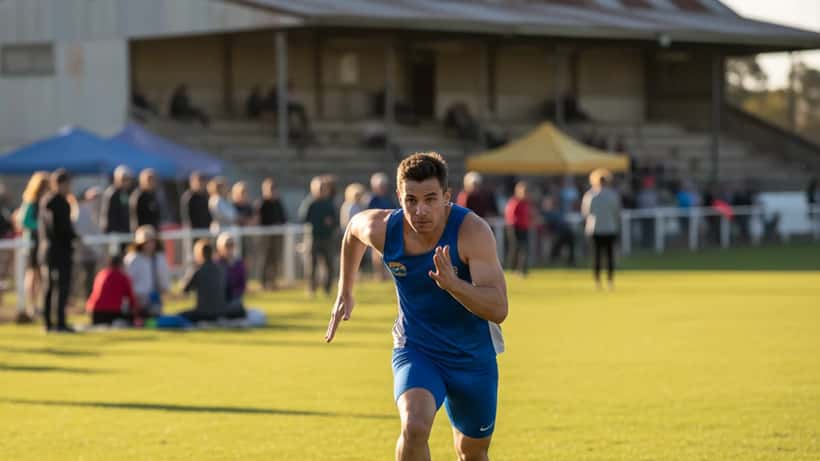
Sha'Carri Richardson made Australian sporting history on 5 April 2026, stepping up from scratch at the 144th Powercor Stawell Gift — the world's richest and most prestigious handicap sprint. Thousands of fans packed Central Park in Stawell, Victoria, to watch the American Olympic gold medallist compete against local hopefuls in a race format unlike anything in international athletics. Her heat win and semifinal berth captivated the country. But behind the glamour of elite sprinting lies a sobering reality that every amateur runner in Australia should understand: sprint injuries are common, serious, and largely preventable.
What Is the Stawell Gift?
The Stawell Gift has been run every Easter since 1878, making it one of the world's longest-running foot races. The format is a 120-metre grass sprint with a handicap system: slower runners get a head start of up to 10 metres, while elite athletes like Richardson and fellow American Christian Coleman start from scratch (0 metres). The prize is $40,000 for both the men's and women's winners.
According to Athletics Australia, the 2026 edition attracted its largest international field in decades, with Richardson posting an adjusted time of 13.815 seconds in her heat. Her participation marks her first competitive appearance in Australia and her season debut ahead of the 2026 World Athletics Championships.
The Injury Reality Behind Elite Sprinting
What most spectators don't see is the preparation — and the risk — behind each explosive 120-metre dash. Sprint events place enormous stress on the human body in a very short time.
According to a 2024 study published in the British Journal of Sports Medicine, hamstring strains are the most common injury in short-distance sprinters, accounting for approximately 37% of all track and field injuries. Calf strains, Achilles tendon issues, and hip flexor tears are also frequently reported.
For elite athletes like Richardson, who works with a full support team of physiotherapists, strength coaches, and sports doctors, injury risk is managed with sophisticated biomechanical analysis, progressive loading programmes, and regular screening.
For amateur runners who sign up for fun runs, school athletics carnivals, or community sprint events inspired by watching Stawell on Channel 7 — the support is rarely there.
Why Amateur Sprinters Are at Higher Risk
The danger for amateur and recreational runners is disproportionate for several reasons:
Explosive effort without preparation: Unlike distance running, sprinting requires near-maximal muscle activation from the first stride. A recreational runner whose body isn't conditioned for that demand is far more susceptible to acute muscle tears.
Poor warm-up habits: Research from La Trobe University indicates that inadequate warm-up is a primary factor in hamstring injuries among recreational athletes. A proper sprint warm-up should include progressive acceleration drills, dynamic stretching and at least 15 minutes of activation — not just a few static stretches.
Overconfidence after watching elite sport: Events like the Stawell Gift inspire participation — which is wonderful. But watching Richardson sprint 120 metres and thinking you can replicate that effort without months of conditioning is a recipe for a torn hamstring. The effect is known in sports medicine as "post-event inspiration injury," where untrained spectators attempt movements they've watched professionals perform.
Age-related tissue vulnerability: Achilles tendons and hamstrings become less elastic with age. A 45-year-old casual runner has significantly higher injury risk in explosive efforts than a 25-year-old who trains regularly.
What Should Amateur Sprinters Do Before Their Next Race?
A sports medicine doctor or physiotherapist can help you assess your sprint readiness and build a safe training plan. Key considerations include:
Hamstring strength testing: Weakness or asymmetry between legs is one of the strongest predictors of injury. A physiotherapist can screen for this in a single session.
Progressive sprint training: Never go straight from slow jogging to full-speed sprinting. Build through walk-jog intervals, strider acceleration drills, and progressive intensities over several weeks.
Footwear and surface assessment: Grass sprinting (as at Stawell) differs significantly from running on synthetic tracks or roads. The right footwear reduces joint stress and improves traction.
Recovery protocols: After sprint-specific training, ice, compression and adequate sleep are essential. Delayed-onset muscle soreness (DOMS) in the days after hard sprinting is normal — but sharp pain during effort is not.
According to Sports Medicine Australia, hamstring injuries that are not properly rehabilitated have a re-injury rate of up to 30% within the first season of return to sport. Early treatment by a qualified practitioner significantly reduces this risk.
Richardson's Preparation: A Benchmark for Best Practice
Richardson's Stawell Gift appearance follows a disciplined pre-season preparation block. She told Olympics.com ahead of the event that she had worked intensively on her start mechanics and acceleration phase over the Southern Hemisphere summer. Her team monitors neuromuscular fatigue daily, adjusts training loads based on GPS and heart rate data, and has a dedicated physiotherapist on-site for every training session.
Most amateur runners have none of this support. But the key principle — structured, progressive preparation — is accessible to everyone, regardless of budget.
The Stawell Inspiration Effect: Turning It Into Health Gain
The Stawell Gift is a uniquely Australian institution, and Richardson's participation is a once-in-a-generation moment for the event. If it inspires more Australians to run, to compete, or to get back into athletics — that is an unequivocal public health win.
The key is channelling that inspiration safely. Before your next sprint event, consult a sports medicine practitioner or physiotherapist who can assess your readiness, screen for vulnerabilities, and help you train appropriately.
Disclaimer: This article provides general health and fitness information and does not constitute medical advice. Consult a qualified sports medicine professional before beginning a sprint training programme, particularly if you have existing injuries or health conditions.
Whether you're planning to run a community sprint race, join a local athletics club, or simply race your kids on Easter weekend — getting expert guidance first means you'll still be running well into winter.
