 Theo Manning
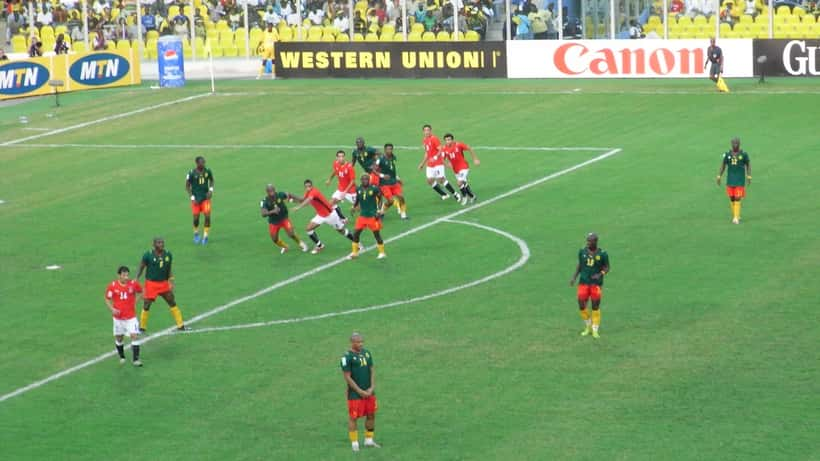
Egypt's Pharaohs demolished South Sudan 5-0 at Juba National Stadium on Tuesday, 29 September 2026, in the second round of 2027 Africa Cup of Nations qualifying. Omar Marmoush ended a 139-day goal drought with a brace, while Mostafa Zizo, Ibrahim Adel and Hamza Abdelkarim completed the rout — Egypt's biggest winning margin since Hossam Hassan took charge.
But the most discussed figure from the result was not on the pitch. Mohamed Salah, Egypt's captain and all-time leading scorer, was absent from the squad — not through suspension or injury, but because Juba National Stadium uses an artificial turf surface. For Australian footballers playing on synthetic pitches every week, what happened in Juba carries a legal lesson worth understanding.
The Artificial Turf Decision That Sparked a Global Debate
The choice to rest Salah was reportedly agreed jointly between the player and Egypt's coaching staff before their opening qualifier, a 0-0 draw against Angola. The decision was presented as protective rather than contentious — but it has triggered serious questions about the gap between what international football rules permit and what professional clubs allow when it comes to pitch surfaces.
FIFA certifies artificial pitches through its Quality Programme for Football Turf, established to ensure synthetic surfaces meet minimum standards for bounce, traction, shock absorption and structural integrity. The Juba National Stadium carries such certification, which means the pitch was entirely legal for international competition.
Yet players, clubs and national federations are increasingly making distinctions that FIFA's certification framework does not address. Research from the British Journal of Sports Medicine has found that certain synthetic surfaces correlate with higher rates of ankle sprains and specific knee injuries among professional players. When a footballer is worth hundreds of millions of euros to a club, the employer's duty of care intersects directly with international fixture obligations.
According to Egypt's Football Association, the decision was made "to protect the player," with coaching staff and Salah agreeing before the Angola fixture that he would not travel to Juba. Egypt's technical staff notified the federation well in advance — not as a dispute, but as a planned precaution built into the squad selection process.
For Australian players — where artificial pitches are standard in many National Premier League and community competition venues — the same questions arise at every level, but without the same resources or legal knowledge to navigate them.
An Expert Perspective: What This Means Under Australian Law
Under Australian employment law and the Work Health and Safety Act 2011, employers — including sporting clubs operating with paid player contracts — must eliminate or minimise health and safety risks so far as reasonably practicable. Safe Work Australia's model codes of practice confirm that this obligation extends to any physical environment an employee is required to work in, including sporting venues and playing surfaces.
"Players often don't understand that their contract may contain implied terms about workplace conditions," explains one sports law practitioner familiar with Football Australia contracts. "If a club requires you to play on a surface that has been medically flagged as injurious for you specifically, compelling you to play may breach the employer's duty of care — particularly where the club had notice of the medical risk in writing."
The crucial distinction is between a surface that is approved in general terms and one that poses a specific, documented risk to a specific player. Salah's situation illustrates how this distinction is managed proactively at the elite level: a pre-agreed protocol, supported by medical staff, built into selection planning. At community level in Australia, those protections must often be negotiated or asserted after the fact — by the player, alone.
For related context on how professional sports contracts allocate risk between players and teams in 2026, this analysis of NBA player contract clauses and legal rights outlines the standard frameworks now common across major leagues.
Concrete Case: A Semi-Professional Player in Western Sydney
Consider a scenario representative of cases that may reach a sports lawyer in NSW or Victoria in 2026.
A 27-year-old semi-professional winger plays for a National Premier League club in Western Sydney on a contract worth $41,000 per season. Her club's home ground features a FIFA-certified artificial turf surface installed in 2024. In August 2026, she sustains a partial anterior cruciate ligament sprain during training. Her treating physiotherapist advises in writing that she should avoid hard synthetic surfaces for a minimum of five weeks, citing a documented re-injury rate of approximately 31% on synthetic fibres before full collagen remodelling in this type of ligament injury.
Her club schedules her for a matchday squad two weeks later — same surface — and invokes a standard clause imposing a $2,800 fine for each unexcused match absence. She has not been formally cleared by the club's own medical officer, only asked to present for fitness testing.
Under this scenario, two substantive legal positions are worth exploring before she makes any decision:
If the club issues the fine: If the player notified the club in writing of her physiotherapist's advice before the match, and the club responded with a fine rather than accommodation, this may constitute a failure of the employer's duty to provide a safe system of work under the Work Health and Safety Act 2011 (NSW). The fine clause itself may be legally challengeable on the grounds that compliance required the player to accept a foreseeable risk of aggravated injury while the employer had prior written notice of that risk.
If the player plays and re-injures: If she complies and re-injures on the same surface within the physiotherapist's recommended recovery window, the club's prior notice of the medical risk substantially increases its exposure to a workplace injury compensation claim. Anterior cruciate reconstruction in Australia typically costs between $18,000 and $26,000 privately, with a recovery period of six to twelve months during which earning capacity is affected.
The $2,800 fine looks very different placed beside those numbers. If Salah — with an entire national federation's medical staff behind him — still needed a pre-agreed written protocol to protect himself from an artificial surface, then a semi-professional player relying on a verbal conversation with her coach is in a precarious position. A 30-minute consultation with a sports and employment lawyer, taken before she misses the match, could clarify whether the fine clause is enforceable in this specific context and what documentation she needs to protect her legal position.
FIFA Certification and the Limits of What It Actually Covers
FIFA's Quality Programme for Football Turf is a rigorous technical standard. What it is not is a blanket indemnity for clubs or federations.
Certification confirms a pitch meets FIFA's performance benchmarks at the time of testing. It does not certify that the surface is appropriate for every player in every physical condition, nor does it override an employer's specific duty of care obligations to individual employees whose medical circumstances are known.
This distinction — navigated smoothly by Salah's team — is where recreational and semi-professional Australian players are most exposed. Football Australia does not currently mandate that clubs provide specific injury-liability disclosures when players are scheduled to play on artificial surfaces, beyond general Work Health and Safety obligations already in force.
That regulatory gap creates genuine exposure. Clubs that assume FIFA pitch certification is sufficient protection against duty-of-care claims may find, in litigation, that general certification does not displace their specific obligations to an employee whose medical needs were brought to their attention in writing.
The 5-0 scoreline in Juba will be filed away as a qualifier result. The legal questions it raised about pitch standards, player protection and employer obligations in 2026 are more immediate — and considerably closer to Australian football grounds than Juba National Stadium.
Disclaimer: This article contains general legal and health information only and is not a substitute for professional legal or medical advice. If you are facing a sports contract dispute, workplace injury, or pitch safety issue, consult a qualified legal professional.
The Practical Steps If You Face a Pitch Dispute in Australia
If you are a registered player in any Australian football code and you have concerns about a compulsory playing surface, the steps most sports lawyers recommend begin before the match — not after:
- Get medical advice in writing: Your treating practitioner's recommendation should specifically reference the surface type, not just the injury. "Avoid artificial turf for five weeks" is more legally useful than "rest advised."
- Review your contract now: Look for clauses about duty of care, fine structures, who holds medical clearance authority, and what constitutes an excused absence.
- Notify your club formally: A written notification before the match establishes that the club had notice. An oral conversation followed by reluctant compliance does not create the same paper trail.
- Seek specialist advice before the decision is made: Once a fine is issued or a re-injury occurs, your options narrow. The time to understand your legal position is before you are asked to choose between your health and your contract.
Expert Zoom connects Australian players, coaches and sporting professionals with qualified legal specialists across the country, covering employment, sports and personal injury law. Whether the issue involves a contract clause, a pitch dispute or an injury liability question, an early consultation can prevent a much larger problem later.
