 Mark Campbell
Severe Tropical Cyclone Narelle made landfall on Queensland's Cape York Peninsula on 20 March 2026 as a Category 4 storm, bringing wind gusts of up to 250 km/h and triggering mass evacuations across northern Australia. If your property was in the path of this system, the days ahead are critical — and knowing when to call a professional building inspector could protect you from far greater losses down the track.
What Happened and Where
Cyclone Narelle formed in the Coral Sea on 16 March 2026, intensified to Category 5 on 19 March, and made landfall near Lockhart River as a Category 4 system early on 20 March 2026. The storm then crossed Cape York Peninsula and re-entered the Gulf of Carpentaria, where it was expected to strengthen again before approaching the Northern Territory.
Around 500 residents of Numbulwar were evacuated to Darwin as a precaution. Australian Defence Force personnel were deployed to affected communities, and emergency warnings remained active across multiple council zones as of 21 March 2026.
The storm brought not only extreme winds but also storm surge and heavy rainfall — a combination that puts residential and commercial structures under enormous and often invisible stress.
The Hidden Damage Problem
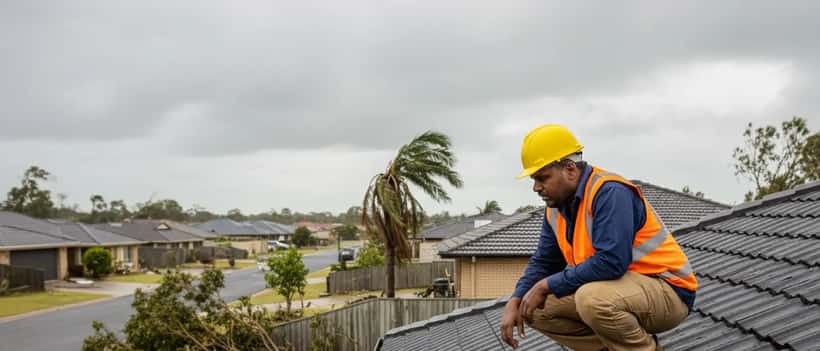
The most dangerous consequence of cyclone damage is not always what you can see. Twisted roof trusses, hairline cracks in load-bearing walls, weakened foundations from water saturation, and compromised windows and doors can leave a building structurally unsafe even when it looks superficially intact.
After Cyclone Yasi in 2011 and Cyclone Debbie in 2017, post-storm structural assessments found that a significant proportion of homes deemed "visually undamaged" had sustained structural compromise detectable only by a licensed building inspector. The Australian Institute of Building Surveyors has repeatedly warned homeowners that self-assessment after a major cyclone is unreliable.
Insurers are aware of this too. Under most Australian home insurance policies, you are required to take "reasonable steps to prevent further damage" once a storm passes. Failing to identify and report structural damage promptly can affect your claim.
When to Call a Building Professional
You should call a licensed building inspector or structural engineer as soon as safe access to your property is possible if any of the following apply:
- The cyclone passed within 50 km of your property
- You heard cracking, groaning, or unusual sounds from the structure during the storm
- You can see any visible warping, cracking, or shifted materials on roof, walls, or foundations
- Water entered areas that were previously watertight
- Your property is on a flood plain or within 500 metres of the coast
- Your home is more than 20 years old and has not had a recent structural inspection
For properties in Category 4 or 5 zones, a professional inspection is advisable regardless of visible damage.
What a Building Inspection Covers
A licensed building inspector will assess the structural integrity of your roof framing, wall frames, floor system, and foundations. They will check for damage to tie-down connections — the metal brackets and bolts that anchor your roof to walls — which are a primary failure point in cyclone damage. They will also assess drainage, subfloor conditions, and the integrity of windows and sliding door frames.
In Queensland and the Northern Territory, building inspectors must hold a current licence under the relevant state Building Act. After a declared disaster, some councils offer subsidised or fast-tracked inspection services — contact your local council or the Queensland Building and Construction Commission (QBCC) for current post-Narelle assistance programs.
What to Do Right Now
Before entering your property:
- Wait for the official all-clear from emergency services
- Check for downed power lines and report them to Ergon Energy or Essential Energy
- Photograph all visible damage from the exterior before entering
After entering:
- Document every room with photos and video before touching anything
- Check your insurance policy for required notification timeframes (typically 30 days)
- Contact your insurer to lodge a storm claim and request a loss assessor
Finding a qualified building professional: Platforms like ExpertZoom connect homeowners with licensed building inspectors and structural engineers across Australia, including in regional Queensland and the Northern Territory. Given the demand surge following a major cyclone event, booking early secures priority access.
Insurance and Liability: Key Points
Under Australian consumer law, a building inspector owes a duty of care to the commissioning party. If an inspector signs off on a property as structurally sound and it later collapses due to undiscovered cyclone damage, the inspector can be held liable. Always ensure the professional you engage holds current professional indemnity insurance and appropriate state licensing.
If you are a landlord, your obligations are more stringent. Under residential tenancy legislation in Queensland and the NT, you must ensure the property is safe and habitable before tenants return. Engaging a licensed inspector protects you legally and demonstrates your duty of care.
The Broader Cost of Waiting
The Insurance Council of Australia estimates that delayed reporting of cyclone damage costs homeowners an average of 34% more in total repair costs compared to early intervention. Structural problems worsened by subsequent rain events — very common in the northern wet season — are often classified by insurers as a separate maintenance issue rather than a storm claim.
Acting quickly, with the right professionals, is both a financial and a safety imperative after a cyclone of Narelle's magnitude.
Disclaimer: This article provides general information only and does not constitute legal or structural engineering advice. Always consult a licensed professional for your specific situation.
Do you need a building inspector or structural engineer after Cyclone Narelle? Find qualified professionals near you on ExpertZoom Australia — specialists in post-storm property assessment across Queensland and the Northern Territory.
