 Fred Rivers
Sam Switkowski walked into the 2026 AFL finals as one of the lucky ones: ten years at Fremantle, 126 games, 78 goals, and a retirement on his own terms. The 29-year-old forward — managed out of the Dockers' final home-and-away game but expected back for the qualifying final — has confirmed this will be his last campaign. After a season-ending back stress fracture wiped out his entire 2020 year and recurring hamstring setbacks interrupted the seasons that followed, Switkowski exits with agency. Many AFL players who deal with similar injury accumulation do not get that choice. And the legal protections they rely on when they don't are considerably thinner than most Australians realise.
The $650,000 Cut No One Saw Coming
In March 2026, Zurich Insurance informed the AFL Players' Association (AFLPA) that it would no longer provide Total and Permanent Disability (TPD) coverage for claims relating to concussion, traumatic brain injury, post-concussion syndrome, or chronic traumatic encephalopathy (CTE) — effective May 1, 2026.
The financial impact is immediate and material. AFL players previously had access to up to $1.1 million in combined death and TPD cover through their superannuation funds. Under the new Zurich position, TPD cover is reduced by $650,000 and death cover by $350,000 for any claim with a brain-injury connection. For players who have sustained repeated sub-concussive contact over a career spanning a decade or more, the reduction is not hypothetical — it is a direct cut to the insurance ceiling they carry.
Lawyers representing former players have publicly described the change as exposing the fragility of the compensation framework for professional footballers. The AFL and AFLPA are in discussions about alternative coverage arrangements, but as of the start of the 2026 finals series, no replacement product has been confirmed.
Why AFL Players Fall Outside Australia's Safety Net
The structural gap that most football supporters — and many players — do not fully appreciate: AFL footballers are generally excluded from the state-based WorkCover schemes that protect almost every other category of Australian worker.
A warehouse operative, a teacher, or a construction worker who sustains a serious spinal injury at work can access wage replacement, funded medical treatment, and permanent impairment payments through their state's workers' compensation authority. The process is bureaucratic, but the entitlement exists in law. For an AFL player who sustains equivalent physical damage during a match, that pathway is closed. Footballers are not classified as employees for WorkCover purposes in most jurisdictions — they operate under a specific legal framework governed by the AFL-AFLPA Collective Bargaining Agreement (2023–2027), which is the document that defines what players are actually owed.
Under the CBA, players receive continued salary payments during injury, access to club medical and rehabilitation resources, and entitlements through their nominated superannuation fund. What the CBA cannot guarantee — and what creates the most financially precarious situations — is what happens after the contract expires. Once the paper ends, the protections narrow sharply. Understanding exactly where they narrow, and by how much, is where independent legal advice becomes essential.
According to the 2023–2027 AFL and AFLW Collective Bargaining Agreement, the entitlements framework is detailed and layered — but reading and applying it correctly requires expertise that most players, and most club welfare officers, do not have at the level of individual financial and legal consequence.
Sam's Situation vs. a Player Who Doesn't Get to Choose
Switkowski's retirement is, in legal terms, a clean scenario. He has chosen the timing, completed a senior leadership role at the club, and exits with a full contract season in the finals. The entitlement questions for a player in his position are manageable.
Now consider a parallel case: a Fremantle forward comparable in age and role — 27 years old, on a two-year contract at $320,000 per season — who does not control his exit. He ruptures his hamstring in Round 12. Under the CBA, the club continues paying his salary through the contract period. He undergoes surgery, completes rehabilitation, and makes himself available for selection in the final rounds. The club, however, declines to renew his contract at season's end, and no other club makes an offer. He exits the game at 27 with no ongoing income, no WorkCover entitlement, and a body that carries a documented history of three hamstring episodes over seven seasons.
At this point, the AFLPA Severe Injury Benefit — a fund established in May 2025 — becomes the primary legal mechanism available to him. To access a lump-sum payment of up to $600,000, he must satisfy two legal criteria: first, that he has a permanent impairment significantly contributed to by his AFL career; second, that the impairment reduces his future earning capacity to normal retirement age by at least 40 per cent.
If an independent assessment places his capacity reduction at 38 per cent — just below the statutory threshold — he receives nothing from the fund. If it is assessed at 42 per cent, he can access up to $600,000. The difference between those two outcomes, in this scenario worth more than the remaining value of his expired contract, is largely determined by how the medical evidence was gathered and how the legal submission was framed. Players who navigate this process without independent legal representation routinely leave that gap unfilled.
The $54 Million Fund — And the Evidence Threshold That Decides Everything
The AFLPA Severe Injury Benefit represents a meaningful advance in protections for former players exiting with lasting physical damage. The fund holds $54 million and was expanded in May 2025 following advocacy from former players and their legal representatives. It is the most significant financial safety net available to AFL players outside the CBA itself.
But the eligibility requirements are precisely defined, and the application is not self-navigating. An applicant must produce medical evidence of permanent impairment, a formal capacity assessment, and legal submissions demonstrating that the 40 per cent earning-capacity reduction threshold is met. The process parallels a workers' compensation claim in its documentation requirements, even though it operates entirely outside that system.
Sports employment lawyers note that a significant proportion of eligible former players either do not apply — often because they are unaware the fund exists — or apply without adequate support and fail to structure their evidence to meet the legal standard. Given that the same injury assessed differently can determine a $600,000 outcome, the cost of proceeding without legal expertise is not abstract.
The 2026 TPD insurance changes compound this. With brain-injury coverage removed from AFL superannuation policies from May 1, any player with a documented concussion history now has a materially reduced insurance ceiling in their fund. Whether supplementary products are available through an individual fund, and how to access them, requires financial and legal advice specific to the AFL employment context.
What a Legal Specialist Actually Does Here
For Sam Switkowski, the next chapter begins clearly and on his own terms. For the players who follow a different path — those managing the consequences of accumulated injury, navigating the $54 million fund application, or trying to understand what the Zurich coverage change means for their own policy — the legal landscape is considerably less certain.
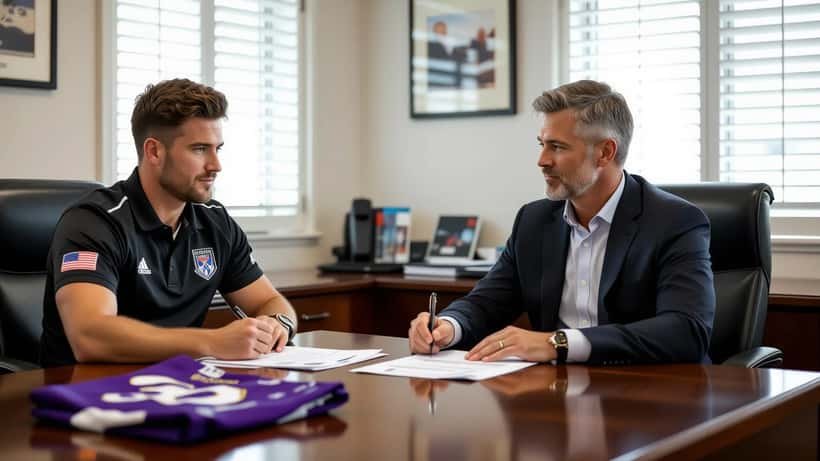
A sports law or employment law specialist working in the AFL context provides concrete assistance across several areas: reviewing CBA entitlements to identify what a club is legally required to provide versus what is discretionary; assessing superannuation and TPD positions following the 2026 insurance changes; supporting the Severe Injury Benefit application, including the evidence framing that can determine whether a borderline assessment qualifies; and advising on exit negotiations when a club and player approach contract-end under injury circumstances.
As explored in our coverage of Hayden Young's long-term contract and injury situation, the intersection of injury management and contract structure creates financial stakes that require specialist navigation — not welfare officers or club advisers, but independent legal expertise with no institutional loyalty to the club.
Sam Switkowski's career ends this finals series in the way every player hopes theirs will: deliberately, with finals football, with agency. The legal protections available to those who exit under different circumstances are imperfect and, as of 2026, materially reduced. Knowing what you are owed before the contract ends — before you are in the middle of a capacity assessment that could go either way — is no longer a precaution. It is the job.
Disclaimer: This article provides general information only and does not constitute legal or financial advice. Players or former players with specific entitlement questions should consult a qualified sports law or employment law specialist.
