 Emily Turner
Hayden Young's Hamstring Setback: What AFL Players — and Weekend Warriors — Need to Know
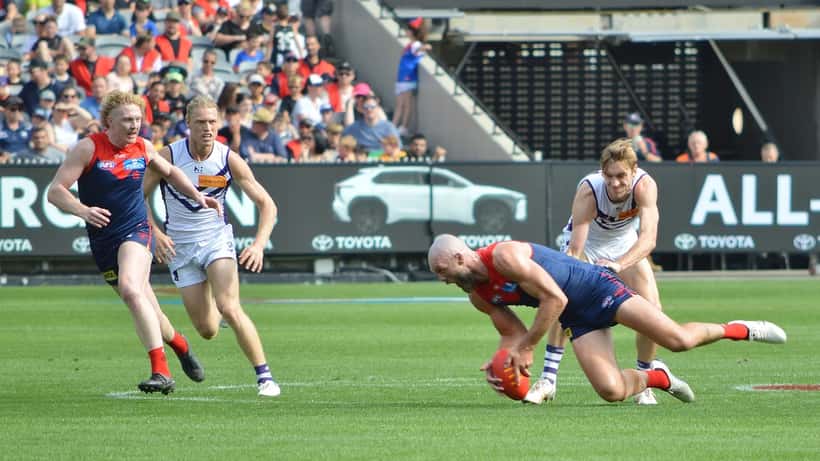
Fremantle Dockers midfielder Hayden Young is one of AFL's most prized assets in 2026. In December 2025, he signed the longest contract extension in Fremantle's history — a six-year deal that locks him in until at least 2031. Yet by Round 1 of the 2026 season, a minor hamstring strain against Geelong had already forced him off the field and out of the lineup for three games.
Young's injury is a reminder that even elite athletes with exceptional physical preparation cannot entirely escape one of football's most persistent problems. Hamstring strains account for the highest number of missed games across the AFL each season — and they affect recreational players just as readily as professionals.
What Actually Happens in a Hamstring Strain?
The hamstring is a group of three muscles running along the back of the thigh — the biceps femoris, semitendinosus, and semimembranosus. These muscles are responsible for bending the knee and extending the hip, making them critical in the explosive, high-speed movements that define AFL football.
A strain occurs when the muscle fibres are stretched beyond their capacity. Clinicians classify hamstring injuries in three grades:
- Grade 1: Mild overstretching with micro-tears, minimal pain, return to play typically within one to two weeks
- Grade 2: Partial tear with noticeable pain, swelling, and bruising, requiring two to six weeks of rehabilitation
- Grade 3: Complete muscle rupture, often requiring surgical intervention and three to six months of recovery
Based on Young's three-game absence, his injury was likely a Grade 1 or minor Grade 2 strain — but even at that level, mismanaged recovery can set a player up for recurrence.
Why Hamstrings Are So Prone to Re-injury
Hamstring re-injury rates in elite sport are significant. As documented by Healthdirect Australia, Australia's government-backed health information service, athletes who return to play too early — before full neuromuscular strength is restored — face a substantially elevated risk of re-injury, which can be more severe than the original incident.
The challenge is that a hamstring can feel functional well before it is biomechanically ready for match-intensity loads. This is why professional clubs rely on sports medicine teams to guide return-to-play decisions based on objective strength and functional testing, not just subjective pain levels.
For Hayden Young, the Fremantle medical staff would have used a battery of assessments — including isokinetic dynamometry, the Nordic hamstring test, and high-speed running load tracking — before clearing him to return. Contrast this with recreational players, who often judge readiness on whether walking or light jogging feels okay. That gap in assessment quality is where most re-injuries happen.
AFL Season Intensity and Hamstring Load
Young's position transition — from defender to midfielder — adds an additional dimension to his injury risk. Midfielders cover far more ground per game than defenders, typically 12 to 15 kilometres per match at the elite level, with frequent high-intensity bursts above 25 km/h. The metabolic and mechanical load on the hamstring is substantially greater in the midfield role.
After three games out, returning to full midfield duties requires a carefully managed ramp-up in training volume. Jumping straight back into match intensity without adequate conditioning is one of the leading causes of re-injury in the first two to four weeks after return.
When Should You See a Sports Medicine Professional?
For everyday Australians who play park footy, soccer, tennis, or simply run for fitness, a hamstring strain is a common reality. The instinct is often to rest for a week and return to activity when it stops hurting. However, there are clear signals that warrant professional assessment:
- Sudden, sharp pain at the back of the thigh during activity, especially at high speed
- Difficulty walking without a limp after the injury
- Significant bruising appearing within 24 hours, tracking down toward the knee
- A popping sensation at the moment of injury
- Recurring strains — if you've had a hamstring injury before in the same leg
- Pain that does not improve after five to seven days of rest
A sports medicine physician or physiotherapist can classify the severity, use ultrasound or MRI to confirm the extent of the tear, and prescribe a targeted rehabilitation programme. This matters because Grade 2 and Grade 3 strains treated without professional guidance frequently become chronic issues.
The Bigger Picture: Long-Term Contracts and the Injury Question
Young's six-year deal also raises questions relevant to any professional athlete — and by extension, any Australian employed under a long-term contract. What protections exist if injury interrupts your ability to perform?
In professional sport, collective bargaining agreements and individual contracts typically include injury payment provisions. Under the AFL Players Association collective bargaining arrangement, players receive ongoing salary during injury, subject to contractual terms around serious long-term incapacity. However, contract clauses can vary significantly, and the devil is always in the detail.
If you are involved in a professional sporting contract — or any long-term employment agreement that involves physical performance obligations — it is worth understanding what your injury protections actually say before you sign. A legal professional specialising in sports or employment law can review those clauses and flag anything that may leave you exposed.
Separately, for anyone returning to recreational sport after injury, don't underestimate the value of an expert consultation. Physiotherapists and sports medicine doctors aren't just for professionals — and a proper rehabilitation programme significantly reduces the likelihood of re-injury and longer-term complications.
Hayden Young's quick return to the Fremantle lineup is a testament to both his physical resilience and the quality of professional sports medicine support around him. Weekend warriors deserve that same level of care, even if the scale is different.
Disclaimer: This article provides general information only and does not constitute medical advice. If you have sustained a hamstring injury or are experiencing persistent musculoskeletal symptoms, consult a qualified health professional.
