 Sophie Thompson
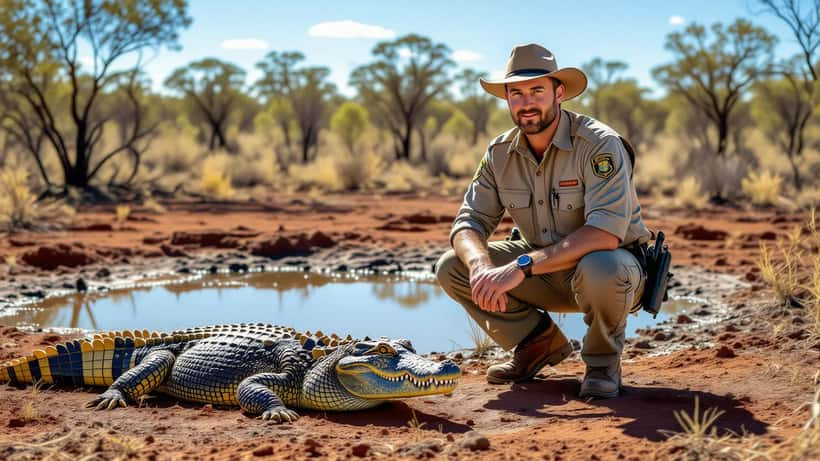
A saltwater crocodile sighting reported in Richmond Shire has put outback Queensland communities on alert, raising urgent questions about what residents, farmers, and pet owners should do when Australia's apex predator appears far outside its expected range. Wildlife experts and veterinarians are urging calm — but also swift action.
A Long Way from the Coast
Richmond Shire sits in outback northwestern Queensland, hundreds of kilometres from the coastal waterways that saltwater crocodiles typically call home. Yet Australia's surging crocodile population — now estimated at more than 150,000 animals according to wildlife surveys, up dramatically since protections were introduced in 1974 — means sightings in unexpected places are no longer rare.
Flooding events play a major role. When heavy rains sweep across Queensland's river systems, crocodiles ride floodwaters far inland and can become stranded in waterholes when waters recede. The major flooding that struck northwestern Queensland in late 2025 and early 2026 left communities like Richmond dealing with conditions that wildlife managers say are ideal for unexpected encounters. The Flinders River system, which runs through Richmond Shire, is hydrologically connected to catchments where crocodile populations have been growing for decades.
"When you get big flood events, crocs move with the water," one Queensland Parks and Wildlife officer noted during the January 2026 floods, when multiple large crocodiles were filmed strolling through suburban streets in far north Queensland. "When the water drops, they can end up in places people don't expect."
The Rise of the Out-of-Range Sighting
The Richmond Shire sighting fits a documented national pattern. In March 2026, a 2.3-metre saltwater crocodile was discovered living in a farm dam in the Somerset region near Toowoomba — well over 400 kilometres south of the species' established range. That animal is suspected to have been an illegally kept pet that was dumped after Victoria moved to ban private ownership of crocodilians.
Queensland wildlife authorities receive thousands of crocodile sighting reports each year via the government's online reporting system and the QWildlife app. The vast majority are from established crocodile country in the far north, but a growing proportion involve animals outside that zone — including the outback west.
Whether a crocodile in Richmond Shire arrived via floodwaters, was transported illegally, or represents an animal pushing the boundaries of the species' expanding range, the advice from wildlife experts is the same: do not approach, do not attempt to move it, and report it immediately.
What to Do If You Spot a Crocodile
If you see a crocodile in Queensland — whether in expected or unexpected territory — the Queensland Government's Be Croc Wise program provides clear guidance:
Report it immediately. Call 1300 130 372 (Option 1) or use the QWildlife app to log the sighting with as much detail as possible: location, size estimate, time, and any photos if they can be taken safely from a distance. This triggers a response from Queensland Parks and Wildlife Service.
Do not approach the animal. A saltwater crocodile that has travelled a long distance may be stressed, hungry, or disoriented — and therefore unpredictable. Even a smaller individual is capable of inflicting serious injury. A two-metre animal can sprint at up to 17 kilometres per hour on land for short distances.
Keep children and dogs away from water. In the immediate area of a reported sighting, avoid any bodies of water — dams, creeks, and even large puddles — until wildlife officers have assessed and managed the situation.
Do not try to relocate or harm the animal. Saltwater crocodiles are protected under Queensland's Nature Conservation Act 1992. Harming, killing, or attempting to capture a crocodile without authorisation is a serious offence that can result in significant fines. Only licensed wildlife officers and authorised contractors are permitted to trap and relocate problem crocodiles.
Protecting Livestock and Pets
For farmers in Richmond Shire and surrounding areas, a crocodile near water sources used by cattle presents a genuine risk. Wildlife veterinarians advise a precautionary approach until the animal has been removed:
Temporarily fence off dam access. If livestock are drinking from a dam or waterhole near the reported sighting location, consider temporarily restricting access and diverting animals to alternative water sources while you wait for wildlife officers to assess the situation.
Keep dogs secured indoors at night. Dogs are particularly vulnerable — they are often the first animals taken by crocodiles that are settling into a new territory. Keep dogs away from water and secured after dark.
Check smaller enclosures. Crocodiles are adept at squeezing through surprisingly narrow gaps and can cover ground at night without detection. Check the perimeters of smaller livestock enclosures — chickens, goats, and pigs — particularly those near water.
Document any tracks or signs. If you find drag marks, disturbed mud, or livestock disappear unexpectedly, document this with photos and pass it on to wildlife officers. It helps build a picture of the animal's territory and behaviour.
When to Call a Wildlife Vet
While wildlife officers handle the capture and relocation of the crocodile itself, a wildlife veterinarian may be involved if the animal appears injured, malnourished, or unwell — which can occur with animals that have been transported long distances or kept illegally. Injured animals are more dangerous and harder to manage.
If you have livestock or companion animals that may have been injured in an encounter, a veterinarian should be contacted immediately. Crocodile bites carry a high risk of severe infection due to bacteria in the animal's saliva and the aquatic environments it inhabits. Wounds that appear superficial can mask deeper tissue damage.
Australia's exotic and wildlife vets have extensive experience managing crocodilian encounters, and ExpertZoom connects Queensland farmers and pet owners with accredited animal specialists who can advise on post-incident care, biosecurity, and livestock management following a wildlife encounter. Similar expertise has recently been needed as invasive species like cane toads continue to pose risks to Australian pets and livestock.
The Broader Lesson
A crocodile appearing in Richmond Shire is a striking reminder that Australia's wildlife management story is one of genuine conservation success — and growing complexity. A population that numbered fewer than a few thousand in the 1970s now exceeds 150,000 animals and continues to expand its range.
For outback communities unaccustomed to sharing their waterways with apex predators, the safest approach is preparation. Know the reporting number (1300 130 372). Understand that the animal is protected and must not be harmed. And consult wildlife and veterinary professionals promptly when livestock or companion animals are at risk.
This article provides general information about crocodile safety in Australia. For specific wildlife management advice relating to your property or animals, consult a licensed wildlife veterinarian or contact Queensland Parks and Wildlife Service directly.
