 Emily Turner
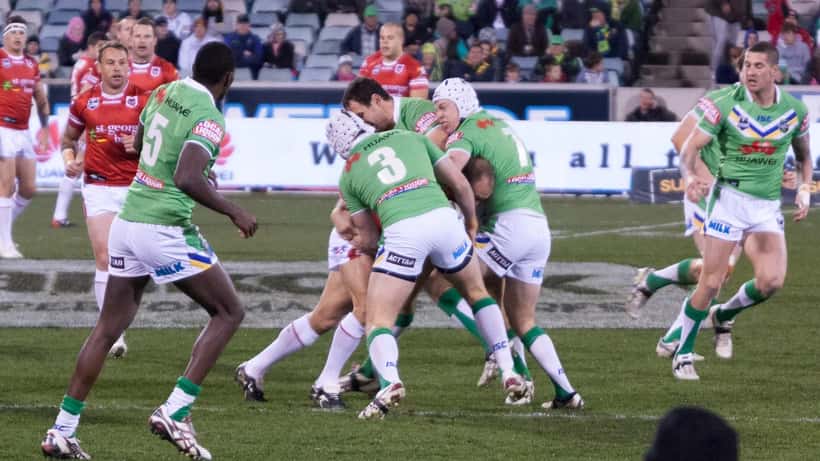
Canberra Raiders and North Queensland Cowboys kick off Round 13 of the 2026 NRL season at GIO Stadium in Canberra on 31 May 2026, drawing more than 5,000 searches per hour from fans tracking lineups and live scores. But beyond the points tally, Australian rugby league has a more urgent conversation to have — one the NRL itself has finally begun to lead.
Before the start of the 2026 season, the NRL became the first Australian contact sport governing body to introduce mandatory contact training limits. Every NRL and NRLW club is now restricted to 100 minutes of body-contact training within each seven-day period between games. It sounds like a scheduling decision, but sports medicine specialists describe it as a watershed moment for brain health in Australian sport.
Why 100 Minutes? The Science of Sub-Concussive Damage
Concussion management has long focused on the obvious — the heavy tackle, the player who stays down, the Head Impact Assessment that removes them from the field. What researchers have been saying for years, however, is that the slow accumulation of sub-concussive impacts is equally dangerous.
Sub-concussive impacts are the everyday collisions of contact training: the set-play drives, the contact drills, the standard tackles that nobody flags as concerning. Each generates enough force to stretch and shear brain tissue. A protein associated with the development of Chronic Traumatic Encephalopathy (CTE) is released with every significant impact — whether the player reports symptoms or not.
No helmet or mouthguard design has been shown to prevent CTE. The only intervention supported by current evidence is reducing total contact exposure across training and matches. The NRL's 100-minute training limit is precisely that.
What Is CTE and Why Does It Matter for Rugby League?
Chronic Traumatic Encephalopathy is a progressive neurodegenerative disease linked to repeated brain trauma. It cannot be diagnosed in a living person — pathologists identify it post-mortem through examination of brain tissue. During life, CTE is associated with memory loss, personality and mood changes, impulsivity, cognitive decline, and depression.
In the United States, a wave of CTE diagnoses in retired American football players drove the NFL to undertake sweeping rule changes from the 2010s onward. Australian contact sports have been slower to respond. The NRL's 2026 training restriction represents the first formal acknowledgement by any Australian elite sporting code that cumulative contact — not just acute concussion events — demands regulation.
A University of Queensland analysis published in April 2026 described the move as "a giant step forward with brain injury prevention" and called on other Australian leagues to follow.
Recognising Concussion Symptoms After a Head Knock
Approximately 450,000 Australians play rugby league at some level. Many watching tonight's Raiders-Cowboys match will train or play on weekends. For community-level players, the concussion questions are practical and immediate.
A concussion does not always involve loss of consciousness. Signs to watch for include:
- Headache or pressure in the head
- Nausea or vomiting
- Balance problems or dizziness
- Blurred or double vision
- Sensitivity to light or noise
- Feeling sluggish, foggy, or simply not quite right
- Difficulty sleeping or sleeping far more than usual
Symptoms are not always immediate. A player who finishes a game feeling fine can develop significant symptoms within hours. According to Healthdirect Australia, any suspected concussion warrants medical assessment, even when symptoms appear mild. If a person experiences persistent vomiting, seizure, a worsening headache, or a difference in pupil size, seek emergency care immediately.
Return-to-Play Protocols: Why Rushing Back Is Dangerous
The most consequential post-concussion decision is when to return to sport. At elite level, the NRL uses a six-stage graduated return-to-play protocol requiring full symptom resolution at each stage before the next begins. The same approach is recommended at community level.
Returning to play too soon after a concussion sharply increases the risk of second-impact syndrome — a rare but potentially fatal condition in which a second head injury causes rapid and catastrophic brain swelling before the first concussion has resolved.
At club level, these protocols are enforced inconsistently. A GP or sports medicine specialist can conduct formal assessments — including ImPACT computerised testing and clinical balance evaluation — to provide a structured, evidence-based return-to-play timeline.
When to See a Doctor After a Head Knock
For amateur players, any of the following should prompt a GP or sports medicine consultation before returning to training or competition:
- Any concussion, including a first event
- Symptoms lasting more than 10 days
- A second concussion within the same season
- Emotional or mood changes following a head injury
- Trouble concentrating at work or school after a head knock
In Australia, your GP is the appropriate first contact, and can refer you to a sports physician, neurologist, or concussion clinic as needed. Resources differ by state; your GP can direct you to the right specialist service in your area.
ExpertZoom connects you with qualified GPs and sports medicine specialists across Australia who can assess and manage concussion recovery. You can also read about the financial considerations for NRL athletes, including how record contracts are structured, in our article on Jason Taumalolo's career earnings and wealth planning.
The Bigger Picture for Australian Sport
The Raiders-Cowboys Round 13 clash on 31 May 2026 is more than a ladder match. Every high-contact game of rugby league — at any level — now occurs in the shadow of a growing scientific consensus about cumulative brain injury. The NRL's 2026 training restriction is a concrete policy response, but its real impact depends on what happens at grassroots level.
Any player, junior or senior, who takes a head knock in training or a match should see a medical professional before returning to the field. That single decision — to get assessed rather than play on — is the most effective protection available.
This article is for informational purposes only and does not constitute medical advice. Always consult a qualified healthcare professional for guidance specific to your situation.
