 Chloe Wilson
With Australia's two Presidents Cup representatives, Adam Scott and Min Woo Lee, making global headlines from Medinah Country Club this week, sports physiotherapists around the country are bracing for what they call "the inspiration injury wave." Both players are performing on the world stage as part of the International team led by Australian captain Geoff Ogilvy — and for the estimated 1.5 million recreational golfers in Australia, according to Golf Australia, the effect is entirely predictable: clubs are coming out of garages, tee times are being booked, and warm-up routines are being skipped entirely.
The result, clinics know from experience, is a surge in preventable golf injuries over the weeks ahead.
The 2026 Presidents Cup: An Australian Story at Medinah
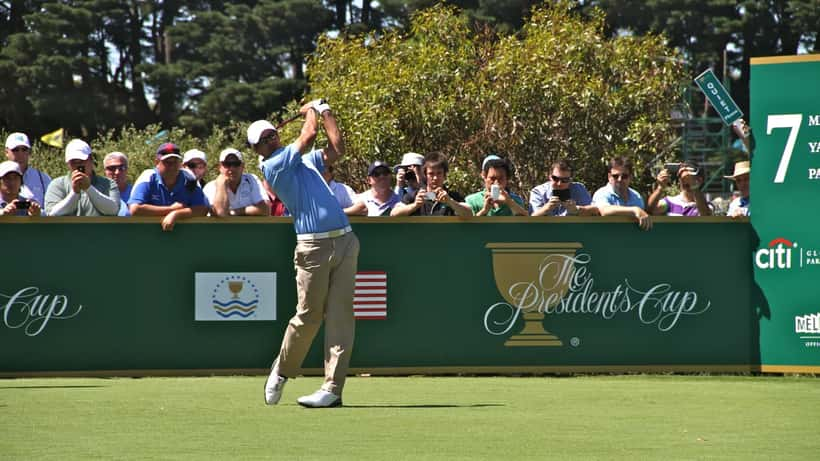
The 2026 Presidents Cup is running from 24 to 27 September at Medinah Country Club's famous No. 3 course in Medinah, Illinois — a layout that carries more Australian DNA than most. International team captain Geoff Ogilvy's design firm, OCM Golf, oversaw a full renovation of the course ahead of this event, incorporating design principles influenced by Australian links golf.
For the International team, the stakes this week are historic. Adam Scott, 46, is making his record-equalling 12th Presidents Cup appearance, matching Phil Mickelson for the most appearances in the tournament's history. Min Woo Lee, 27, arrived at Medinah on the back of one of the best seasons of his career, bringing the kind of free-swinging, aggressive birdie-hunting golf that makes him appointment viewing in Australia.
The event is broadcast live in Australia on Fox Sports and Kayo, pulling early-morning audiences before work across every Australian time zone. Golf Australia reported a 22% surge in tee time reservations in the weeks surrounding the 2019 Presidents Cup at Royal Melbourne. With Scott and Lee among the International team's most prominent performers in 2026, industry observers expect a comparable or larger participation uptick in late September and October — even though this event is hosted overseas.
That enthusiasm is welcome. The injury pattern it produces is not.
Why Golf Hurts More Than It Looks
Sports medicine professionals and physiotherapists who treat recreational golfers consistently identify three anatomical structures that carry the most injury risk: the lumbar spine, the medial elbow, and the rotator cuff.
Golf places compressive forces on the lumbar spine exceeding 700 kilograms at the moment of impact, according to research published in the British Journal of Sports Medicine. For a golfer who has been largely sedentary between sessions, the paraspinal muscles and stabilising ligaments are poorly conditioned to handle that load repeatedly across 18 holes. Acute lower back pain is the most common golf injury presenting to Australian general practice, and it is significantly more likely when a player suddenly increases their playing frequency.
Medial epicondylitis — golf elbow — follows a different but equally predictable pathway. It is an overuse injury driven by cumulative loading of the forearm flexor tendons at their attachment on the medial epicondyle. A golfer who plays twice per week during the regular season, then plays five rounds in one week after watching the Presidents Cup final, applies a load their tendons have not been progressively prepared for. The inflammatory response typically begins during play and becomes acutely symptomatic 24 to 48 hours later, presenting as inner-elbow pain that worsens with gripping and resists quick resolution.
The shoulder rounds out the clinical picture. The rotator cuff — four muscles stabilising the glenohumeral joint — handles significant eccentric loading throughout the golf swing, particularly in the lead arm at impact and during the follow-through. In golfers over 50, SLAP tears (superior labrum anterior to posterior lesions) are disproportionately common. They typically develop in players who dismiss early warning signs — a clicking or catching sensation in the shoulder during the backswing — and continue playing through them.
What Adam Scott's Swing Actually Requires
Scott's golf swing is one of the most studied in professional sport. Its arc is long and fluid; its tempo appears almost effortless from the broadcast cameras. That appearance is the product of decades of targeted physical preparation — not a baseline any recreational player should assume they share.
Scott works year-round with fitness and medical professionals to maintain the specific hip flexor flexibility, thoracic rotation range, and posterior chain strength that his swing demands. Without those physical prerequisites, attempting to replicate his backswing length or hip drive creates disproportionate stress on the lumbar spine and sacroiliac joints.
The Australian Physiotherapy Association (APA) estimates that golf accounts for approximately 17,000 physiotherapy consultations in Australia each year, with the majority of presentations involving players over 45. A significant portion of those consultations follow events that spike recreational participation — majors, the Presidents Cup, the Australian Open.
A physiotherapist or GP sports medicine physician can conduct a pre-golf injury screen in 30 to 45 minutes. The assessment typically covers thoracic mobility, hip rotation range, shoulder impingement testing, and lumbar stability. The output is a short, targeted home-exercise program designed to address the individual vulnerabilities identified. For golfers who have noticed any recurring stiffness, clicking, or forearm tenderness after play — particularly those over 45 — this type of screen is the single most cost-effective step available before increasing playing frequency.
For more on Adam Scott's earlier injury history and what it reveals about golf mechanics, this piece on his back rehabilitation journey provides useful clinical context.
A Concrete Case: One Long Weekend, One Injury
Consider a 53-year-old male golfer based in outer-northern Brisbane. He plays an average of two rounds per month across the golf season — approximately 16 to 18 rounds per year. Watching Adam Scott play at Medinah on Saturday morning, he books four rounds for the following long weekend: Friday afternoon, Saturday morning, Sunday morning, and a twilight round on Monday.
That schedule shifts his weekly playing frequency from approximately 0.5 rounds per week to 4 rounds across 4 days — an 8× load increase above his established baseline.
By Sunday morning, his lower back is stiff. His medial forearm is tender on grip. He plays through both. On Monday, swinging from an awkward uneven lie in a fairway bunker on the 11th hole, he feels a sharp pull in the left side of his lumbar spine that forces him to pick up his ball and walk off the course.
The physiotherapy and GP assessment that follows diagnoses a lumbar facet joint irritation with associated multifidus muscle strain. Out-of-pocket treatment costs in a standard Australian private health extras scenario typically range from $600 to $1,200 for a moderate back strain over 6 to 10 sessions, depending on the individual's extras cover level. Recovery time involving restricted activity generally runs 3 to 6 weeks — during which golf is contraindicated.
If the same golfer had built toward that long-weekend schedule progressively — adding one extra round per week across three weeks before the long weekend — the cumulative load increase would have remained within his tissue tolerance. A single 40-minute pre-season physiotherapy screen, costing approximately $100 to $160 out-of-pocket in most Australian metropolitan areas, could have identified his lumbar instability risk and provided the three-exercise home program (hip flexor stretching, bird-dog, glute bridge) needed to address it.
Prevention cost: $100 to $160. Treatment cost: $600 to $1,200, plus 3 to 6 weeks off the course.
Warning Signs That Warrant a Consultation Now
For recreational golfers who want to play more golf in the coming weeks — and there will be many — the following signs indicate that a health professional consultation should happen before the next round, not after:
- Lower back pain that begins during a round and persists for more than 24 hours afterwards
- Inner elbow tenderness that worsens with gripping a club or turning a door handle
- A clicking or catching sensation in the shoulder during the backswing
- Hip tightness that limits rotation and causes you to compensate through the lower back
- Any symptom that you have been "playing through" for more than two consecutive rounds
Sports medicine and physiotherapy professionals on Expert Zoom can conduct telehealth or in-person assessments to determine what level of play is appropriate for your current physical condition.
Sports Medicine Australia, the country's peak body for sports medicine practice, provides detailed clinical guidance on recreational sport injury prevention and the appropriate thresholds for seeking professional advice at sma.org.au.
Play More Golf — But Play It Safely
The Presidents Cup 2026 is a rare and exceptional week for Australian golf. Adam Scott's 12th appearance is historic. Min Woo Lee's attacking play at Medinah is exactly the kind of golf that makes new players pick up the sport and brings lapsed players back to the course. Geoff Ogilvy building an International team capable of challenging the United States on US soil adds a strategic storyline that will keep Australian golf fans engaged through Sunday's singles.
The right response to all of that is to book a tee time. The smart response is to book a tee time and, if you haven't played consistently this year or are planning a significant increase in rounds, spend 40 minutes with a physiotherapist or sports medicine GP first. The conversation will either confirm you're ready to go — or save you several months and several hundred dollars in injury management.
This article is for general informational purposes only and does not constitute medical advice. If you are experiencing pain or injury symptoms, consult a qualified physiotherapist, sports medicine physician, or GP before returning to physical activity.
Australia has been here before with the Presidents Cup. In 2019, the Royal Melbourne crowds and the Internationals' dramatic last-day surge generated the biggest participation spike Australian golf had seen in a decade. This time, Scott and Lee are carrying that flag from Medinah. The clinical pattern that follows is the one sport health professionals know well. It does not have to include you.
