 Andrew Thompson
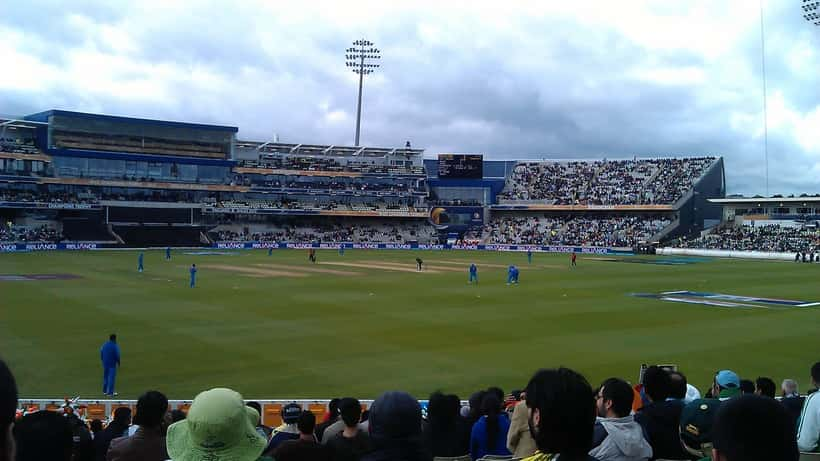
India swept Pakistan by 61 runs in the most watched cricket fixture of the ICC Men's T20 World Cup 2026, played on February 15 at R. Premadasa Stadium in Colombo. Ishan Kishan's blistering 77 off 40 balls powered India to 175-7, before Pakistan collapsed to 114 all out in 18 overs — a result that delivered massive payouts to Australian bettors and, for some, triggered legal headaches with bookmakers that are still unresolved months later.
This article is informational and does not constitute legal advice. Gambling laws vary by state and territory; consult a qualified legal professional for advice specific to your situation.
Australia's Biggest Cricket Betting Event of 2026
The PAK vs IND T20 World Cup 2026 Group A fixture was, by most accounts, the single most-bet cricket event in Australian history. Industry monitoring groups estimated more than AUD $200 million was wagered across licensed Australian operators — eclipsing even the Ashes Test and the 2023 Cricket World Cup final in terms of same-day volume.
What made it legally unusual was the pre-match political uncertainty. Pakistan initially signalled a boycott of the fixture over unresolved bilateral tensions with India, triggering an ICC-brokered diplomatic process that involved interventions by Sri Lanka's President Anura Kumara Dissanayake and senior PCB officials. Pakistan's final confirmation to play came just 72 hours before the February 15 start — and those 72 hours created a legal grey zone for Australian punters who had already placed bets.
As a result of this compressed timeline, many operators applied "pending confirmation" clauses to bets placed before Pakistan's official confirmation. Some bets placed at Pakistan odds of 2.35 or higher were voided as "odds errors." Others were re-graded to post-confirmation prices. That is where large-scale legal disputes began, and they offer a clear window into your rights as an Australian bettor.
You can explore how similar issues played out in the AFG vs IND 2026 cricket betting cases to understand the precedents already being cited by legal practitioners.
What Australian Law Actually Covers
Sports betting in Australia is governed by a patchwork of federal and state laws. At the federal level, the Interactive Gambling Act 2001 (IGA) regulates online wagering services. Individual states issue the operating licences — Northern Territory's Racing Commission, for instance, licenses most major online operators including Sportsbet, Ladbrokes, and Neds.
Two key legal protections apply directly to Australian bettors.
Winnings are not taxable for recreational bettors. The Australian Taxation Office (ATO) does not treat gambling proceeds as assessable income for casual punters. If you placed a $500 bet on India at 1.65 and collected $825, that $325 profit carries zero income tax obligation. The exception is professional gamblers — those who systematically wager, maintain betting records, and derive a substantial portion of their income from wagering — who may have a tax reporting obligation. The ATO examines conduct and frequency, not just dollar amounts, when making this determination.
Operators have mandatory dispute obligations. Every licensed Australian bookmaker must operate an internal dispute resolution (IDR) process. Under the National Consumer Protection Framework (NCPF) for online wagering — which came into full effect in 2019 — operators must acknowledge disputes within specified timeframes. Failure to comply is a licensing breach reportable to the Australian Communications and Media Authority (ACMA). A parallel set of IDR obligations applies under Australian Consumer Law (schedule 2 of the Competition and Consumer Act 2010), which prohibits misleading conduct in the supply of services.
For context on similar disputes during the IPL 2026 betting season — which involved many of the same operators — see this related analysis of IPL 2026 Australian betting rights.
A Concrete Case — The $3,500 Dispute That Went to the Regulator
Consider the following scenario, which closely mirrors disputes lodged with state gambling regulators following the February 2026 fixture.
A Melbourne-based punter placed AUD $3,500 on India to win the PAK vs IND T20 World Cup match, accepted at odds of 1.62 on February 13 — two days before the match and before Pakistan's official confirmation was issued. At those odds, a winning bet would return $5,670 (profit of AUD $2,170).
After India won by 61 runs, the bettor attempted to withdraw the full $5,670. The operator placed a 72-hour hold on the withdrawal, citing "unusual betting activity patterns" — a provision permitted under Australia's Anti-Money Laundering and Counter-Terrorism Financing Act 2006, which requires operators to flag and review large or unusual transactions.
Here is the if/then breakdown that applies to this situation:
- If the AML review finds no concerns → the operator must release the full $5,670 within the review window. Under the NCPF, AML review processes cannot be used as a pretext to indefinitely withhold legitimate winnings.
- If the operator claims the 1.62 odds were an "obvious error" → they must demonstrate this in writing. A 1.62 line for India against Pakistan in a T20 World Cup fixture is commercially reasonable; it would fail the "manifestly incorrect" test applied by most state gambling regulators.
- If the IDR process does not resolve the dispute within 45 days → the bettor can escalate to their state gambling regulator (Liquor & Gaming NSW, Victorian Responsible Gambling Foundation, or Racing Queensland) or, for operators licensed in the Northern Territory, to the NT Racing Commission.
- If the regulator upholds the complaint → the operator can be required to pay the full winnings plus a compensation component for the delay and distress caused.
The limitation period for pursuing a wagering contract dispute through Australian civil courts is six years from the date of the original bet. Most legitimate disputes are resolved well before that stage — but the window matters if an operator has closed or restructured.
Responsible Gambling Obligations and What Operators Must Not Do
The NCPF introduced in 2019 goes beyond dispute resolution. These obligations directly affect how operators must treat customers on high-volume events like PAK vs IND.
Under the NCPF, every licensed online bookmaker operating in Australia must provide a self-exclusion tool that takes effect within 24 hours of a request. They must allow customers to set binding deposit limits and — critically — must not send unsolicited betting promotions or bonus offers to customers who have activated those limits. They must also issue monthly activity statements to customers who have not set deposit limits.
These are not voluntary guidelines. They are licensing conditions. According to ACMA's online gambling compliance monitoring reports, breaches of NCPF bonus-offer restrictions for limited accounts were the most common category of bookmaker non-compliance in recent audits.
If a bookmaker sent you a PAK vs IND promotional offer after you activated a deposit limit, or if you were not allowed to close your account within 24 hours of requesting it, the operator may be in breach of their licence. You can report this directly at acma.gov.au.
The Accumulator Problem — Multi-Leg Bets and Voided Legs
A further complication arose for Australians who included PAK vs IND as a leg in multi-bet accumulators. Several operators applied different settlement rules to accumulator legs versus single-game bets.
The core legal question: when an operator voids one leg of a five-leg accumulator (citing odds error or pending confirmation), does the entire multi-bet collapse, or is only that leg removed?
Australian Consumer Law prohibits misleading conduct in the supply of services. If an operator did not clearly disclose, at the point of bet acceptance, that pending-confirmation events could be voided retrospectively, that constitutes a potentially misleading omission — regardless of what is buried in a 45-page terms and conditions document linked from the footer. There is a meaningful legal distinction between a term that is disclosed and one that is technically present but not practically communicated.
Legal practitioners are now applying this logic to PAK vs IND accumulator disputes across multiple states, with mixed outcomes at the IDR stage — and escalating numbers of referrals to state regulators.
When to Consult a Legal Expert
PAK vs IND is the kind of fixture where even small legal ambiguities can represent thousands of dollars. If your bookmaker withheld your winnings, voided your accumulator leg without a clear contractual basis, or restricted your account after a winning run, you have options beyond accepting the operator's decision.
A consultation with a legal expert in consumer protection or gaming law can help you:
- Determine whether your operator followed the NCPF's IDR timeline requirements
- Challenge an odds-error void that lacks documented justification
- Understand your rights if an account was suspended or closed after winning
- Assess whether an accumulator re-settlement was consistent with disclosed terms
ExpertZoom connects you with verified legal professionals across Australia who specialise in consumer and sports betting law. A single consultation can clarify whether your claim is worth pursuing beyond the regulator stage — and potentially recover winnings you may have assumed were gone.
