 Andrew Thompson
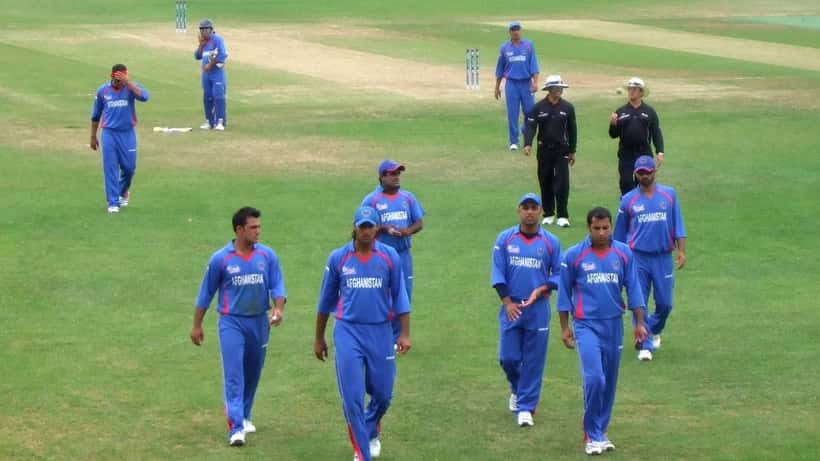
Millions of Australians are watching as Afghanistan clashes with India in what has become one of cricket's most compelling rivalries in 2026. But while the action unfolds on the pitch, a parallel game is being played in TABs, online platforms, and backroom punting groups — and the legal lines are far from clearly drawn. If you have placed a bet on this series or plan to, there are several Australian legal realities worth understanding before you act.
Why the AFG vs IND Series Is Capturing Australian Attention
Cricket between Afghanistan and India has shifted dramatically in the past decade. Afghanistan, once a cricketing minnow, now consistently challenges India's top-order batsmen. Their spin attack — led by world-class wrist spinners — has unsettled Indian line-ups at ICC events and bilateral series alike.
For Australian fans, the appeal is real: these are high-scoring, unpredictable matches where results are never guaranteed. Betting markets have responded accordingly. According to the Australian Communications and Media Authority (ACMA), Australians collectively wagered over $3.2 billion on cricket-related markets during the 2025–26 season, a figure that continues to climb with each high-profile international series.
That growth brings legal exposure — both for casual bettors and for anyone promoting or facilitating wagers through social media, group chats, or informal "tipping comp" networks.
How Australian Sports Betting Law Actually Works
Australia's interactive gambling framework sits under the Interactive Gambling Act 2001 (Cth), as amended significantly by the 2017 reforms. The core rule is straightforward: it is legal for licensed Australian bookmakers (such as Sportsbet, Ladbrokes, PointsBet, and TAB) to accept bets on cricket from Australian residents. What generates legal risk is everything around the edges.
Unlicensed operators remain illegal. If you use an offshore platform that is not licensed under Australian law, you are accessing an illegal gambling service. While enforcement against individual punters is rare, the platforms themselves face substantial penalties — and your funds may have no legal protection if a dispute arises.
In-play betting on cricket has specific restrictions. Since 2017, interactive (online) in-play betting on cricket is prohibited in Australia, except via telephone. You cannot legally tap your phone to place a live bet as a wicket falls — you must call the bookmaker. This surprises many first-time bettors. The rule applies to matches played anywhere in the world, including AFG vs IND games hosted in the UAE or India.
Advertising restrictions are tightening. The government's 2023 review led by Senator Perin Davey recommended phasing out almost all gambling advertising during sport broadcasts. While full legislative implementation is still rolling out, several broadcasters now impose voluntary blackout periods. If you run a tipping group on social media and accept payment (even informally), you may be operating a gambling service that requires a licence.
The Legal Opinion That Matters: What an Australian Lawyer Would Say
A lawyer advising an Australian cricket fan today would flag two primary risk areas: tax and undeclared winnings, and unlicensed betting facilitation through social media.
On tax: Australia technically does not tax gambling winnings from recreational punters, because gambling is classified as a hobby rather than income. However, if you are demonstrably systematic — you use data analytics, bet with regularity, and profit consistently — the ATO has the discretion to treat your winnings as assessable income. One Federal Court case from 2024 found that a punter who used algorithmic tools to place cricket bets was running a "gambling business" and owed income tax on $184,000 in net winnings. That decision has made tax lawyers cautious about giving blanket reassurances.
On group betting: WhatsApp and Facebook cricket tipping groups where participants contribute money are legal informally under the Charitable Fundraising Act exemptions — but only if the pool is not run for profit and does not exceed defined thresholds. A group organiser who skims a fee for administration, or who runs multiple concurrent pools, may be in breach of state gaming laws.
Concrete Case: The $200 Tipping Competition That Became a Legal Problem
Consider this realistic scenario: a Sydney cricket fan — call them Alex — organises an AFG vs IND match tipping competition among 18 colleagues. Each person contributes $20 (total pool: $360). Alex charges a $5 admin fee per person for running the platform, totalling $90. The winner receives $270.
Under New South Wales law, this is likely a lottery or trade promotion — and Alex has probably just run an unlicensed promotional lottery. The Lotteries and Art Unions Act 1901 (NSW) requires that no fee or levy be charged to participants in a private competition where a prize is awarded. The $5 "admin fee" crosses that line.
If/then breakdown:
- If Alex charges no admin fee and the full pool ($360) goes to the winner → generally permissible as a private social betting arrangement
- If Alex takes any cut, even for "platform costs" → likely an unlicensed lottery; potential fine up to $11,000 under NSW law
- If Alex runs this on a public Facebook group (open membership) rather than a private closed group → the "private social betting" defence disappears entirely under the Act
The dollar amounts are small, but the legal mechanism is real. According to NSW Fair Trading guidance updated in March 2026, five such operators were cautioned and two were fined during the 2025–26 cricket season. The AFG vs IND series, drawing higher-than-usual engagement from diaspora communities in Western Sydney, has already prompted new ACMA monitoring alerts for that region.
For anyone in this situation, a 30-minute consultation with a gaming lawyer — or a free call to NSW Fair Trading — would clarify exposure before the next match.
Practical Implications for Australian Cricket Fans in 2026
Use only ACMA-licensed bookmakers. The ACMA publishes an updated list at acma.gov.au of all licensed interactive wagering service providers. Offshore platforms not on this list are illegal.
Avoid in-play online betting on cricket. If you want to bet while the match is live, call the bookmaker. Using the app for in-play cricket wagers exposes the operator, and ACMA is increasingly targeting platforms that facilitate this.
Know the tipping-pool rules in your state. NSW, Victoria, and Queensland each have different thresholds for "private social betting" arrangements. If your group exceeds a few hundred dollars or you charge any fee, consult a lawyer.
Keep records if you are a regular bettor. If the ATO ever questions whether your gambling is a "business," documentation of casual recreational intent (varied stakes, multiple sports, no systematic strategy) is your primary defence.
For Afghan-Australian community leaders organising match-viewing events: fundraising at events that include raffles or sweepstakes linked to the cricket match may require a charitable gaming permit. Check with your state's gaming authority before the event, not after.
What to Do Next
The intersection of cricket excitement and Australian gambling law is more complex than most fans realise — especially as match formats, diaspora audiences, and digital platforms all grow simultaneously. If you have specific questions about your own situation — whether that's a tipping competition you run, winnings you have not declared, or a dispute with an offshore bookmaker — an Australian lawyer with gaming law expertise can provide a clear, personalised answer.
Expert Zoom connects Australians with licensed legal experts who handle gaming law, consumer disputes, and tax exposure. An initial consultation is available online, with no obligation to proceed.
This article provides general legal information only and does not constitute legal advice. Individual circumstances vary. Readers with specific situations should consult a qualified Australian legal practitioner.
