 Olivia Miller
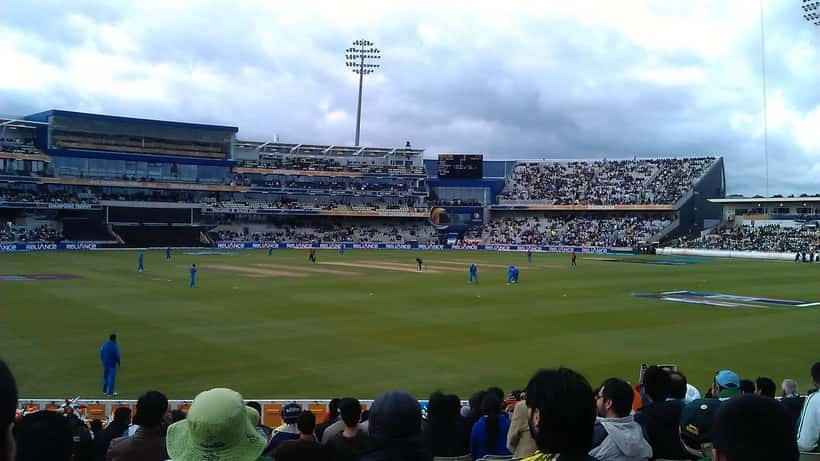
The roar that swept through living rooms across Sydney, Melbourne, and Brisbane on 15 February 2026 was not merely celebration. When Ishan Kishan's 77 off 40 balls helped India post 175/7 against Pakistan at the R Premadasa Stadium in Colombo, then watched Pakistan collapse to 114 all out for a 61-run defeat, millions of Australian residents with roots in the subcontinent experienced something far more than sport. For many, it was a physiological event — elevated heart rate, surging cortisol, and for a significant number, symptoms that warranted medical attention.
Australia is home to one of the world's largest South Asian communities. The Indian-born resident population exceeded 800,000 at the last census, with a Pakistani-Australian community surpassing 100,000 and growing. When these two nations meet on a cricket field, the combined Australian viewership approaches two million people, and that number does not capture the emotional intensity each of those viewers brings to the match.
What Made the T20 World Cup 2026 Clash Different
The ICC T20 World Cup 2026 Group A fixture between India and Pakistan was, by February 15, already the most talked-about match of the tournament — and it very nearly did not happen. Pakistan had initially indicated it would not participate in the fixture before a resolution was reached, adding a layer of political tension that reverberated through diaspora communities in Australia for weeks beforehand.
The match itself was emphatic. India controlled both innings. Pakistan's reply never threatened the target and the margin — 61 runs — was decisive. For Indian-Australian fans, it was a moment of exhilaration. For Pakistani-Australian fans, the defeat carried additional weight given the controversy that preceded it.
For Australian GPs and mental health practitioners treating patients from both communities, the days that followed told a familiar story.
The Physiological Reality of High-Stakes Sports
Sports rivalry stress is a documented clinical phenomenon, and the India-Pakistan cricket match sits at the extreme end of the spectrum. Watching a high-stakes sporting event triggers the same physiological stress pathway as a genuine perceived threat. The hypothalamic-pituitary-adrenal axis releases cortisol and adrenaline. Heart rate can rise by 30 to 40 beats per minute. Blood pressure can spike by 15 to 20 mmHg in individuals already managing hypertension — enough to move a borderline patient into a range requiring clinical attention.
A study published in JAMA Internal Medicine examining cardiac event triggers found that major international cricket and football fixtures were associated with measurable increases in emergency cardiac presentations among diaspora communities in the 48 to 72 hours following high-tension matches.
The India-Pakistan rivalry is, by almost every metric, the highest-tension fixture in international cricket. It carries decades of geopolitical history, national identity, family loyalty, and social pressure into every over. Research by the University of Queensland's sports psychology department has highlighted that fans whose sense of national identity is strongly tied to a team show cortisol responses during key matches comparable to responses recorded in competitive athletes — not passive spectators.
What Australian Doctors Are Observing After Big Matches
GPs and mental health practitioners in South Asian community centres across Melbourne, Sydney, and Brisbane report a consistent pattern in the weeks following India-Pakistan fixtures. The effects fall into three main categories.
Cardiovascular impact is the most immediate concern. Older fans with pre-existing conditions — hypertension, arrhythmia, and early-stage heart disease — are most at risk. According to data from the Australian Institute of Health and Welfare, approximately 1.3 million Australians live with heart disease, and a disproportionate number of first-generation South Asian immigrants fall into high-risk cardiovascular categories due to genetic predisposition and lifestyle factors. The emotional intensity of the India-Pakistan match is a genuine trigger event for this group.
Sleep disruption compounds the physiological impact. The February 2026 match kicked off at 9:30 AM AEDT, which meant Australian fans watched live during business hours — but post-match social media engagement, family phone calls to the subcontinent, and the adrenaline comedown following a result meant many supporters reported 48 to 72 hours of disrupted sleep patterns. Sleep deprivation in cardiovascular patients is independently associated with elevated blood pressure and increased arrhythmia frequency.
Mental health effects for losing supporters are less often discussed but clinically real. For Pakistani-Australian fans, the combination of the 61-run defeat and the backdrop of the pre-match controversy produced what mental health practitioners describe as compound loss — a sporting setback layered over political grievance and community identity stress. Research on sports-related mood disruption consistently shows that fans with high national identity attachment can experience measurable declines in mood, concentration, and interpersonal functioning for up to a week following a significant loss.
A Concrete Case: When the Match Becomes a Clinical Moment
The profile of the patient most at risk from a high-stakes cricket fixture is specific enough to be clinically useful.
Consider a composite case drawn from the GP presentations that followed the February 2026 match. Amir is a 54-year-old Pakistani-Australian from Parramatta with documented Stage 1 hypertension, managed with a low-dose ACE inhibitor. His baseline resting blood pressure sits around 138/88 mmHg — controlled, but with limited margin.
On the morning of 15 February 2026, Amir watched the match live with his two adult sons and several neighbours. Pakistan's collapse from 55/2 to 114 all out unfolded over 90 minutes. His smartwatch recorded a peak heart rate of 122 bpm during the final wickets. The post-match atmosphere in the room was subdued, then escalating — argument about the boycott, about the umpiring, about selection decisions. Amir ate heavily, had two cups of tea, and did not go to bed until 1:30 AM.
The measurable consequence: At his next GP visit 12 days later, Amir's blood pressure read 162/98 mmHg — a spike of approximately 24/10 mmHg above his managed baseline. His GP noted the pattern in his records: the same dynamic had occurred following the 2024 T20 World Cup.
The if/then threshold that matters: If your resting blood pressure is above 130/80 and you have any cardiac history, a reading of 162/98 mmHg during or after a high-emotion event exceeds the threshold for a same-day medical assessment. Smartwatch alerts are increasingly capturing these spikes in real time — but only help if the patient acts on them rather than dismissing the reading as "just the cricket."
The cost of not acting: Sustained hypertensive episodes, even brief ones, increase the cumulative risk of stroke and cardiac events. For Amir — and for the estimated 40,000 to 60,000 South Asian-born Australians managing hypertension — building a match-day management plan with their GP before the next high-stakes fixture is a clinically meaningful step, not an overreaction.
A Practical Guide for Australian Fans Before the Next Fixture
The India-Pakistan cricket rivalry will produce more high-stakes matches. With T20 World Cup knockout fixtures and bilateral series scheduled through 2026 and 2027, the opportunity to prepare — rather than react — exists now.
Before a big match: If you manage hypertension, diabetes, or any cardiovascular condition, discuss upcoming high-emotion events with your GP. Review your current medication plan. Confirm what blood pressure thresholds should prompt you to seek same-day care. The WHO cardiovascular disease fact sheet outlines the global risk landscape and the specific triggers — stress, disrupted sleep, and alcohol — that compound heart disease outcomes.
During the match: Take breaks during overs. Stand and move. Limit caffeine and alcohol — both amplify the physiological stress response. If you're using a health monitoring device, treat its alerts as meaningful data rather than inconvenience.
After the match — if your team lost: Give yourself permission to disengage from social media for 12 to 24 hours. High-volume post-match commentary, particularly content that relitigates pre-match controversies, extends the stress response beyond the sporting event itself. Disrupted sleep following an emotionally charged match is normal; three or more nights of significantly disrupted sleep is worth raising with a practitioner.
Seek same-day medical advice if you experience: chest tightness or pressure, palpitations lasting more than 3 minutes, blood pressure readings above 160/100 mmHg, shortness of breath disproportionate to activity level, or severe anxiety that does not settle within two hours of the match ending.
Bringing It Together: Cricket, Community, and Preventive Care
The Pakistan vs India cricket fixture is a cultural institution for South Asian Australians — and increasingly, for mainstream Australian cricket culture as well. Its intensity is not a problem to be solved. But for the hundreds of thousands of Australians in elevated-risk health categories, treating it as a clinical event — one that can be prepared for, managed, and monitored — is the difference between a memorable sporting occasion and a preventable health crisis.
A short telehealth consultation with a GP through Expert-Zoom's Health specialists can produce a personalised match-day protocol in under 30 minutes. For mental health support following a difficult sporting result, the Beyond Blue support line is available 24/7 at 1300 22 4636.
This article is for informational purposes only and does not constitute medical advice. If you are experiencing chest pain, breathing difficulties, or a blood pressure reading above 180/110 mmHg, call 000 immediately.
