 Emily Turner
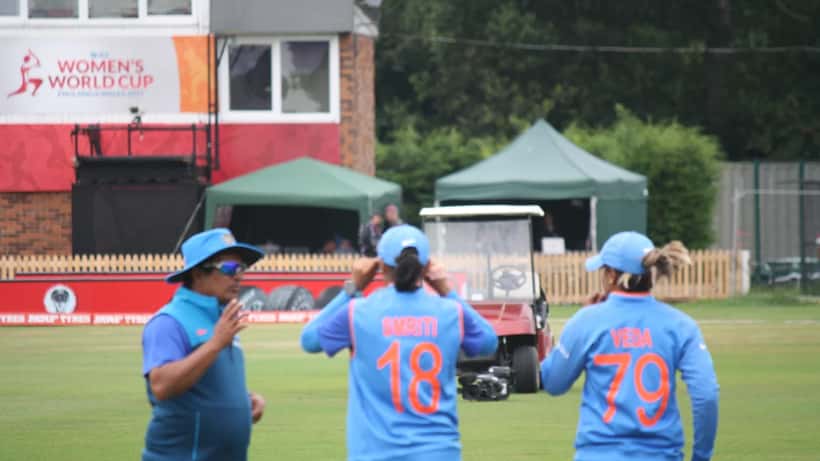
India women set a commanding 171-run target against Pakistan at Edgbaston, Birmingham on 14 June 2026, with Smriti Mandhana blazing 68 from just 44 balls in a Group 1 match of the ICC Women's T20 World Cup. Richa Ghosh contributed a devastating 34 from 17 deliveries as India posted 170/6 — leaving Pakistan chasing their most demanding target of the tournament.
The Physical Demands Behind That 170
What the scoreboard doesn't capture is the physiological story behind every T20 innings. Mandhana's knock demanded explosive bat-speed, micro-second reaction times, and the ability to maintain composure under the acute physical stress of high-stakes international sport. Richa Ghosh's clean striking — four fours and a six in 17 balls — required neuromuscular precision refined through thousands of hours of training.
For sports health professionals working with elite cricketers, T20 cricket has fundamentally changed the physical demands on the body. Unlike Test cricket — where recovery periods allow injury management — T20 tournaments compress high-intensity matches into short windows, elevating injury risk for both batters and fielders.
"The rotational forces in a T20 batter's swing are comparable to those in a professional golfer's drive," notes research from sports biomechanics studies. "Lower back stress, shoulder strain, and hamstring loading all spike during concentrated tournament play."
For Australian women playing club and social cricket — inspired by performances like Mandhana's at Edgbaston — understanding these injury dynamics is not just for professional athletes.
The Three Injuries Australian Cricketers Miss Until It's Too Late
Sports medicine practitioners across Australia report consistent patterns in recreational cricket injuries — most of which are preventable with early intervention.
1. Rotator cuff strain. The overhead throwing motion demanded in cricket fielding is one of the highest-risk movements in team sport. Many players feel a "twinge" that they dismiss, not realising that untreated micro-tears compound over a season. Persistent shoulder pain after fielding sessions warrants assessment — not rest and hope.
2. Lumbar stress fractures. Fast bowlers — even recreational ones — generate significant spinal loading in their delivery stride. Women fast bowlers are at elevated risk due to biomechanical factors including hip-to-shoulder ratios. A dull ache in the lower back that persists beyond three days after bowling should be assessed by a sports health professional.
3. Hamstring and adductor strains. Quick singles, diving stops, and explosive batting footwork load the posterior chain in ways that static stretching alone cannot address. The Australian Institute of Sport (AIS) publishes research on injury prevention protocols for field sports — protocols that translate directly to community cricket.
What Mandhana's Technique Teaches Us About Injury Prevention
Mandhana's batting is technically instructive beyond the scorebook. Her high elbow on the drive, weight transfer through the ball, and controlled follow-through are hallmarks of a technique that minimises injury risk while maximising power. Coaching clinics that emphasise technical foundations — not just hitting power — produce cricketers who play longer with fewer injuries.
For Australian youth players particularly, the timing of introducing high-intensity T20 match play matters. The AIS recommends sport-specific physical literacy programs before players enter competitive leagues — building the movement patterns that support joint health over a career spanning decades.
Pakistan's Chasing Challenge: The Science of Pressure and Performance
With Pakistan needing 171 from 20 overs, and falling to 75/4 after eleven overs mid-innings, the physiological toll on batters managing a high-pressure chase becomes apparent. Cortisol elevation — the body's stress hormone — affects fine motor control, decision-making speed, and physical coordination. It is why late-innings collapses in cricket are often not technical failures, but physiological ones.
Sports psychologists working with national cricket teams now treat pressure management as a physical discipline, not just a mental one. Breathing regulation, pre-ball routines, and interval recovery techniques are taught alongside batting mechanics. For Australian club cricketers who feel they "choke" under pressure, these same techniques — available through sports health practitioners — offer measurable improvement.
Australia's Women Cricketers: A Pathway to Expert Support
Australia's national women's cricket program benefits from world-class sports medicine infrastructure. But the pathway to that expertise is broader than many recreational players realise.
Beyond elite programs, Australian women cricketers at club level can access:
- Physiotherapists with sports specialisation listed through Cricket Australia's club affiliation network
- Exercise physiologists who design T20-specific conditioning programs
- Sports psychologists who work with performance under pressure
For cricketers in regional areas, telehealth consultations now connect players with sports health specialists who understand cricket-specific injury patterns — removing a barrier that once made rural sporting communities underserviced.
The Women's T20 World Cup at venues like Edgbaston also carries important health considerations for travelling Australian fans — from managing jet lag to accessing healthcare in the UK.
When to See a Sports Health Specialist
The Women's T20 World Cup is an ideal moment to assess your own cricket fitness. Consider seeing a sports health professional if you experience any of the following during or after play:
- Shoulder pain that persists more than 48 hours after fielding
- A "clicking" or "catching" sensation in the shoulder when throwing
- Lower back pain that radiates into the buttocks or thighs after bowling
- Hamstring tightness that does not resolve with stretching within a week
- Wrist or elbow discomfort after extended batting sessions
Early assessment prevents the majority of cricket-related injuries from progressing to chronic conditions. The players on the Edgbaston pitch today have entire medical teams tracking their load and joint health in real time. For Australian recreational cricketers, a conversation with a sports health expert is the accessible equivalent.
Whether you watched Mandhana's innings from a Birmingham grandstand or a lounge in Melbourne, the elite performances at the Women's T20 World Cup 2026 are a reminder of what the human body can achieve — and what it needs to sustain those achievements over a lifetime of sport.
This article contains general health information only. Please consult a qualified health professional for advice specific to your condition.
