 Andrew Thompson
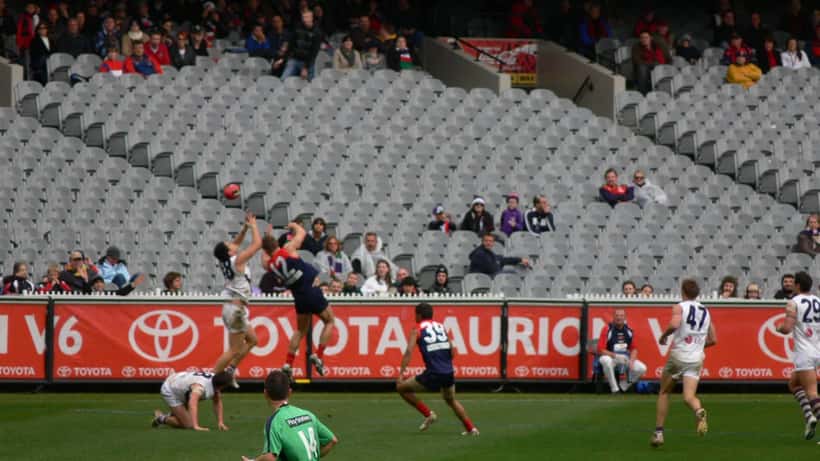
North Melbourne hosts Fremantle at Hands Oval in Bunbury on Saturday 6 June 2026, the first AFL Premiership Season fixture played at the regional Western Australian ground. With around 18,000 fans expected at a venue normally used for local Western Australian Football League games, the match raises a question few spectators ever think about until something goes wrong: what are your legal rights if you are injured at a regional AFL venue, and how do they compare to a major stadium?
The clash at the 1908-built community oval is part of the AFL's regional expansion push for 2026, and it tests insurance and duty-of-care frameworks that were originally designed for purpose-built stadiums like the MCG and Marvel Stadium.
A Regional Oval Hosting a Premiership Fixture
Hands Oval is the home of the South West Football League and ordinarily seats a fraction of an AFL premiership crowd. According to the City of Bunbury, the AFL has worked with the local council to install temporary seating, ticketing infrastructure and crowd-management plans for the Round 13 match. Tickets for the fully ticketed event are managed by Ticketmaster and the home club, with no general admission member scanning at the gate.
Smaller venues mean tighter sightlines, less crowd separation and different evacuation logistics than what AFL regulars are used to. None of those facts is a problem in itself — but they reshape the legal duty owed to ticket-holders.
What the Duty of Care Actually Looks Like
In Australia, when you buy a ticket to a sporting event, the venue operator and the home club owe you a non-delegable duty of care under the common law of negligence and under each state's civil liability legislation. For matches played in Western Australia, the Civil Liability Act 2002 (WA) governs how injury claims against occupiers are handled. The duty is to take reasonable steps to keep the premises safe for the activity advertised — in this case, attending a high-attendance professional football match.
According to Marsh, the broker that administers the Australian Football National Risk Protection Program, AFL-affiliated clubs are covered by a public liability policy that responds to third-party personal injury claims arising from negligence. Critically, the policy requires clubs not to admit liability without insurer consent and to refer every spectator claim to the insurer for instructions. That is true at the MCG and it is true at Hands Oval.
What differs at a regional venue is the standard of reasonableness. Courts assess negligence by asking what a reasonable occupier would have done in the circumstances. A community oval temporarily hosting 18,000 people is judged against the precautions a prudent organiser would take for that specific configuration — temporary stands, regional ambulance response times, parking pressure on local roads — not against the standard fitted-out stadium baseline.
Where Spectators Run Into Trouble
A solicitor experienced in Australian personal injury law can usually identify three problem areas at temporary or regional venues:
- Trip hazards from temporary infrastructure. Cable runs, marquee guy-ropes and modular bleacher steps cause more claims at pop-up sporting events than the permanent fixtures at established stadiums. Document the hazard immediately if you trip on one.
- Slower medical response. Bunbury Regional Hospital is roughly five minutes from Hands Oval, but on-ground first-aid capacity at a temporary AFL fit-out is not identical to a major-stadium medical room. If you suffer an injury that needs more than minor first aid, the timing and quality of treatment can later affect your damages claim.
- Confused ticket terms. Tickets sold through Ticketmaster for relocated AFL games still carry the AFL's standard conditions of entry, including limits on what you can bring (no folding chairs, no coolers) and the operator's right to refuse entry. Conditions of entry do not override the statutory duty of care, but they shape what is "reasonable" risk-taking by a spectator.
What to Do If Something Goes Wrong on Saturday
If you are hurt at the match — whether by a stray football, a slip on a wet temporary ramp, or an altercation — the practical steps a lawyer would suggest are unchanged from any other Australian sports venue. Report the incident on the day to the nearest event official and request the incident number. Photograph the location, take down witness names, and seek medical assessment even if symptoms feel minor.
Western Australia has a strict notification regime under the Civil Liability Act for personal injury claims, with limitation periods that generally require action within three years of the date of injury (and shorter periods for some pre-action notifications). The detail of those periods is exactly the kind of question a qualified solicitor will answer based on your specific circumstances, and engaging one promptly preserves your options.
For consumers worried about ticket-side issues — refund disputes, resale restrictions, last-minute cancellations — the Australian Competition and Consumer Commission sets out the consumer guarantees that apply under the Australian Consumer Law, including the right to a refund or remedy when a service is not delivered as promised.
The Broader Lesson for Regional AFL
The AFL's commitment to staging Premiership Season matches at regional grounds like Hands Oval, alongside fixtures in Cairns, Darwin and Tasmania, expands the league's footprint and brings top-tier football to communities that rarely host it. It also means a generation of spectators will attend AFL matches at venues without the medical, legal and infrastructure depth of a Marvel Stadium.
Most fans will go to Bunbury on Saturday, watch North Melbourne and Fremantle, and have a perfectly safe day out. For the small minority who do not, the legal framework that protects them is the same one that operates at every venue — but the practical application of "reasonable care" is shaped by the place you are sitting in. A short conversation with a personal injury or consumer-rights lawyer is cheap insurance if anything during the match leaves you with more than just a sore voice.
