 Emily Turner
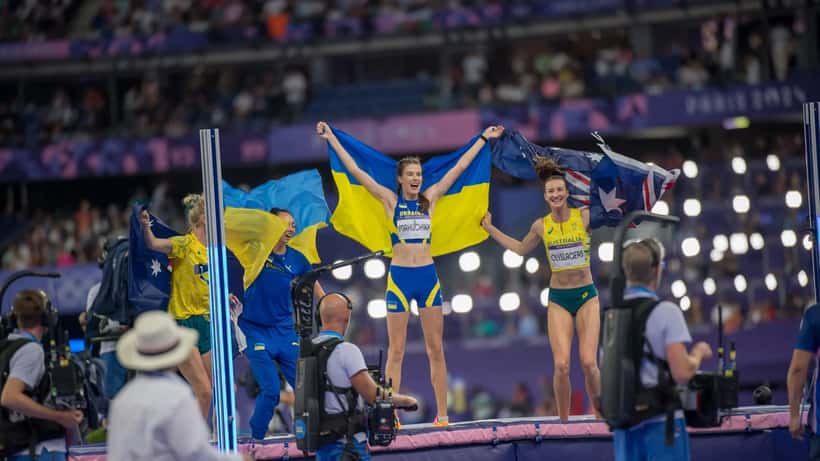
Nicola Olyslagers cleared 2.01m at the London Diamond League on 18 July 2026, defeating world record holder Yaroslava Mahuchikh on countback in one of the most compelling high jump performances of the athletics season. For Australian fans, it was a moment of celebration — but for anyone who has faced a serious sporting injury, it was something more: proof that with the right expert care, elite performance is possible on the other side of a devastating physical setback.
Olyslagers's win cannot be separated from her history. At the 2022 Birmingham Commonwealth Games, she tore a calf muscle in her jumping leg during the qualification round — what began as a tight sensation became a confirmed tear under medical assessment. She cleared the bar on her remaining qualification attempts but withdrew from the final on medical advice. The injury threatened to derail a career that was already operating at world-class level.
Instead, it became the foundation of her most extraordinary chapter.
A Season at the Very Top
The London result was Olyslagers's first clearance of 2.00m or above in the 2026 outdoor season. She entered the competition ranked number one in the world, holding a personal best of 2.04m set in August 2025 — a mark that places her among the greatest women's high jumpers in history.
Beating Mahuchikh — the Ukrainian who holds the world record at 2.10m — on countback at 2.01m is a result that would have seemed unthinkable during those anxious days in Birmingham four years earlier. Australian teammate Eleanor Patterson secured third place with 1.96m, making it a historic double for Australian athletics on English soil.
What makes the London result particularly striking is the speed of Olyslagers's 2022 recovery. After the Birmingham tear, she wrote publicly that returning to competition in Brussels just weeks later was "a miracle" given she had been cleared to run only days before the race. Standard rehabilitation for a calf muscle tear of that severity typically runs 8 to 12 weeks; Olyslagers returned in roughly half that time. She still reached the podium.
That recovery didn't happen by chance. It happened because she had access to expert-guided rehabilitation from day one.
What Elite Muscle Recovery Actually Looks Like
Elite athletes like Olyslagers don't navigate muscle tears through guesswork or rest alone. Their recovery involves a multi-disciplinary team: sports physiotherapists who assess tear grade and design rehabilitation progressions, exercise physiologists who manage load and return-to-sport testing, and sports medicine doctors who make the clinical call on when an athlete is safe to compete.
The Australian Institute of Sport describes this integrated approach as the benchmark for athlete care in Australia. It involves accurate injury classification — Grade I (minor tear), Grade II (partial tear), Grade III (complete rupture) — followed by a structured, evidence-based rehabilitation pathway tailored to the athlete and the specific injury site. Return to competition requires passing functional benchmarks, not just the absence of pain.
This framework is not exclusive to professionals. It is the evidence base for anyone who wants to return to sport safely, at any level. The critical variables are speed of assessment and quality of guidance in the first 48 to 72 hours.
The Parkrun Runner's Hamstring: A Concrete Case
Consider a 38-year-old Australian woman who tears a hamstring while sprinting during a Saturday morning parkrun event in Melbourne. The pain arrives sharply and immediately at the back of the thigh. She can still walk, but each stride produces a pulling sensation and a dull ache. She has no bruising yet — that often appears on day two or three.
If she decides to rest and see how it feels over the following week, the muscle fibres heal with disorganised scar tissue rather than aligned, functional muscle fibres. According to sports medicine research, untreated Grade II hamstring strains carry a re-injury rate of up to 34 per cent within the first year of returning to sport. The second tear typically takes longer to heal and carries a higher risk of a third.
If she sees a sports physiotherapist within 48 hours, she receives a clinical assessment of tear grade, an accurate prognosis (typically 4–8 weeks for a Grade II hamstring), and a structured return-to-run programme that addresses not just the tear site but the contributing factors — limited hip mobility, glute weakness, overstriding gait. Managed correctly, re-injury risk falls below 10 per cent.
The financial comparison is stark. A physiotherapy assessment in Australia runs approximately $90 to $120 for an initial consult, with a rehabilitation programme of 6 to 10 sessions typically costing $600 to $1,200 in total. Private health insurance partially covers this for most Australians with extras cover.
Compare that to the cost of surgical repair for a complete Grade III hamstring rupture — which ranges from $8,000 to $15,000 in the Australian private health system — or the broader cost of missing several months of activity due to a chronic re-tear cycle.
The if/then logic is direct: if you experience sudden, sharp, localised muscle pain during sport that alters how you move, then seek professional assessment within 48 hours — not next week, and not when the bruising spreads.
Why Australians Wait Too Long
Despite the country's deep sporting culture, a significant proportion of recreational athletes delay seeking help after muscle injuries. The reasons are predictable: "she'll be right" stoicism, uncertainty about whether the injury is serious enough to warrant a consultation, concern about cost, or the assumption that rest alone will resolve it.
Sports medicine clinicians consistently report seeing patients weeks or months after the original injury, at which point scar tissue has solidified and the rehabilitation timeline has doubled or tripled. In some cases, athletes who could have returned to sport in eight weeks are still symptomatic at six months.
Three warning signs that mean you should see a health professional immediately, not later: sudden, sharp pain during or after physical activity; visible swelling or bruising appearing within 24 hours; inability to bear weight or complete normal movement without significant pain. These are the hallmarks of a Grade II or III tear that will not resolve with rest and wishful thinking.
For Australians aged under 18, Sport Australia's Active Kids programme and school-based physiotherapy services provide entry points. For adults, a GP referral through Medicare can access physiotherapy services with a partial rebate under a Chronic Disease Management plan. Private sports medicine clinics are also widely available in Australian metropolitan and regional centres.
For elite and sub-elite athletes, the pathway that Olyslagers used — immediate clinical assessment, expert-guided staging, functional testing before return — is available. The question is whether recreational athletes are willing to access it.
Treating Your Body Like an Asset
Olyslagers's career since 2022 is an argument for a particular relationship with your own physical health: one that treats the body as an asset requiring expert stewardship rather than a machine that either works or doesn't.
At 29, she is performing at the absolute summit of her sport, four years after an injury that could have ended it. The difference between her trajectory and a career-ending outcome was not luck. It was accurate diagnosis, trusted professionals, structured rehabilitation, and a willingness to follow expert guidance even when it was difficult.
The athletes who avoid re-injury are not the ones with the toughest pain tolerance. They are the ones who invest early in professional assessment and follow the evidence.
For the millions of Australians who run, swim, play netball or AFL, or simply walk to keep healthy, that investment is available and affordable. It begins with not waiting.
If you've sustained a sudden muscle or tendon injury during sport, a health consultation with a sports physiotherapist or sports medicine doctor can provide an accurate grade assessment, personalised recovery plan, and a clear return-to-activity timeline. See our related guide on how elite athletes in Australia approach injury prevention for more evidence-based guidance.
This article provides general health information only. It is not a substitute for professional medical advice, diagnosis, or treatment. If you are experiencing pain or injury symptoms, consult a qualified health professional.
