 Chloe Anderson
Gout Gout Races Against the World — and Comes Sixth
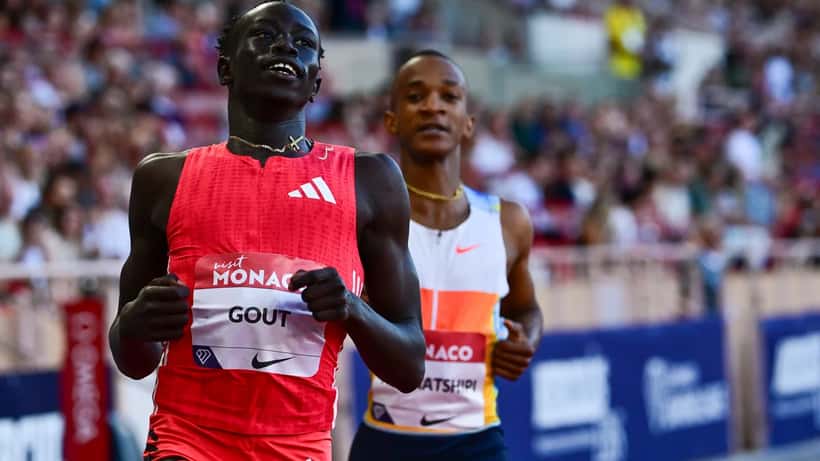
At 18 years old, on a cool June evening at Oslo's Bislett Stadium, Gout Gout lined up for his first-ever Wanda Diamond League race. The 200 metres. The crowd knew his name. The expectation was enormous. The result was not what Australia had hoped for.
Olympic champion Letsile Tebogo of Botswana won in 19.84 seconds on June 10, 2026, the only man to break the 20-second mark on the night. Gout Gout, unable to recover from a slow start, finished sixth in 20.60 seconds — nearly a full second outside his own world U20 record of 19.67 seconds set in Sydney in April. The result triggered immediate commentary about pressure, pacing, and the weight placed on elite young athletes before their bodies and minds are fully ready.
But beyond the race, Gout Gout's rise raises a question sports medicine practitioners across Australia are actively grappling with: what does pursuing world-record sprint speeds do to a teenager's body — and how can it be managed safely?
Who Is Gout Gout?
Gout Gout was born in November 2006 in Brisbane to South Sudanese refugee parents. In February 2026, at the Dane Bird-Smith Shield Meet, he set a new Australian U20 100 metres record of 10.00 seconds. Two months later, at the national senior championships in Sydney, he clocked 19.67 seconds for 200 metres — breaking the world U20 record previously held by Usain Bolt (19.93 seconds, set when Bolt was 17 in 2004).
In April 2026, Bolt himself publicly hoped the young Australian "has a strong support system around him" — a pointed reference to an athletics world littered with teenage prodigies who burned brightly before injury or burnout ended their careers prematurely.
The Physiology of Sprinting at 18
Elite sprinting is among the most physically demanding disciplines in sport. Over 200 metres, peak velocities exceed 11 metres per second, demanding near-maximal explosive output from the hamstrings, glutes, and hip flexors — while maintaining technical form under escalating metabolic stress in the final 60 metres.
At 18, Gout Gout's musculoskeletal system is still maturing. Growth plates — the cartilage zones at the ends of long bones where growth occurs — typically close between ages 17 and 25 in male athletes. Until closure, these plates are structurally weaker than the surrounding bone and significantly more vulnerable to stress fractures and overuse injury under high-load sprint training.
The Australian Institute of Sport acknowledges that young high-performance athletes face a fundamental tension: their performance potential frequently exceeds their physical readiness for the training volumes required to compete internationally. Bridging that gap safely is one of the most complex challenges in youth sports medicine.
Common Injury Risks for Young Sprint Athletes
Sports medicine practitioners identify several high-risk injury categories that parents, coaches, and young athletes should understand:
Hamstring muscle strains. The dominant injury in sprint sports at all ages. In adolescent athletes, the immaturity of muscle architecture extends recovery timelines and increases the risk of recurrence if return to full training is rushed.
Proximal hamstring apophysitis. Unique to adolescent athletes, this is inflammation of the hamstring's attachment point at the pelvis (ischial tuberosity), triggered by explosive sprint loading before the growth plate has fully fused. It produces deep buttock pain and is frequently misdiagnosed as a simple hamstring strain or referred pain.
Shin splints and tibial stress fractures. High-volume sprint training on synthetic track surfaces elevates risk of tibial stress injury. Left unaddressed, a shin splint can progress to a full stress fracture requiring months of rest.
Lumbar spine overload. The rotational forces generated at sprint speeds place high demands on the lower back. In young athletes still developing core strength and postural control, this can produce posterior element stress injuries and disc-related pain.
Sha'Carri Richardson's career has underscored that injury prevention is non-negotiable even for the most gifted sprinters in the world. The principles apply at every level of the sport.
The Psychological Pressure Problem
Gout Gout's Oslo debut was watched by a global audience that had been primed for something historic. He finished sixth. That gap between expectation and outcome — experienced publicly at 18 — creates psychological as well as physical risk that deserves serious attention.
Sports psychology research consistently shows that adolescent elite athletes are substantially more vulnerable to performance anxiety, burnout, and what practitioners call identity fusion — the conflation of sporting success with personal worth — than adult competitors. When a young athlete's value seems contingent on results, the pressure to perform can undermine the very foundation that makes great performances possible.
Usain Bolt did not accidentally choose the words "support system" when commenting on Gout in April. He was pointing at infrastructure: coaches, sports psychologists, family, management, and medical staff who can collectively absorb pressure that a teenager cannot carry alone.
What Australian Junior Sport Can Learn
Whether your child is a junior sprinter, a club swimmer, a school football player, or a competitive cyclist, the lessons from Gout Gout's story have practical applications:
- Training load increases should be gradual. No more than 10% per week is the widely supported benchmark in sports medicine. This applies to junior athletes as much as professionals.
- Pain during activity is not a badge of honour. Adolescent athletes are sometimes conditioned to push through discomfort. Any pain that persists beyond 72 hours, recurs in the same site, or worsens under load warrants a sports medicine assessment.
- Mental health support is part of the performance programme. High-performing young athletes benefit from access to sports psychologists. This is standard practice at the AIS and should be considered at state and club levels as well.
- Planned rest is a performance tool. Periodisation — structured rest phases built into a training calendar — supports long-term development. Rest weeks are not wasted training time; they are when physiological adaptation actually occurs.
Australia's 4x100m relay programme has shown what systematic youth development in sprint athletics produces across a full squad. Gout Gout is the headline — but the pipeline behind him matters as much as the individual.
When to Seek Specialist Help
If you are the parent, guardian, or coach of a young competitive athlete experiencing any of the following, a sports medicine consultation is appropriate:
- Recurring pain in the same muscle or joint across multiple training cycles
- Unexplained fatigue or decline in performance without a change in load
- Pain that persists or worsens beyond 72 hours despite rest
- A need for a structured, age-appropriate return-to-sport plan after injury
Sports Medicine Australia and the Australian Institute of Sport both provide pathways to practitioners who specialise in adolescent athlete health — accessing this expertise early can make the difference between a long career and a cautionary story.
Gout Gout will race again. At 18, the entire arc of his career lies ahead. How the people around him manage the next few years of his development will matter more than tonight's result in Oslo.
This article is for general informational purposes and does not constitute medical advice. For concerns about a young athlete's health or training load, consult a qualified sports medicine professional.
