 Emily Turner
Nick Kyrgios Wins First Match in 15 Months: What His Injury History Reveals About Athlete Recovery
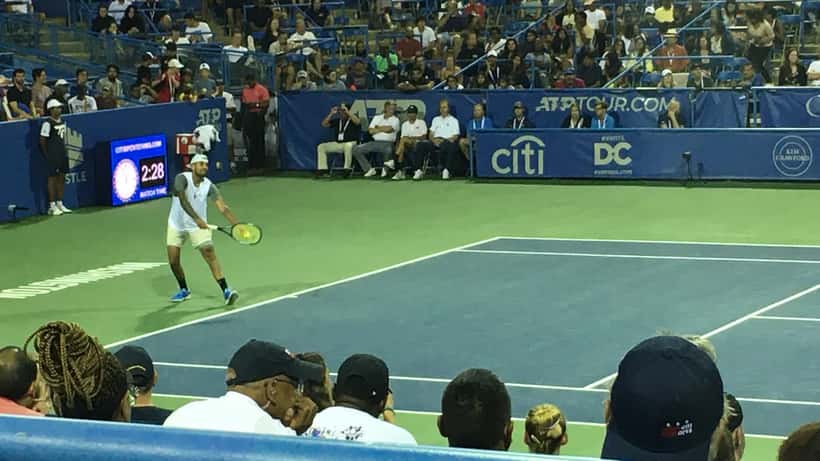
On 10 June 2026, Nick Kyrgios stepped onto the grass at the Stuttgart BOSS Open and beat Corentin Moutet 6-3, 6-4 in just 69 minutes. It was his first singles win in 15 months — and, for a player who endured four knee surgeries and a full wrist reconstruction, it felt like a minor medical miracle. But behind the scoreline lies a story that resonates far beyond professional tennis: when do sports injuries require specialist intervention, and what does a successful comeback actually look like?
A Career Interrupted by the Operating Table
Kyrgios, who turns 31 this year, has spent more time in rehabilitation rooms than on courts over the past three years. His injury list reads like a trauma ward catalogue: a wrist reconstruction, four separate knee surgeries, an abdominal tear at the 2025 Australian Open, and persistent shoulder pain throughout last year. At the lowest point, surgeons told him he might never play professional tennis again.
He entered Stuttgart on a wildcard and without an ATP ranking — a humbling position for a player who reached the 2022 Wimbledon final. Yet his serve statistics in that first-round victory were immaculate: 84% first serves in, zero break points conceded. The body had returned. The question is how.
What Four Knee Surgeries Actually Mean
The knee is one of the most complex joints in the body, housing the anterior cruciate ligament (ACL), medial collateral ligament (MCL), menisci, and patellofemoral cartilage. Athletes who require multiple surgeries on the same joint face compounding risks: scar tissue formation, altered biomechanics, and elevated risk of re-injury to adjacent structures.
Kyrgios's repeated knee procedures illustrate a pattern that Sports Medicine Australia describes as a "cascade effect" — where one structural repair changes loading patterns and places stress on previously unaffected tissue. According to Sports Medicine Australia, early specialist involvement can interrupt this cascade before it becomes a multi-year problem. The organisation recommends that athletes experiencing persistent pain beyond two weeks, swelling that does not resolve with rest, or instability during movement seek a formal assessment rather than self-managing.
For Kyrgios, the turning point appears to have been a more disciplined off-season in late 2025, combining surgical recovery with a structured return-to-play protocol supervised by his medical team.
The Warning Signs Athletes Too Often Ignore
The professional athlete's relationship with pain is complicated. Playing through discomfort is normalised — celebrated, even. But there is a critical distinction between muscle soreness, which resolves with recovery, and structural damage, which does not.
Sports medicine specialists identify four signals that warrant urgent professional evaluation:
Acute swelling within hours of injury. Swelling that appears rapidly — particularly in the knee, ankle, or shoulder — often indicates bleeding within the joint, which can signal ligament rupture or a serious cartilage tear.
A sensation of instability or "giving way." When a joint feels unreliable under load, it suggests ligamentous damage that passive rest will not repair.
Night pain that disturbs sleep. Pain that persists at rest and wakes a patient at night can indicate inflammatory conditions or structural problems requiring imaging.
Return of pain after apparent recovery. Kyrgios experienced this during the 2025 Australian Open when an abdominal strain emerged weeks after he had declared himself fit. Re-injury at the site of previous damage is a clear signal that the underlying healing process was incomplete.
Rehabilitation: What Kyrgios's Comeback Reveals
The Stuttgart performance suggests Kyrgios followed a structured rehabilitation model rather than simply waiting until he felt ready. Modern sports rehabilitation for complex multi-tissue injuries typically involves three phases.
The first is tissue healing — passive recovery, anti-inflammatory management, and gentle range-of-motion work. This phase cannot be rushed. Returning to explosive movement before tissue tensile strength is restored is the most common cause of re-injury in professional athletes.
The second is functional loading — progressive exercises that replicate sporting demands without the unpredictability of competition. For tennis, this means controlled serving, lateral movement, and directional changes, with load and speed increased incrementally.
The third is return-to-play criteria — objective benchmarks that must be met before competitive play. These include strength symmetry (the injured limb must be within 90% of the healthy side), proprioception testing, and psychological readiness assessments.
Australian readers can learn more about these return-to-play frameworks through resources available from Sports Medicine Australia, the peak body for sports medicine practitioners in the country.
The Weekend Warrior Problem
While Kyrgios had access to world-class medical support, most Australians sustaining sports injuries rely on GP referrals and stretched public physiotherapy waitlists. The result is that minor injuries frequently become chronic conditions, and what could have been addressed in six weeks with early intervention instead becomes a six-month problem.
Tennis, running, football codes, and cycling — all popular recreational pursuits — generate a consistent stream of knee, ankle, and shoulder injuries in the weekend athlete population. According to the Australian Institute of Health and Welfare, sporting injuries account for approximately one in five presentations to hospital emergency departments among those aged 25 to 54.
The lesson from the Kokkinakis and Kyrgios cases — as explored in the context of Kokkinakis's landmark knee surgery earlier this year — is that early specialist consultation changes outcomes. The difference between a surgical and a conservative treatment pathway is often determined within the first 72 hours of injury.
What an Expert Consultation Offers
Sports medicine specialists bring tools that general practitioners typically do not have immediate access to: musculoskeletal ultrasound, joint aspiration capability, corticosteroid and PRP injection techniques, and established relationships with orthopaedic surgeons who specialise in athletic populations.
An initial consultation generally involves a detailed history of the injury mechanism, clinical examination of joint stability and range of motion, and a decision on whether imaging is required. For many injuries, this single consultation is sufficient to establish a management plan and avoid costly or delayed escalation to surgery.
ExpertZoom connects patients with experienced health professionals — including sports medicine doctors and physiotherapists — who can assess injuries promptly and provide evidence-based guidance. If you are managing a sports injury that is not resolving, speaking with a health expert is the most efficient next step.
This article provides general health information only. For a personalised assessment of any injury, please consult a qualified health professional.
