 Olivia Miller
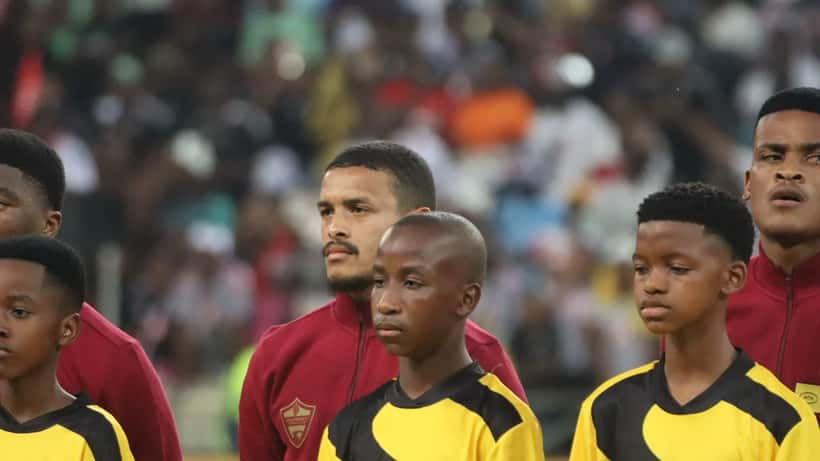
South Africa's MTN8 has entered its knockout semi-final rounds, and the combination of short turnarounds, high-tempo play, and maximum-intensity football is captivating fans worldwide — including tens of thousands of Australian weekend players now heading into spring finals season. Sports medicine specialists say the timing is no coincidence: every year, as continental cups reach their climax, local injury presentations spike. In October 2026, that pattern is holding true.
What the MTN8 Format Demands — and Why It Matters to Weekend Warriors
The MTN8 is South Africa's premier football cup, contested by the top eight finishers from the previous PSL season. Unlike league football distributed across months, every MTN8 match must be decided on the day — extra time and penalties included. Clubs like Orlando Pirates, Mamelodi Sundowns, and Kaizer Chiefs field near full-strength squads and push their athletes to peak physical output in every fixture. The 2026 edition, which entered its semi-final stage in early October, has been played at a ferocious pace.
When recreational players watch this level of intensity and then take it onto a local pitch on a Saturday morning, they often replicate the style without the underlying fitness infrastructure. The result is predictable: soft tissue injuries, joint stress, and the kind of delayed decision-making about medical assessment that turns a two-week recovery into a six-week ordeal.
According to data published by FIFA's medical research division, tournament-format football with short turnarounds increases soft tissue injury risk by up to 34 per cent compared with regular-season play. Recreational footballers do not have the sports science teams, cryotherapy chambers, or physiotherapists on standby that professional players in the MTN8 enjoy. What they do have is enthusiasm — and an increasing willingness to push beyond their seasonal fitness base.
Spring Conditions Are Compounding the Risk
Australia's spring season introduces a specific set of injury-risk factors that align poorly with the MTN8-inspired intensity. After winter detraining — where many recreational players have been less active — the first warm-weather months see a surge in playing frequency and effort levels. Pitches are transitional: dry and firm on top but softer underneath, creating unpredictable footing during cuts and tackles.
Sports Medicine Australia's annual recreational injury registry consistently identifies October as one of the three highest-risk months for adult amateur football injuries in New South Wales and Victoria. The combination of finals pressure, warmer temperatures encouraging more aggressive play, and detraining effects from winter creates what sports rehabilitation specialists describe as a "perfect storm window."
It is also worth noting that spring sunlight extends playing hours: games scheduled for the late afternoon are now contested in higher ambient temperatures, increasing fatigue rates and reducing neuromuscular control — the single biggest predictor of non-contact lower-limb injury.
The Three Injuries Presenting Most Frequently This October
Across sports medicine clinics in Sydney, Melbourne, and Brisbane, three injury patterns are presenting with elevated frequency in October 2026:
1. Hamstring strains (Grade I–II) The hamstring is the most commonly injured muscle in field sports worldwide. Research from the Australian Institute of Sport indicates hamstring strains account for approximately 28 per cent of all football-related soft tissue injuries in adult recreational players. They occur predominantly during acceleration sprints and sudden directional changes — the exact movements that high-tempo cup football like the MTN8 showcases and glorifies. Weekend players watching a MTN8 highlight of a striker surging past a defender will attempt something similar on Saturday without the same warm-up protocol or sprint conditioning base.
2. Lateral ankle sprains Ankle sprains remain the single most common acute injury in recreational football globally. The mechanism is almost always inversion — rolling outward — during a tackle attempt or landing on uneven turf. In spring, transitional pitches amplify this risk. A Grade I sprain will typically resolve in 7 to 10 days with appropriate management; a Grade II involves partial ligament tearing and requires 3 to 6 weeks of structured rehabilitation. The critical difference between these outcomes often comes down to whether the player sought assessment within 48 hours.
3. Knee ligament stress and ACL episodes While full ACL tears are more commonly associated with collision sports, partial ACL injuries and acute knee instability episodes are a growing concern for recreational footballers aged 35 and above. A 2024 survey by the Australian Orthopaedic Association estimated that one in seven recreational footballers over 35 reports some form of knee instability episode each season — a statistic that rarely makes headlines but represents significant long-term joint health risk.
What all three of these injuries share: they are time-sensitive. A 24-to-48-hour assessment window dramatically changes recovery timelines, treatment costs, and the likelihood of full return to sport.
When a Saturday Match Becomes a Six-Week Recovery: A Concrete Scenario
Consider a scenario that plays out hundreds of times across Australian amateur football each October:
Marcus, a 41-year-old project manager based in western Sydney, plays in an over-35 competition. He has been following MTN8 2026 closely and is energised heading into Saturday's semi-final against the league leaders. Midway through the second half, pushing to win a 50-50 ball, he accelerates sharply from a standing position. He feels a sudden pulling sensation in his left hamstring at the proximal attachment — that sharp, deep pull that experienced footballers immediately recognise.
Marcus pulls up, shakes it off, and plays the final fifteen minutes at reduced pace. He ices it that evening and decides to "see how it feels Monday."
Path A — Marcus sees a sports medicine specialist by Monday afternoon: Ultrasound confirms a Grade I hamstring strain, with less than 10 per cent of fibres involved and no haematoma. He is given a targeted 10-to-14-day progressive loading protocol and one physiotherapy session. Total cost: approximately AUD $200–$280. He misses one week of training and returns for the final.
Path B — Marcus waits 12 days before seeking assessment: By this point, scar tissue has started forming along the injury site, and his compensatory gait — favouring the left leg — has introduced secondary tension through his lower back and right hip. What was a Grade I strain is now presenting with Grade II functional characteristics. His physiotherapist estimates 5 to 6 weeks of rehabilitation. The course costs AUD $900–$1,400. Marcus misses the rest of his season. His lower back issue persists into summer.
The difference between these two outcomes is a single clinical consultation within 48 hours of injury — a decision that costs less than $250 and saves weeks of recovery time, thousands of dollars, and the rest of a season.
Red Flags That Mean You Should Not Wait
The standard first-aid response for soft tissue injuries — Rest, Ice, Compression, Elevation — is appropriate initial management but is not a substitute for clinical assessment when certain indicators are present. The Better Health Channel, published by Victoria's Department of Health, recommends seeking professional assessment if any of the following apply after a football injury:
- You heard or felt a "pop" at the moment of injury
- You cannot bear weight on the affected limb within 30 minutes
- Significant swelling develops within two hours (a sign of Grade II+ tissue damage or haemarthrosis)
- Pain persists beyond 72 hours despite rest and icing
- You have previously injured the same area
Understanding these red flags matters most during finals season, when the pressure to play through discomfort is at its highest. An injury dismissed as "manageable" in week one of October can become a surgical consideration by summer if the initial tissue damage is more significant than it felt in the adrenaline of the match.
Getting Expert Assessment Without the Waiting Room
For recreational footballers navigating an injury mid-season, access to a sports medicine specialist has historically meant a GP referral and a two-to-three-week waiting list. In 2026, that bottleneck no longer exists. Platforms such as Expert Zoom connect Australians directly with accredited sports medicine practitioners, physiotherapists, and orthopaedic specialists for same-day or next-day video consultations.
For soft tissue injuries where the clinical priority is diagnosis, imaging referral, and a return-to-play protocol — rather than hands-on manipulation — a telehealth assessment delivers equivalent triage outcomes in a fraction of the time. For a footballer like Marcus who has just come off the pitch with a hamstring concern, that speed is the difference between a two-week and a six-week absence.
MTN8 2026 is showing Australian football fans what elite competitive intensity looks like. It is also, for amateur players who take that inspiration onto their local pitch, a timely reminder that elite recovery support begins with a single decision: seek expert assessment early, not after the damage compounds. As similar patterns were seen when a Premier League derby earlier this season and Ireland's recent international fixture triggered surges in recreational football intensity, the lesson holds — tournament football inspires weekend warriors, and that inspiration carries real injury cost.
This article contains general health information. Consult a qualified sports medicine professional or healthcare provider for assessment and advice tailored to your specific situation.
