 Emie Wang
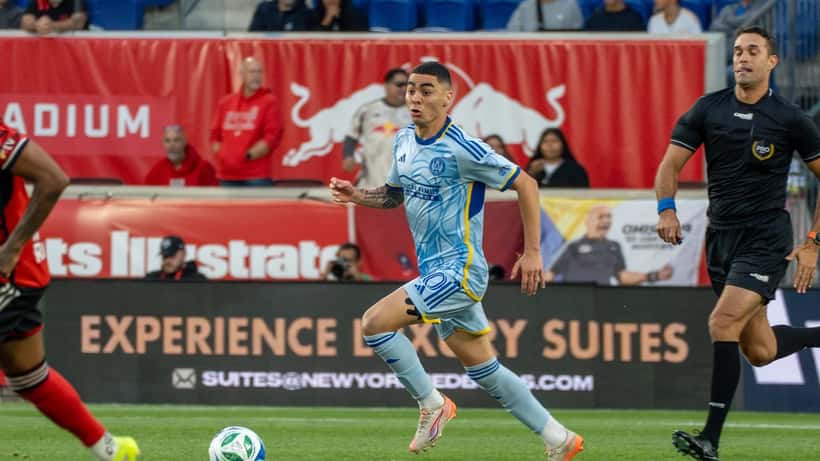
When Paraguayan midfielder Miguel Almirón covered his mouth while arguing with Turkish defender Mert Muldur in the 45th minute of their Group D clash on 19 June 2026, he made World Cup history — for all the wrong reasons. The referee reached for his red card, and Almirón became the first player ever sent off at a FIFA World Cup for the gesture alone.
Despite finishing the match with ten men, Paraguay held on to win 1-0. Matías Galarza's stunning 64-second opener — the fastest goal scored at World Cup 2026 — proved decisive, and Turkey was eliminated from the tournament.
What Is the Mouth-Covering Rule?
FIFA introduced the mouth-covering regulation ahead of the 2026 World Cup as part of a broader crackdown on unsporting conduct during on-field confrontations. Under the rule, any player who intentionally covers their mouth while speaking to an opponent or official during a confrontation faces an immediate red card.
The rationale is straightforward. If a player conceals what they are saying, FIFA presumes the content is likely offensive, abusive, or discriminatory. Because lip-reading and audio evidence are rarely available in a stadium of 70,000 spectators, the gesture itself becomes the offence. By making the act of concealment automatic grounds for dismissal, the governing body has shifted the burden of proof entirely onto the player.
For Almirón, it was a career-defining moment he could not have anticipated. The 32-year-old midfielder, who earns in the vicinity of AUD $8 million annually, now faces a mandatory one-match suspension and will miss Paraguay's next Group D fixture.
How FIFA Disciplines Players at the World Cup
FIFA's disciplinary framework at the tournament operates on timelines that leave almost no room for delay. According to the FIFA Disciplinary Code, a team wishing to challenge a red card decision must lodge a formal appeal with FIFA's disciplinary committee within 24 hours of the original ruling.
The process then moves through two stages.
FIFA internal review: The disciplinary committee examines whether the red card was clearly erroneous — a factual error rather than a judgment call. For a straight red card like Almirón's, the committee would need to find that the player did not intentionally cover his mouth, or that the referee applied the rule incorrectly. This is a high bar when the gesture was captured on television cameras from multiple angles.
Court of Arbitration for Sport (CAS) Ad Hoc Division: If FIFA's appeals committee rules against the team, the next recourse is CAS. A dedicated Ad Hoc Division has been established for the 2026 World Cup, operating from 11 June to 19 July 2026. This panel is required to issue a binding, non-appealable decision within 48 hours of an application being filed — a deliberately compressed timeline designed to resolve disputes before the next scheduled match.
These compressed timelines mean legal representation in sports law is not a luxury. A sports lawyer must have their arguments and evidence prepared in advance. Assembling witness statements, video evidence, and a legal argument within 24 hours of a red card — during an active tournament — is an extraordinary challenge without prior preparation.
What Australian Sports Professionals Should Take From This
Australia has a sophisticated tradition of sporting tribunal jurisprudence through the AFL and NRL, where players regularly contest suspensions before independent panels. The principles are not entirely dissimilar to FIFA's framework, but the international dimension adds significant complexity.
For Australian athletes competing overseas — or Australian coaches, agents, and officials advising clients at international tournaments — several lessons emerge from the Almirón case.
Understand the specific rules before the whistle blows. FIFA publicised the mouth-covering regulation months before the tournament began. Yet Almirón was still caught out. Ignorance of a rule is never a valid defence in sporting law, just as it is not in civil law. Ensuring clients understand every regulation that could result in suspension is basic duty of care.
Documentation is everything. In FIFA disciplinary proceedings, video footage is the primary evidence. A sports lawyer preparing an appeal will immediately seek all available camera angles, referee reports, and witness statements. The 24-hour lodgement deadline means this documentation must be assembled almost instantly.
Know the difference between a factual error and a judgment call. FIFA's disciplinary committees — and CAS panels — are reluctant to overturn decisions that fall within the referee's lawful discretion. Almirón's case is particularly difficult to appeal precisely because the gesture was visible from multiple broadcast angles. An appeal would need to argue that the gesture was inadvertent rather than deliberate — a nuanced distinction.
Consider the commercial and contractual implications. A one-match suspension for a professional footballer earning AUD $8 million annually has measurable financial consequences, both in match fees and in sponsorship clauses that may be triggered by disciplinary sanctions. Sports lawyers advising professional athletes routinely build conduct-clause protections into contracts to manage this risk.
For an overview of how similar FIFA disciplinary cases have played out, see our analysis of Tunisia's Gharbi red card and the FIFA disciplinary process.
A New Rule in a New Era
The mouth-covering red card is not an isolated quirk. It reflects FIFA's broader push to make on-field conduct more transparent and accountable in an era of constant multi-angle video surveillance. Referees at the 2026 World Cup have access to VAR technology that can review incidents from dozens of camera positions in real time.
As these technological capabilities expand, so too does the evidentiary burden on players who contest disciplinary decisions. The standard defence — "I didn't say anything wrong" — is harder to sustain when high-definition footage captures every expression and gesture.
For Australians with a stake in professional football — whether as athletes, agents, club administrators, or family members of players competing internationally — understanding how FIFA's disciplinary system operates is no longer academic. As more Australians pursue careers in European and South American clubs, and as Australia continues to participate in international competitions, the intersection of Australian legal frameworks and FIFA regulations is a practical reality that requires specialist knowledge.
If you or a client is facing a sporting disciplinary matter — whether at an international tournament or in a domestic competition — consulting a sports law specialist early can make the difference between a suspension that stands and one that is overturned.
This article provides general information only and does not constitute legal advice. Readers facing specific sporting disciplinary matters should seek advice from a qualified Australian legal professional.
