 Fred Rivers
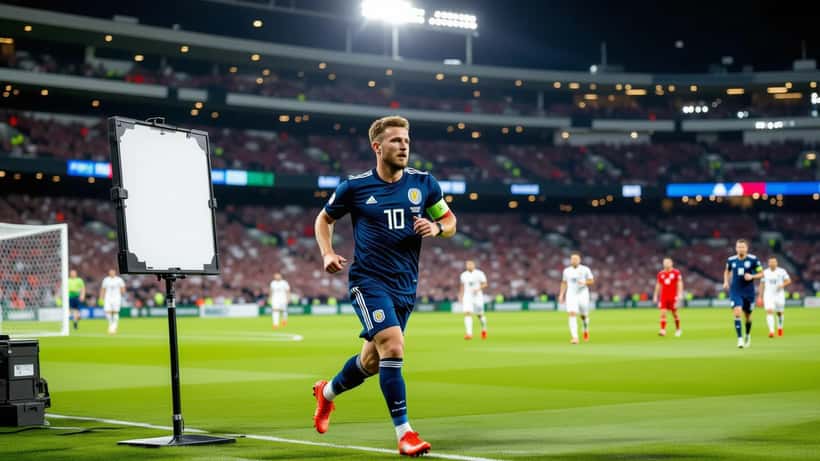
When Lyndon Dykes sprinted onto the pitch at Gillette Stadium in Boston on 19 June 2026, he carried with him a story that resonates with thousands of Australian families. Born in Gold Coast, Queensland, the 30-year-old striker came off the bench in the 71st minute of Scotland's 0-1 defeat to Morocco in Group C of the FIFA World Cup — sending a late header agonisingly wide as Scotland pushed for an equaliser that never came. For Australian football fans, Dykes is impossible to ignore: he is one of their own, raised on home soil, yet standing tall in a World Cup jersey that reads "Scotland."
His presence at the tournament has sparked genuine curiosity and, for many families, a pressing legal question: how does FIFA's dual nationality eligibility system actually work — and if your Australian-born child holds a second nationality, could they one day face the same career-defining choice?
Who Is Lyndon Dykes?
Lyndon Dykes was born on 7 October 1995 in Gold Coast, Australia, to Scottish parents. He grew up in Queensland before pursuing his football career in Scotland, progressing through Queen of the South and Livingston before joining Queens Park Rangers. In August 2020, he made his senior Scotland debut — a choice he has said he "always knew" he would make.
Now holding 50 caps for Scotland, Dykes was one of seven foreign-born players in Scotland's 26-man squad for the 2026 World Cup. He came off the bench in the opening 1-0 victory over Haiti on 14 June in Boston, and again four days later against Morocco, where his last-gasp header went wide as Scotland's tournament hopes hung by a thread. With a final group game against Brazil on 24 June still to come, Dykes' role in Steve Clarke's squad remains pivotal.
His trending status in Australia this week reflects something beyond football fandom. Many Australian parents and sporting families are watching Dykes and asking themselves whether their dual-national children could face a similar career decision — and what their legal rights actually are before that moment arrives.
How FIFA Dual Nationality Eligibility Works
FIFA's eligibility framework, governed by Articles 15 to 18 of the FIFA Statutes, allows a player to represent any national team for which they hold a valid nationality. The critical constraint: once a player has appeared in a competitive senior international match, switching allegiance becomes extremely restricted.
Under rules updated in January 2021, the conditions for changing association are precise:
- The player must hold valid nationality for the new country at the time of the request
- They must not have played competitive senior internationals for their previous country — or qualify under the 2021 exception, which permits a switch if a player earned no more than three competitive senior caps before the age of 21
- A written, substantiated request must be submitted to FIFA's Players Status Committee
- FIFA makes the final determination — approval is not automatic
For Dykes, the path was straightforward. He declared for Scotland before accumulating any competitive Socceroos caps, preserving his eligibility without complications. For families navigating these rules today, understanding the timing is everything. Leaving a declaration too late — or playing in the wrong matches — can permanently close a door.
Australia's Experience with the Dual Nationality System
Australia has both benefited and lost talent through FIFA's framework. Cristian Volpato, the Roma midfielder born in Sydney, switched his allegiance from Italy to the Socceroos — one of the most prominent recent examples of the process working in Australia's favour. Conversely, players born abroad to Australian parents, like Dykes in reverse, continue to represent other nations at the highest level.
Football Australia's national pathway program increasingly competes for dual-national talent, but the reality of FIFA's framework is that the player — not the federation — holds the ultimate power. Federations can lobby and recruit, but a family that understands the rules early is in the strongest position to act on their child's behalf.
For an overview of how dual nationality rules interact with Australian citizenship law, the Department of Home Affairs provides guidance at homeaffairs.gov.au/citizenship.
When Should You Seek Legal Advice?
If you have a talented young footballer with dual nationality, several moments are critical for professional consultation:
Before your child earns their first senior competitive cap. This is the highest-stakes decision point. Once competitive caps accumulate, options narrow sharply. A sports law specialist can map out your child's eligibility under both FIFA rules and the citizenship laws of both countries, allowing you to plan strategically rather than reactively.
When applying to change association. The FIFA process requires a formal, substantiated written request to the Players Status Committee. Poorly prepared applications are rejected. A legal professional with knowledge of sports regulation can draft and manage this submission correctly.
When citizenship or passport status is unclear. In many cases, a player's right to represent a second country depends on their passport status, which may require a citizenship application, a claim by descent, or a naturalisation process under Australian law. Holding dual citizenship is permitted under Australian law, but the procedural pathway for acquiring a second nationality has specific requirements that benefit from expert review.
When two federations both claim a player. These disputes require understanding both FIFA's internal procedures and, at times, Australian administrative law. Legal clarity early avoids complications that can delay or derail a promising career.
The Bigger Picture: Dual-National Athletes in 2026
The 2026 World Cup has placed dual-national footballers in the spotlight more than any previous tournament. Morocco's Group C squad featured 19 of 26 players born outside the country — a striking demonstration of how FIFA's framework shapes elite football. Scotland's seven foreign-born players, Dykes chief among them in Australian hearts, reflects the same globalised talent landscape.
More broadly, understanding these eligibility rules has become relevant across multiple sports, not just football. As Australia's multicultural communities grow and children hold passports from multiple countries, the question of representation is increasingly common and consequential.
For families thinking ahead, ExpertZoom connects you with legal experts who have navigated FIFA dual nationality cases and the surrounding citizenship law — the kind of specialised advice that can shape a young athlete's entire career arc.
Lyndon Dykes made his choice early, with clarity and timing on his side. For the next generation of dual-national Australian athletes, that same clarity can begin with one informed conversation.
This article provides general information only and does not constitute legal advice. For advice tailored to your specific circumstances, consult a qualified legal professional.
