 Theo Manning
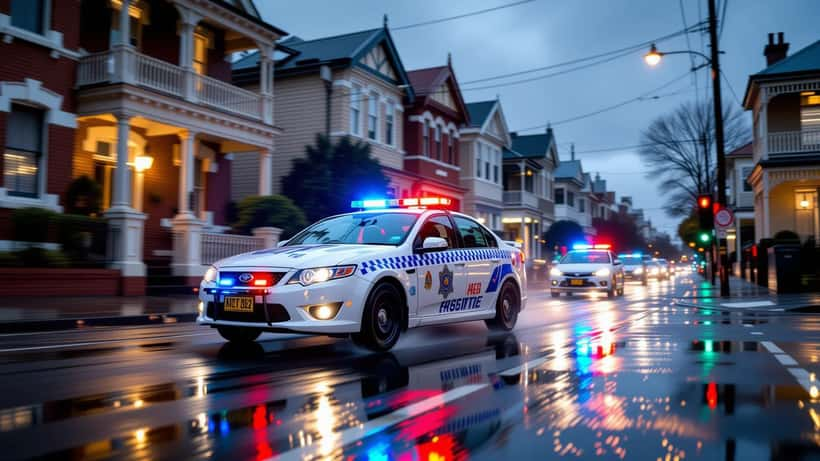
At 1:30am on Thursday 25 September 2026, Constable Mia Lay was in the passenger seat of a marked NSW Police patrol car racing through inner-Sydney to respond to a stolen vehicle report in nearby Glebe. The car struck a tree on Gibbons Street, Redfern. Lay — 20 years old and just 16 months into her career — died at the scene. The driver, a 24-year-old male constable, was taken to hospital in a stable condition.
NSW Police Commissioner Mal Lanyon described it as a "dark day" for the force. But beyond the grief, Constable Lay's death raises a set of urgent legal questions that affect every officer on night shift and every family watching the news from home: What does NSW law say about emergency driving? Who bears legal responsibility when an officer dies not in a pursuit, but simply responding to a call? And what accountability mechanisms are now running — whether the public knows it or not?
The Law Governing Emergency Response Driving in NSW
Under the Road Rules 2014 (NSW), a police vehicle operating with lights and sirens activated is exempt from a range of road rules — including posted speed limits and red traffic signals. But this exemption is explicitly conditional. The officer behind the wheel must still take "due care" for the safety of other road users and, critically, the officer beside them.
The NSW Police Force operates under an internal Safe Driving Policy — a document that has been withheld from public release but which has come under direct coronial scrutiny in previous incidents involving officer deaths. That policy sets the standards: when emergency equipment may be activated, what speed thresholds are appropriate for a given road type at 1:30am, and what supervision structures apply during solo-crew night-shift callouts.
According to data compiled by NSW Courts, police pursuits and emergency responses in NSW have surged by more than 70 percent over the past eight years, with approximately 3,770 such incidents recorded in one recent calendar year. Speed, darkness, and time pressure combine in ways that make emergency response one of the most statistically dangerous activities a constable can undertake — yet it is also one of the least discussed from a legal accountability standpoint.
Expert Analysis: Duty of Care and the WHS Act
The moment Constable Lay died on duty, the Work Health and Safety Act 2011 (NSW) was triggered. SafeWork NSW — the state workplace regulator — has mandatory obligations to investigate a workplace fatality. Under section 35 of the WHS Act, NSW Police was required to notify SafeWork NSW immediately after a worker died. An investigation follows automatically.
Under section 19 of the WHS Act, the NSW Police Force, as a person conducting a business or undertaking, must ensure — so far as is reasonably practicable — the health and safety of all workers. For patrol officers, this duty extends to: vehicle roadworthiness standards, fatigue risk management for night shifts, the training protocols that govern paired-officer emergency response, and whether real-time supervisory oversight was available when the callout was made.
If SafeWork NSW determines that NSW Police failed to meet its primary duty in any of these areas, the matter can be referred to the Director of Public Prosecutions. Since NSW introduced industrial manslaughter laws in 2024, an employer — including a government agency — can face criminal prosecution if gross negligence leads to a worker's death. The maximum penalty is 25 years' imprisonment for an individual officer of the organisation or a fine of $22 million for a body corporate.
Separately, the Law Enforcement Conduct Commission (LECC) will conduct a mandatory independent review into the operational circumstances of the crash. The LECC has the power to compel testimony, access classified police records including the Safe Driving Policy, and issue formal recommendations to the Police Commissioner. Its findings carry public weight — and legal weight in any subsequent civil proceedings.
Could the Person Who Stole the Car Face Liability?
This question is circulating on social media and in police circles — and it has a genuinely complex legal answer. NSW criminal law includes the concept of "causation": if a person's criminal act sets in motion a foreseeable chain of events that results in death, that person may bear criminal responsibility for the outcome even if they were not at the crash scene.
Under the Crimes Act 1900 (NSW), existing offences and, in egregious cases, the broader principle of unlawful and dangerous act manslaughter could be examined. But historically, NSW courts have been cautious when a police action — rather than the offender's direct conduct — is the proximate cause of death. The test is whether the offender could reasonably have foreseen that their crime would trigger an emergency response that resulted in death.
The investigation is in its earliest stages. But a specialist criminal solicitor retained by the police service or by Lay's family would be examining this question now, not after the coronial inquest concludes in 12 to 18 months.
If You Are Mia Lay's Family: The Legal Process Right Now
Take this scenario, which directly mirrors Lay's circumstances. A 20-year-old constable, unmarried with no children, dies on duty during an emergency callout. She has served for 16 months and is earning approximately $78,000 per year under the current NSW Police Enterprise Agreement.
Under the Police Act 1990 (NSW) and the NSW Police Officers' Superannuation Fund (SPOSF) rules, her nominated beneficiaries — typically parents or a partner — are entitled to a death benefit calculated at 10 times the officer's notional salary. At $78,000, that equates to a minimum lump-sum payment of approximately $780,000, paid free of income tax and outside the estate for estate duty purposes.
The if/then logic is direct: if SafeWork NSW or the LECC finds that NSW Police failed to meet its duty of care — for example, that the patrol vehicle did not meet the force's own roadworthiness standards, that no supervisory sign-off was obtained before the emergency activation, or that night-shift fatigue protocols were not followed — then the family also has standing to bring a civil negligence claim against NSW Police for additional damages. Under the Workers Compensation Act 1987 (NSW), this can include a lump-sum payment for the officer's future economic loss and, in a negligence action, damages for the family's loss of dependency.
Critically, the limitation period under the Limitation Act 1969 (NSW) is three years from the date of death. The clock started on 25 September 2026. A family that waits for the coronial inquest to conclude before seeking independent legal advice may find itself outside that window.
What Every NSW Officer Should Know
Constable Mia Lay's death is not the first of its kind. Multiple NSW police officers have died in vehicle crashes during emergency responses over the past decade. Each death produces an investigation. Each investigation generates recommendations. The Police Association of NSW has consistently pressed for mandatory in-vehicle cameras in all patrol cars, real-time GPS supervision of emergency activations, and stricter approval protocols for high-speed night responses.
"Every single one of those recommendations came from a life lost," a Police Association spokesperson noted in commentary on previous vehicle incidents. Whether those recommendations have been systematically implemented will be a central question for both SafeWork NSW and the LECC in the weeks ahead.
For SafeWork NSW's full guidance on employer obligations under the WHS Act, including the duty to notify of workplace fatalities, visit SafeWork NSW's official legislation page.
This article provides general legal information only and does not constitute legal advice. Individual circumstances vary significantly. For guidance specific to your situation, consult a qualified solicitor.
For a broader look at the legal rights available to victims of police-related incidents in Australia, including how courts determine liability and what compensation pathways exist, see this related analysis on legal rights in Australian police pursuit cases.
What to Do If You or Your Family Are Affected
If you are a serving NSW police officer, a family member of Constable Lay, a colleague, or anyone seeking clarity about legal rights after a police duty death, a specialist employment, personal injury, or criminal law solicitor can help you:
- Secure the full superannuation death benefit without delay
- Assess whether a WorkCover or WHS Act breach claim adds to that entitlement
- Navigate the LECC and coronial inquest process, including your right to appear and make submissions
- Advise on whether a civil negligence or industrial manslaughter referral should be pursued before limitation periods expire
Acting early — before the investigations conclude — is the difference between a fully informed legal strategy and one built on incomplete findings. Expert legal advice, specific to emergency services and police employment law, is available through specialist solicitors on the ExpertZoom platform.
