 Mia Jones
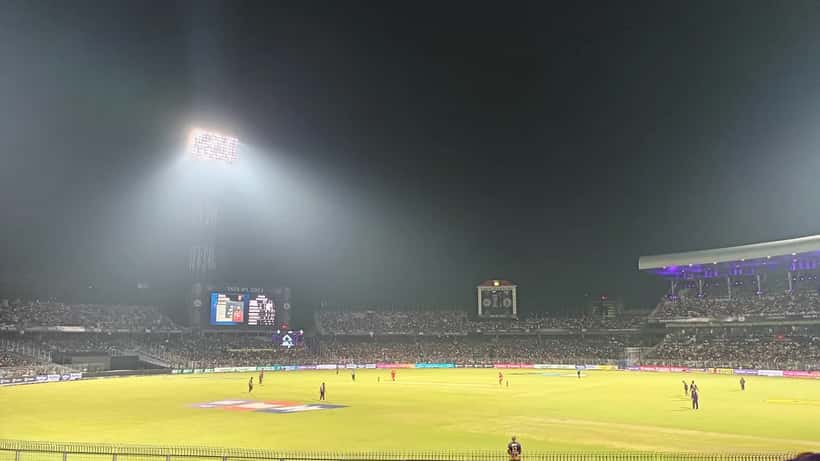
Mumbai Indians stunned Kolkata Knight Riders by 6 wickets in Match 65 of IPL 2026 at Eden Gardens on 20 May 2026, in a rain-interrupted contest that produced one of the season's most dramatic finishes. For Australian cricket fans, the standout figure was Cameron Green — the most expensive overseas player in IPL history at 25.20 crore rupees (approximately AUD 4.5 million) — who took two wickets and held a sharp catch for the losing side despite a creditable personal performance.
But Green's presence in Kolkata raises a question most cricket fans never consider: what legal and employment protections do Australians actually have when they take professional work overseas?
The NOC: Cricket's Version of Employment Permission
Before any of the 15-plus Australian cricketers currently playing in IPL 2026 — Pat Cummins, Travis Head, Mitchell Starc, Mitchell Marsh, Cameron Green, and others — could take a wicket or hit a boundary in India, each required a No Objection Certificate (NOC) from Cricket Australia.
The NOC system is, in employment law terms, a form of restrictive covenant built into professional sport. Cricket Australia retains the power to withhold permission for players to participate in foreign tournaments. Without an NOC, a player cannot take up an IPL contract regardless of what that contract offers.
This became tangible in early 2026 when Mitchell Starc's NOC from Cricket Australia was delayed, leaving Delhi Capitals in limbo ahead of the tournament. Ultimately, Cricket Australia granted clearances to all its contracted players — including Cummins, Head, and Marsh, who skipped the Australia-Pakistan ODI series to honour their IPL franchise commitments.
"In virtually any other profession, an employer cannot tell you not to work for someone else during your time off," says the general principle underlying Australian employment law. Cricket operates under a markedly different framework. The NOC system gives the national board significant power over where players earn a living — power with no mainstream workplace equivalent.
Who Is Legally Employing These Australians?
When Cameron Green plays for Kolkata Knight Riders, his legal employer is not Cricket Australia or any Australian entity. It is the KKR franchise — an Indian company operating under Board of Control for Cricket in India (BCCI) regulations.
This has significant consequences.
Australia's Fair Work Act 2009 — the legislation that sets minimum wages, protects against unfair dismissal, and guarantees entitlements including personal leave and redundancy pay — does not extend to employment relationships governed by Indian law. According to legislation.gov.au, the Fair Work Act applies to national system employers operating within Australia's constitutional jurisdiction. An Indian IPL franchise employing an Australian player is not within that framework.
Australian cricketers in the IPL work under Indian labour law and BCCI contract terms, with their Australian employment protections effectively suspended for the duration of the tournament.
This principle is not unique to cricket. Any Australian professional taking short-term overseas employment — in finance, engineering, construction, or sport — should understand that the protections of Australian law may not travel with them.
What IPL Contracts Actually Cover
IPL player contracts are governed by the BCCI's Standard Player Contract, which includes:
- A fixed match fee per game played, negotiated at the IPL Player Auction or via retention
- Conduct and disciplinary clauses overseen by the BCCI and the franchise
- Intellectual property rights assigned to the BCCI and franchise for commercial and broadcast use
- Insurance provisions that vary by franchise
Australian players in the IPL are among the highest-paid cricketers in the world for the seven-week window. Pat Cummins' retained fee, Cameron Green's record auction price, and Travis Head's franchise valuation each reflect salaries that dwarf most Australian employment contracts.
But salary is not the same as security. Unlike Australian employment arrangements — where a worker facing injury or dismissal has recourse under the Fair Work Act and state workers' compensation schemes — IPL contracts offer protections only as strong as what the BCCI and individual franchise agreements provide.
Tax Obligations Follow You, Even When Law Doesn't
One area where Australian law absolutely does follow players overseas is taxation. The Australian Taxation Office requires Australian tax residents to declare worldwide income, including IPL earnings.
Players who spend significant time in India may also trigger Indian income tax obligations. Cricket Australia advises players to seek independent tax advice, and most elite players retain specialist sports tax lawyers to manage dual-jurisdiction implications.
For non-professional Australians taking on short-term overseas work — seasonal employment, remote consulting, or freelance contracts — the tax obligations are identical in principle. Australian residents pay Australian tax on everything they earn, anywhere in the world. Foreign tax credits can offset double taxation in many cases, but the compliance obligation still applies.
The NOC Parallel: Non-Compete Clauses in Everyday Employment
The NOC mechanism has a direct equivalent in mainstream Australian employment: restraint of trade and non-compete clauses.
Many Australian employment contracts contain clauses restricting workers from taking similar roles with competitors for a defined period after leaving. Courts have historically scrutinised these clauses carefully, assessing whether they are reasonably necessary to protect the employer's legitimate business interests.
What makes the cricket NOC unusual is that it governs concurrent employment — work taken during an off-season window — rather than post-employment restrictions. The BCCI deliberately structured the IPL schedule to avoid clashing with national cricket calendars, making the NOC more of a coordination tool than a genuine labour market restriction.
If you are an Australian professional facing a contract clause that restricts side work, consulting, or external employment, an employment lawyer can assess whether that clause is enforceable under Australian law — a question that varies considerably by industry, seniority level, and geographic scope.
For related reading on how IPL player contracts intersect with insurance and compensation obligations, see IPL 2026: What Injury Clauses Mean for Australian Cricketers.
Three Employment Law Lessons From the IPL
The IPL's employment structure illustrates principles that apply to any Australian working overseas or signing complex employment contracts:
Know whose law governs your contract. If you are employed by an overseas entity, your Australian employment rights may not apply. Check which jurisdiction's law governs disputes before signing.
Understand NOC equivalents in your industry. Non-compete and restraint clauses in Australian employment contracts can function like an NOC — restricting your ability to take concurrent or future work. Get these reviewed before signing any new employment agreement.
Tax obligations follow you. Australian residents are taxed on worldwide income. Independent tax advice before taking overseas work prevents costly compliance surprises and can identify foreign tax credit opportunities.
As MI celebrate their 6-wicket victory over KKR at Eden Gardens on 20 May 2026, and Cameron Green returns to the dressing room after another strong IPL performance, the legal questions his presence in Kolkata raises deserve more attention than the match scorecard ever receives.
For independent advice on employment contracts, overseas work arrangements, or non-compete clauses, an employment lawyer can assess your specific situation and explain which Australian protections apply.
