 Chloe Wilson
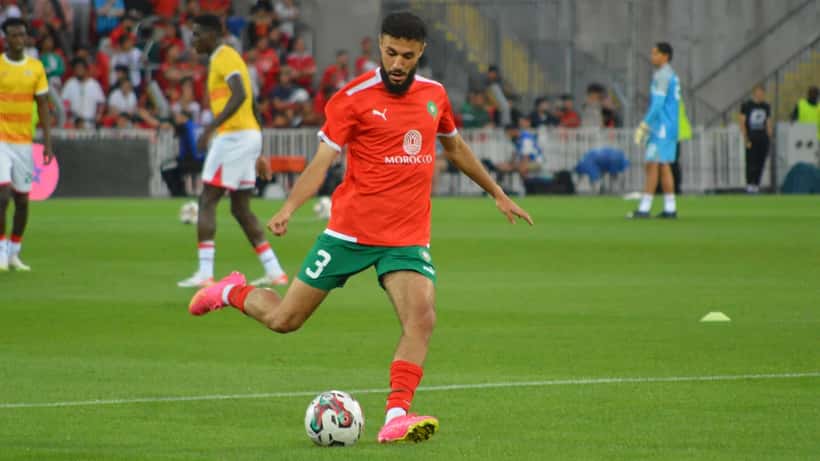
Noussair Mazraoui, Manchester United's first-choice right back and Morocco's key defensive player, suffered a shoulder subluxation just 29 minutes into Morocco's final World Cup 2026 warm-up match against Norway. The injury sent alarm bells through the Atlas Lions' camp ahead of their opening Group F clash against Brazil — but what does a shoulder subluxation actually mean, and how should Australians respond if they experience the same injury?
What Is a Shoulder Subluxation?
A shoulder subluxation is a partial dislocation of the glenohumeral joint — the ball-and-socket joint connecting the upper arm bone (humerus) to the shoulder blade (scapula). Unlike a full dislocation, where the ball pops completely out of the socket, a subluxation means the head of the humerus shifts partially out before snapping back to its normal position.
According to Better Health Channel, shoulder dislocation — including partial subluxation — is the most common major joint dislocation presenting to emergency departments in Australia. The condition typically produces sharp, immediate pain, a "giving way" sensation, temporary numbness or tingling down the arm, and visible swelling or deformity.
Mazraoui's injury occurred during a routine defensive action. His shoulder gave way under physical contact, a pattern common in contact sports. The initial prognosis raised fears he would miss Morocco's World Cup opener, but subsequent medical examinations produced encouraging results.
Why the World Cup Timing Matters
The 2026 FIFA World Cup, co-hosted by the United States, Canada, and Mexico, represents the pinnacle of Mazraoui's career. At 28, this may be his best opportunity to perform on football's biggest stage. Morocco, who stunned the world by reaching the semi-finals in Qatar 2022, are targeting another deep run under coach Walid Regragui — and Mazraoui is central to that ambition.
Reports from ESPN and Morocco World News confirmed that Mazraoui underwent solo rehabilitation away from squad training in the days before the Brazil opener, working on an individual indoor recovery program under direct medical supervision. Regular reassessment sessions, rather than a fixed return date, formed the core of his treatment plan.
The timeline illustrates a critical tension elite athletes face at every level: the pressure to return quickly versus the genuine risk of destabilising an already compromised joint.
The Hidden Risk: Shoulder Instability After Subluxation
Sports medicine specialists consistently warn that a first-time subluxation significantly increases the likelihood of repeat episodes. In young, active patients, the recurrence rate following an initial anterior shoulder subluxation can exceed 70% without appropriate rehabilitation or, where necessary, surgical intervention.
After the initial incident, the shoulder's stabilising structures — the labrum (a ring of fibrocartilage), the glenohumeral ligaments, and the rotator cuff tendons — can be stretched or partially torn. Without proper clinical assessment and structured rehabilitation, the shoulder may remain chronically unstable, making every subsequent collision or sudden overhead movement a re-injury risk.
This is why the decision to play Mazraoui — or not — is far more than a short-term tactical call. It is a genuine medical question with long-term career implications.
When Should You See a Sports Medicine Specialist?
Many Australians brush off a shoulder "giving way" moment, particularly after playing sport. They ice it, rest for a few days, and return to activity assuming the worst has passed. Sports medicine specialists advise strongly against this approach.
An expert assessment is particularly important when:
- The shoulder gave way under load or physical contact during sport
- You experienced immediate sharp pain followed by a distinct "clunk" as the joint returned
- There is lasting weakness, deep aching, or a persistent sense of looseness in the joint
- The injury occurred during high-demand activity — swimming, AFL, rugby, netball, volleyball, or gym training
- You are under 30, since younger patients face significantly higher recurrence rates without treatment
A specialist consultation typically involves a clinical stability examination and may include an MRI or diagnostic ultrasound to assess whether the labrum, rotator cuff, or ligaments have been damaged. Treatment options range from structured physiotherapy programs to minimally invasive arthroscopic surgery, depending on severity and the patient's activity level.
Giovanni Reyna's lengthy injury history at World Cup 2026 illustrates what can happen when musculoskeletal injuries accumulate without adequate rehabilitation: eight separate injuries in five years, with each one compounding the last.
Morocco's Response: A Model for Good Injury Management
Morocco's medical team response has, by all accounts, been measured and evidence-based. Rather than rushing Mazraoui back into group training prematurely, they placed him on an individual indoor program under direct supervision. Regular reassessment, guided by objective clinical findings rather than a fixed return date, is the hallmark of modern elite sports medicine practice.
This approach — monitoring, graded rehabilitation, and evidence-based decision-making — is exactly what sports medicine specialists recommend for recreational athletes too. Whether you play weekend football in Brisbane, surf along the Gold Coast, or compete in club cricket in Melbourne, the underlying principles are the same: get a proper diagnosis, understand the specific structures affected, and follow a supervised return-to-sport protocol rather than guessing your way back.
What This Means for Everyday Australian Athletes
Shoulder subluxations are not a problem exclusive to professional footballers. They are among the most common injuries in Australian contact and overhead sports, including AFL, rugby union, rugby league, netball, and volleyball. Many episodes go undiagnosed because the joint "pops back" and the immediate pain subsides, creating a false sense of recovery.
If you have experienced a shoulder "giving way" moment and are unsure whether it needs specialist attention, a sports medicine consultation can provide clarity quickly. A focused assessment can differentiate between a minor ligament stretch, a subluxation requiring structured rehabilitation, and a more serious structural injury warranting surgical review.
This article is for general informational purposes only and does not constitute medical advice. If you have experienced a shoulder injury, please consult a qualified health professional for an assessment specific to your situation.
