 Olivia Miller
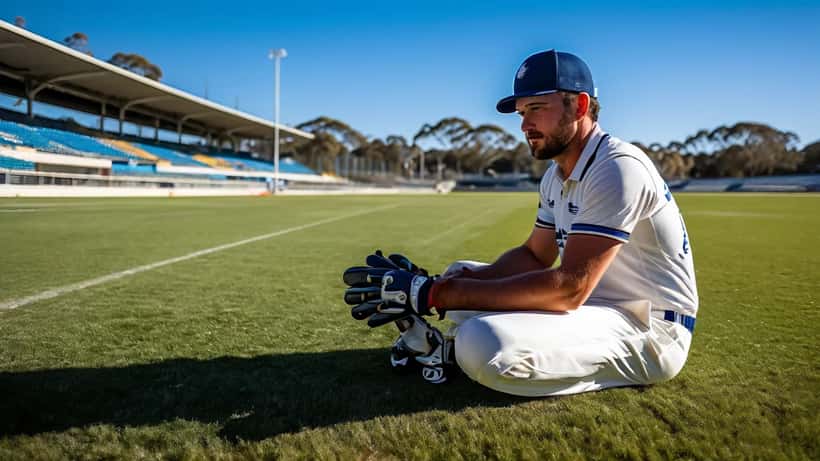
Matt Short, the Adelaide Strikers captain and Australian T20 cricketer, fractured his left thumb during a Sheffield Shield match in March 2026 — an injury that cost him the opening games of his first IPL season with Chennai Super Kings and prompted fresh debate about how Australian sportspeople at every level manage hand injuries. His story is a timely reminder that what happens in the first 48 hours after a hand fracture can determine whether you return to full function in weeks or spend months in rehabilitation.
What Happened to Matt Short
Short suffered the fracture during the final rounds of the 2025-26 Sheffield Shield season. The injury forced him to miss the start of the IPL 2026 campaign with Chennai Super Kings, though medical staff cleared him to join the CSK camp once initial healing was confirmed — typically around the four-week mark for straightforward thumb fractures.
Adding to the timing: Short had already been dropped from Australia's T20 World Cup 2026 squad before the injury occurred, with selectors opting for Matt Renshaw in his place. The thumb fracture arrived as an unwanted additional setback to what had been a difficult selection period.
His recovery trajectory — fractured in March, cleared to travel by mid-April — is consistent with the standard medical timeline for thumb fractures, but only when managed correctly from the outset.
The Medical Reality of Thumb Fractures
The thumb accounts for approximately 40 per cent of all hand function. When it is fractured, the cascade of consequences — reduced grip strength, impaired fine motor control, pain-limited range of motion — affects almost every physical activity.
According to sports medicine specialists, thumb and hand fractures are among the most common injuries in cricket, particularly for batters and fielders. The mechanism is typically blunt impact: a ball striking an outstretched or incorrectly positioned hand.
Healing timeline: Most uncomplicated thumb fractures heal within four to six weeks with proper immobilisation. However, "healed" on an X-ray and "ready to play" are not the same thing. Full strength recovery and pain-free range of motion typically requires six to eight weeks. Return to contact or precision sport — the kind of gripping, catching, and throwing required in cricket — often extends to 10 to 12 weeks.
Why early assessment is critical: The most consequential decision in thumb fracture management is made in the first 24 to 48 hours. Is this fracture stable or unstable? Is the joint involved? Has the bone displaced? These questions determine whether immobilisation alone will work, or whether surgical fixation is required. Delaying that assessment — or attempting to "play through" before imaging — can turn a four-week recovery into a six-month one.
Surgical versus non-surgical: The majority of thumb fractures are managed conservatively with a splint or cast. Displaced fractures, fractures involving the joint surface (intra-articular), and fractures that affect the base of the thumb near the carpometacarpal joint are more likely to require surgical intervention. A sports-trained orthopaedic specialist or hand surgeon should assess this.
What Weekend Warriors Get Wrong
Matt Short has access to elite sports medicine facilities. Most Australians who fracture their thumb during a club cricket match, a football game, or a mountain bike fall do not.
The most common errors according to Australian sports medicine practitioners:
Waiting too long to get imaging. "It's probably just a sprain" is the single most costly assumption in hand injury management. Thumb fractures and ligament tears present with similar initial symptoms — pain, swelling, bruising. Only an X-ray distinguishes them. An undisplaced fracture managed as a sprain can shift into a displaced position during the critical early healing period.
Stopping physiotherapy too soon. Once the pain settles and a cast comes off, many patients assume the job is done. The subsequent rehabilitation phase — restoring strength, flexibility, and sport-specific grip patterns — is what determines final functional outcome. This phase typically runs for four to six weeks after immobilisation ends.
Returning to sport based on pain rather than function. "It doesn't hurt much any more" is not the same as "the bone is stable and the soft tissue has healed." Sport-specific clearance from a physiotherapist or sports doctor should be the benchmark, not pain levels alone.
Not seeking specialist care for complex injuries. General practitioners are well-equipped to manage straightforward fractures. But injuries involving the thumb's base, the scaphoid bone (which notoriously under-shows on early X-rays), or significant joint involvement warrant specialist assessment from a hand surgeon or sports medicine physician.
Protecting Your Hands for the Season Ahead
Across Australia, the winter sport season is beginning. Rugby union and league, AFL, football, hockey, and a range of other contact and ball sports put hands and wrists at significant risk.
The advice from Sports Medicine Australia, the peak body for sports medicine practitioners in the country, consistently emphasises early assessment over self-management for any suspected hand or wrist fracture. Imaging is the only reliable diagnostic tool, and waiting to see "if it improves" after an acute impact injury to the hand is rarely the correct clinical decision.
If you sustain a hand or finger injury during sport — or if a child or family member does — seeking assessment from a sports doctor, physiotherapist, or emergency department promptly is the clearest path to the fastest recovery and the best long-term function.
A sports medicine specialist can assess the injury, advise on imaging and treatment, and build a return-to-sport plan suited to your sport, your position, and your timeline.
Note: This article is informational only and does not constitute medical advice. If you have sustained an injury, seek assessment from a qualified health professional.
