 Isla Henderson
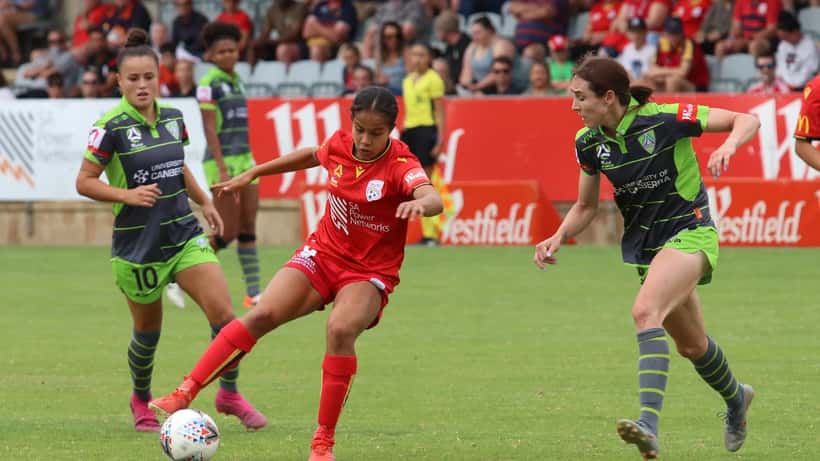
Matildas forward Mary Fowler returned to competitive play in Manchester City's 5-1 win over Chelsea on 1 February 2026, capping a recovery from the ruptured anterior cruciate ligament she suffered in April 2025, and was named PFA Young Women's Player of the Year for a record third consecutive time in October 2025, according to Football360 and ESPN. Matildas head coach Joe Montemurro confirmed in pre-Asian Cup briefings this week that Fowler is tracking ahead of schedule for the tournament.
The on-pitch story is well covered. The financial story behind it — what happens to a 23-year-old Australian footballer's income when an ACL takes nine to twelve months off her career — is the one most Matildas fans never see. It is also the conversation Australia's growing cohort of professional women athletes need to have well before injury, not after.
The PFA award worth a closer look
Three consecutive PFA Young Women's Player awards is a record. Each comes with sponsorship leverage. Within 18 months of her first PFA recognition, Fowler had built a portfolio of brand partnerships across athleisure, telecommunications, and consumer goods — a structure roughly comparable to a senior Premiership player despite her age.
The structure also reveals how women's football endorsement income works in Australia and the UK in 2026: heavily front-loaded, often performance-contingent, and frequently negotiated without the long-term residual rights that men's contracts assume by default. The Professional Footballers' Association of Australia has flagged this structural gap repeatedly in its annual reports.
What an ACL actually costs financially
An ACL rupture for a professional footballer typically takes 9–12 months of rehabilitation before competitive return. The financial impact stacks across several layers:
- Match-day appearance income — paused.
- Performance bonuses — typically unreachable.
- Sponsorship clauses — many have minutes-played or appearance thresholds that go unmet during rehabilitation.
- National team selection — depends on form, which depends on minutes, which depends on health.
- Future contract negotiation leverage — clubs price in injury risk on the next renewal.
Fowler's recovery has been described as ahead of schedule. The financial recovery — restoring sponsorship trajectory, replacing missed appearance income, re-establishing match-day bonus eligibility — typically lags the physical recovery by 6–12 months.
What a wealth manager actually does for a women's footballer
Australian women athletes have a structurally short professional earning window — typically a decade or less of peak income — followed by 40-plus years of post-career life. A qualified financial adviser, registered on the ASIC Financial Advisers Register, does five things that matter most:
- Builds an income-protection structure before injury. Income protection insurance for professional athletes is specialised and gets more expensive — sometimes uninsurable — after a first major injury.
- Structures career earnings through entities that smooth taxable income across years. The Australian Taxation Office's professional sportsperson rules permit specific income-averaging arrangements.
- Negotiates the wealth/super split. Concessional super contributions in Australia (now $30,000 a year) offer tax efficiency that retail brokerage accounts do not.
- Plans for post-career identity. The Players' Voice and PFA Australia track post-career employment outcomes. Athletes who plan for the transition financially also adapt psychologically faster.
- Protects brand income from the worst-case clauses. Many sponsorship contracts contain morality clauses, image-rights assignments, and termination rights that benefit the brand disproportionately.
The gender pay gap in elite Australian sport
The structural numbers behind Fowler's story:
- The minimum salary in the A-League Women is approximately $25,000 plus bonuses for the 2025–26 season under the PFA Australia Collective Bargaining Agreement.
- The equivalent A-League Men minimum is approximately $25,000 with a higher cap.
- Matildas national team payments have closed the gap meaningfully since 2019, but tournament bonuses and FIFA distributions remain weighted toward men's competitions.
- The 2026 FIFA Women's World Cup prize pool will be a benchmark for whether the trend continues.
For an Australian women athlete in her early twenties earning $30,000–$80,000 in domestic football wages, plus $50,000–$300,000 in endorsement income (varying widely), the wealth strategy is fundamentally different from a comparably ranked men's player on five times the base salary.
What young Australian athletes should consider this week
Whether you are a junior representative footballer with a sponsorship offer arriving in the mail or an established professional with a renewal due in 18 months, three steps repay quickly:
- Audit your income protection coverage. Most generic policies exclude or heavily restrict professional sport. A specialist broker, working with an athlete-experienced financial adviser, finds policies that actually apply.
- Review your sponsorship contracts. Ask a sports lawyer or wealth adviser whether your image rights, exit clauses, and bonus structures match peer benchmarks.
- Set up a superannuation strategy that reflects volatile income. Year-to-year sport income can swing dramatically. Tax-effective contribution planning across multiple years matters more for athletes than for salaried earners.
The longer arc
Mary Fowler is 23. Her record three consecutive PFA Young Women's Player awards mark the start of a career, not the peak. The Matildas' 2026 Asian Cup campaign — Australia drawn into a competitive group, with Fowler's return central to the squad's attacking structure — will be one chapter in a longer story.
The financial chapter — the one decided by the contracts she signs in 2026, the insurance she holds before the next setback, and the wealth structure she builds in her highest-earning years — runs in parallel and lasts longer. The PFA Award delivers recognition. The plan around it delivers security.
A consultation with a wealth manager experienced in professional athlete income is the single highest-leverage hour a young Australian athlete can book before, not after, the next major contract.
