 Sarah Thompson
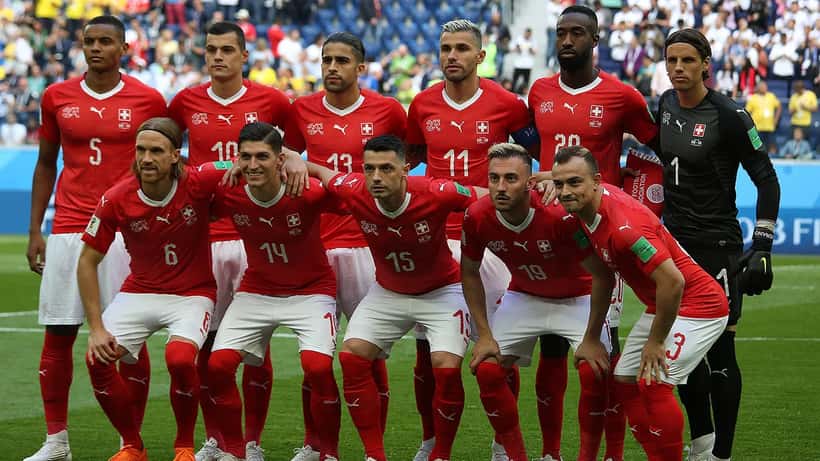
Switzerland beat Qatar 1-0 at Levi's Stadium in Santa Clara, California on June 13, 2026 — a result built on a Breel Embolo penalty in the 17th minute and a squad performance that reminded the world of Swiss football's greatest structural advantage: the ability to field players born across four continents under one legal framework.
Embolo himself was born in Yaoundé, Cameroon. He emigrated to Switzerland as a child, obtained Swiss citizenship, and formally chose to represent the Swiss national team — a process that required FIFA approval, legal documentation, and an understanding of international sports eligibility law that most families never think about.
Until they do.
Who Decides Which Flag a Player Wears?
FIFA governs player eligibility through its Statutes and the Regulations on the Status and Transfer of Players. Under Article 9, a player may represent the national association of the country whose nationality they hold — provided that nationality is a formal legal status and not based purely on residency.
This matters: holding a passport alone does not always confer FIFA eligibility. The governing body examines whether the nationality in question is genuine under that country's own laws. A long-term residency visa, even a permanent one, is not sufficient.
For Australia, this is immediately relevant for families with children who hold dual or triple citizenship. According to the FIFA Players' Status Committee, eligibility must be formally confirmed before a player is selected for official competition — and the rules for doing so are more complex than most families realise.
The One-Time Switch Rule and How It Works
A player may only represent one senior national team in official competition. Once they have played in a competitive international match for one association, that decision is generally permanent.
FIFA's change-of-association regulations, updated in 2021, created a limited pathway for dual nationals: players who appeared only in non-competitive senior or youth matches may apply to switch their allegiance — if the switch occurs before a certain age and meets FIFA's detailed criteria.
The steps in a formal change-of-association application:
- The player must hold legal nationality of the country they wish to represent
- They must not have appeared in a competitive senior international match for another association
- A formal application is submitted to FIFA's Players' Status Committee
- FIFA reviews the case, consults both national associations, and issues a binding ruling
Missing the window — or misunderstanding whether a given match qualifies as "competitive" — can permanently foreclose an athlete's options with no avenue for appeal.
Switzerland's Model and What It Teaches Us
Switzerland's 2026 World Cup squad exemplifies this system in action. Among its members are players born in Cameroon, Kosovo, Ghana, and Portugal who now carry Swiss passports and compete under the white cross. This is not a shortcut — each case went through formal eligibility confirmation.
Switzerland is not alone. According to FIFA data, 289 of the 1,248 players at the 2026 World Cup are representing a country different from their country of birth — nearly one in four athletes. The national associations that have invested in understanding FIFA's legal eligibility framework consistently field deeper and more versatile squads.
Qatar, by contrast, used a residency-based naturalization model for its 2022 World Cup squad that drew sustained criticism from FIFA and rival associations. It illustrates a key point: not every path to eligibility is legally clean, and the consequences of a disputed ruling can follow a player throughout their career.
What Australian Dual Nationals Need to Know
Australia has one of the highest rates of dual citizenship among OECD nations. Significant numbers of Australians hold citizenship in European, Asian, South American, or African countries — by descent, naturalization, or birth overseas.
For families with a child demonstrating genuine sporting potential, questions about eligibility become urgent: if your child qualifies for both Australia and another country, when does the choice lock in? Does a youth tournament appearance for Country A affect their eligibility to represent the Socceroos? What documentation does Football Australia require to support a FIFA submission?
These questions carry real-world financial consequences. National team selection can affect:
- Sponsorship and endorsement contract terms
- Agent agreements and image rights clauses
- Visa and immigration status during overseas club postings
- Player release clauses in professional club contracts
For context on how World Cup 2026 participation is affecting contracts and legal rights for Australians, see our earlier analysis of how the Canada-Bosnia match is shaping legal rights for Australian fans and players.
The Cost of Getting Eligibility Wrong
A FIFA eligibility dispute can sideline a player for months while the Players' Status Committee deliberates. The process is documentation-heavy, conducted in FIFA's official working languages, and follows its own procedural rules that differ significantly from Australian legal norms.
There is no informal fix. Once a player has appeared in an official match for an association, the change-of-association pathway closes — and in some cases the only remaining remedy is a formal legal challenge before the Court of Arbitration for Sport (CAS) in Lausanne.
A sports lawyer with FIFA-specific expertise can:
- Confirm eligibility status before a player accepts a national team call-up
- Prepare and submit change-of-association documentation to FIFA's Players' Status Committee
- Advise on the interaction between FIFA's rules and the nationality laws of both countries
- Represent athletes in Players' Status Committee hearings or CAS appeals
When to Act
Switzerland's 1-0 win over Qatar today is a football story. Underneath it is a story about nationality law, bureaucratic timing, and legal due diligence — the kind that determines whether a player like Breel Embolo earns the right to wear the shirt he spent his career working toward.
If your family is navigating dual nationality and serious sporting ambition, the time to seek legal clarity is not after a national team invitation arrives. By then, the critical windows may have already closed.
ExpertZoom connects Australians with accredited sports law practitioners who specialise in FIFA eligibility, change-of-association processes, and athlete contracts. Book a consultation before the decision gets made for you.
This article is for informational purposes only and does not constitute legal advice. FIFA eligibility determinations are made on a case-by-case basis by the FIFA Players' Status Committee.
