 David Kelly
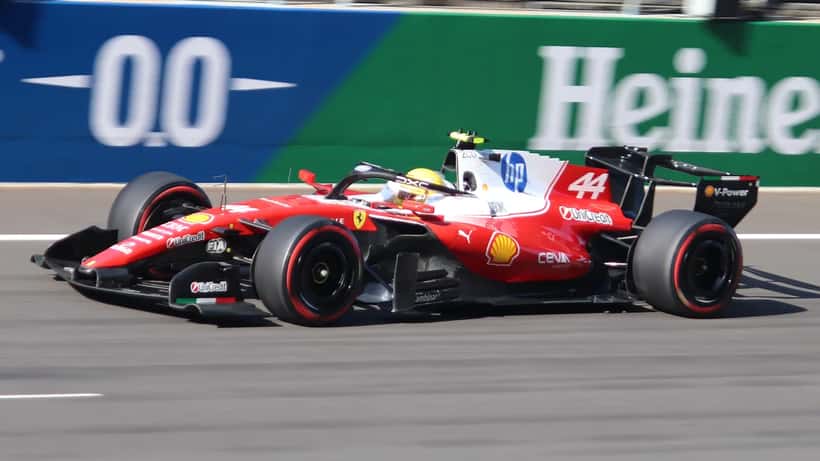
Lewis Hamilton topped second practice at the Monaco Grand Prix on 5 June 2026, leading a Ferrari 1-2 with a 1m 13.026s lap on soft tyres — a tenth quicker than team mate Charles Leclerc, according to Formula1.com's FP2 report. The seven-time world champion sits fourth in the drivers' standings, three points behind Leclerc, with podiums already this season in China and Canada. Twelve months earlier he finished his first Ferrari season sixth, without a single podium.
Hamilton himself credits a single change for the turnaround. In a press conference reported by Motorsport.com and GPFans, he said his new race engineer Carlo Santi has become his "Italian Bono" — a nod to long-time former engineer Peter "Bono" Bonnington. Santi, who previously worked with Kimi Raikkonen, was an inside hire that took months to negotiate. The lesson scales down surprisingly well to Australian motorists: the right specialist, chosen for fit not just credentials, is often the difference between a car that runs and a car that wins.
The Hamilton parable for everyday motorists
Ferrari's 2025 Hamilton problem was not a horsepower deficit. The car was capable; the communication between driver and engineer was not. Bonnington had spent more than a decade learning Hamilton's vocabulary — "snap on entry", "front graining", "diff into 12" — and a new pairing meant rebuilding that shared language from scratch.
Australian mechanics see the smaller version of this every week. A Toyota HiLux that pulls left under braking, a Mazda CX-5 that vibrates at 90 km/h, a BMW with intermittent engine warnings — every car has a vocabulary, and the mechanic who can decode it for a particular vehicle and owner is worth substantially more than one who cannot.
Why a long-term mechanic relationship pays off
Workshop surveys by Australian consumer organisations consistently find that repeat customers receive faster, cheaper and more accurate work than first-time visitors. The reasons mirror what Hamilton describes:
- Vehicle history reduces diagnosis time. A mechanic with three years of service records can rule out half the candidate causes of a new fault before lifting the bonnet.
- Trust changes what gets recommended. A workshop that knows a customer drives 25,000 kilometres a year will recommend different preventative work to one that knows the same vehicle does 6,000.
- Communication preserves the brief. Hamilton's Santi hire turned a Ferrari from "good car, wrong setup" into a podium contender. The equivalent for a daily driver is whether the workshop understands a request like "no rush, just want it to last another five years" — and prices accordingly.
Choosing the right mechanic in Australia
The 2022 Motor Vehicle Service and Repair Information Sharing Scheme, administered by the ACCC, made it easier than ever for independent workshops to access the same technical data manufacturers give their dealers. The ACCC's guide to the scheme confirms that consumers can choose any independent repairer without losing access to manufacturer-grade diagnostics, manuals or software updates.
That changes the calculus for car owners. Three questions help distinguish a workshop worth committing to:
- Do they keep detailed records? A workshop that logs torque settings, replaced parts and observed wear gives the next visit a head start.
- Will they explain trade-offs? A good mechanic offers a $400 fix that lasts two years and a $1,200 fix that lasts ten, and tells the customer which makes more sense for their situation.
- Are they willing to defer non-urgent work? A mechanic who insists on doing everything today should be a warning sign, not a convenience.
When specialisation matters
Hamilton needed an engineer who understood Ferrari's specific car characteristics. The same logic applies to Australian motorists for a narrower set of situations:
- European vehicles — Audi, BMW, Mercedes, Volkswagen — often benefit from a workshop that runs the manufacturer's diagnostic software and stocks brand-specific tools, even if it is independent.
- Hybrid and electric vehicles require dealer-equivalent training to work safely on high-voltage systems. A general mechanic without that certification can be liable for incorrect work.
- Performance-modified cars are best serviced by workshops familiar with the aftermarket parts fitted, not generic chains.
- Older or imported vehicles sometimes need a specialist who can fabricate or source parts no longer in the dealer chain.
For everyday Toyotas, Hyundais, Mazdas and Fords, a competent local mechanic — chosen for service quality, not lowest price — almost always beats a dealer for ongoing servicing once the warranty period ends.
Red flags that should prompt a second opinion
Even the right workshop can drift over time. Customers should consider another mechanic if:
- Quotes consistently come in 20-30% above local averages for the same job.
- The same fault is treated repeatedly without a root-cause diagnosis.
- The mechanic is unwilling to show the worn part being replaced or the diagnostic readout.
- Servicing intervals are aggressively shortened without an explanation tied to the vehicle's history.
- The workshop pushes a sale of unrelated extras — extended warranties, paint protection, fuel additives — at every visit.
Australian state-based fair-trading bodies accept consumer complaints about poor motor vehicle service and can mediate disputes. Documented service records make those complaints far easier to pursue.
The longer-game lesson
Hamilton's Monaco performance is the result of nine months of work with Santi. The relationship will pay off for Ferrari only if both sides commit beyond the next race weekend. For Australian car owners, the equivalent commitment is choosing a workshop and sticking with it through one or two service cycles before judging.
A specialist mechanic who knows a particular vehicle, owner and driving pattern is hard to replace. The first three visits build the record; the fourth begins to repay it in lower bills, faster diagnoses and fewer surprises at registration time.
A mechanic experienced with the specific make, model and driving conditions of a vehicle delivers the same compound benefit Hamilton is now getting from Santi — not magic, just informed work — and finding one is worth more effort than most motorists give it.
