 David Kelly
As Australia's National Cabinet declared a Level 2 fuel security alert in late March 2026, the federal government launched a $20 million advertising campaign urging drivers to use their cars less. But while the ads say "every little bit helps," mechanics and financial advisers say the real opportunity is using this moment to slash your running costs — not just your kilometres.
What the Fuel Campaign Actually Means for Drivers
The "Every Little Bit Helps" campaign, launched after the National Cabinet meeting on 30 March 2026, comes as supply chain pressures from ongoing Middle East conflict have tightened global fuel supplies. Australia has declared a Level 2 alert under the National Fuel Security Plan — meaning supply is under stress but not yet critical.
The government's advice: drive less, use public transport, walk when you can, and drive smoothly to reduce consumption. For many Australians already struggling with cost-of-living pressures, the campaign has attracted significant criticism for spending $20 million telling people to do what they're already doing.
But here's what the ads don't say: how to make your car dramatically cheaper to run, right now.
The Real Cost of Fuel Inefficiency in Your Vehicle
According to Australian Bureau of Statistics CPI data, automotive fuel remains one of the highest-weighted household expenses in Australia's inflation basket — and small changes to vehicle condition can have outsized impacts on fuel consumption.
A poorly maintained engine can increase fuel consumption by 10–15%, according to industry benchmarks. That means an Australian driver spending $200 per month on fuel could be burning $20–$30 unnecessarily every single month due to a dirty air filter, low tyre pressure, or worn spark plugs.
The four biggest mechanical causes of excessive fuel use are:
- Under-inflated tyres: Each 10 kPa drop in tyre pressure increases fuel use by approximately 1%. Australian cars are frequently driven with tyres 20–30 kPa below optimal.
- Dirty or clogged air filters: Restricts airflow to the engine, forcing it to burn more fuel for the same power output.
- Worn or faulty oxygen sensors: Can cause a rich fuel mixture, wasting up to 40% more fuel in severe cases.
- Old or degraded engine oil: Creates more friction, which the engine compensates for by burning more fuel.
What a Mechanic Will Check First
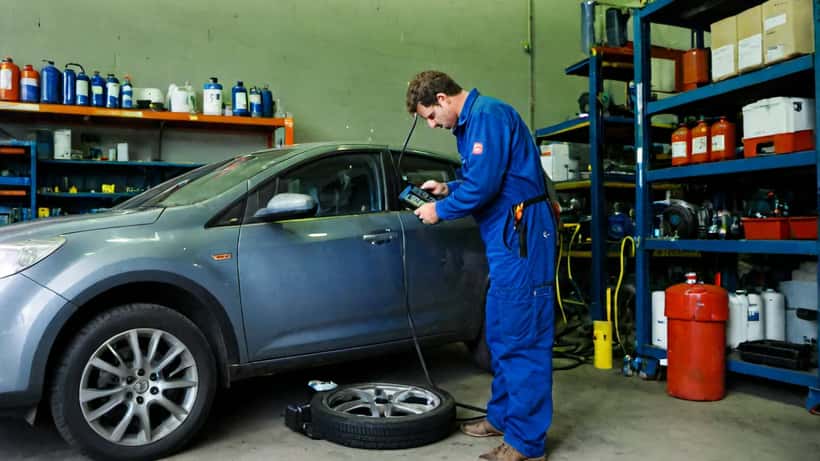
A licensed mechanic performing a fuel efficiency inspection will typically start with a diagnostic scan — checking for fault codes that indicate sensor problems or combustion inefficiencies. This is not the same as a standard logbook service.
In the current climate, mechanics across Australia are reporting a surge in drivers requesting what's known as a "consumption audit" — a targeted inspection focused specifically on fuel-related systems. Cost varies by state, but typically ranges from $80–$150 for a diagnostic scan, with repairs quoted separately.
If you drive more than 15,000 km per year, this inspection can pay for itself within months if a fuel-sapping fault is found and corrected.
Practical Steps to Cut Your Fuel Bill — This Week
You don't need a mechanic to make an immediate difference. These are the steps you can action today:
- Check your tyre pressure at any servo or petrol station air pump. Set to the manufacturer's recommended PSI (found in your door jamb or manual).
- Remove heavy items from your boot: An extra 50 kg increases fuel consumption by roughly 1–2%.
- Use cruise control on motorways: Maintaining a steady speed at 100 km/h uses substantially less fuel than accelerating and braking.
- Service your air filter: If you haven't replaced it in 30,000 km, it's almost certainly reducing efficiency.
- Turn off air conditioning at low speeds: A/C systems can add 5–10% to fuel consumption in urban driving.
When the Government Campaign Gets It Right — and Where It Misses
The "drive less" message is sound in principle. Removing car trips entirely is the most effective fuel reduction strategy. But for the millions of Australians who cannot avoid driving — whether for work, family, or due to inadequate public transport in regional areas — the campaign offers nothing actionable.
That's where professional advice matters. A qualified mechanic can assess whether your specific vehicle has mechanical inefficiencies worth addressing, while a financial adviser can model whether a vehicle upgrade (to a hybrid or EV) makes financial sense at current fuel prices.
At Level 2 of the National Fuel Security Plan, prices are elevated but supply remains available. If the situation escalates to Level 3, fuel rationing protocols could come into effect — making vehicle efficiency even more critical.
The Bottom Line
The government's $20 million campaign has sparked debate, but the underlying message — that Australians need to take fuel consumption seriously — is correct. The difference is in the execution.
Rather than simply driving less, use this moment to audit your vehicle's efficiency. A single inspection by a licensed mechanic could reveal issues that are quietly draining your tank every day. In a fuel-stressed market, that's not just good car maintenance — it's financial self-defence.
If you're unsure where your vehicle stands, connecting with a qualified mechanic through Expert Zoom can help you identify the specific changes that will have the greatest impact on your fuel bill — without guessing.
