 Jess Johnson
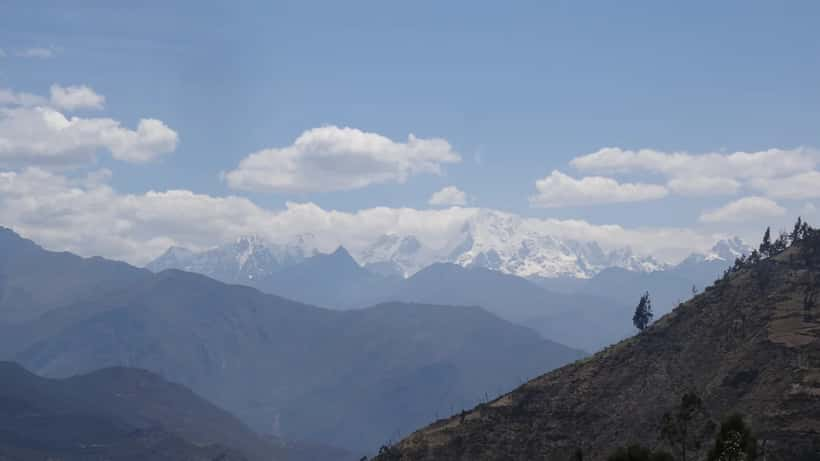
On 11 October 2026, the family of Melbourne hiker Jordan Yap, 30, received devastating confirmation: his body had been found in Peru's Mitucocha Lagoon, a high-altitude lake at 4,270 metres in the remote Huayhuash Mountains, weeks after he disappeared. Yap had left a Huaraz hostel on 14 September for a planned multi-day solo trek. When he missed a Lima hotel check-in on 23 September and a flight to Cusco the following day, his family raised the alarm — contacting Australia's Department of Foreign Affairs and Trade (DFAT) and hiring a private Peruvian mountain rescue team.
DFAT's response to media enquiries was brief: it was "providing consular assistance to the family of an Australian who died in Peru." For many Australians, those words conjure an image of government support that extends far beyond what the law actually provides. The gap between expectation and reality — legal, financial, and logistical — is one that trips up families at the worst possible moment.
Jordan Yap's case is the latest in a series of tragedies involving Australians travelling in developing countries, including poisoning incidents in Southeast Asia that exposed similar legal blind spots. Each case has forced the same question: what do Australian families actually have the right to expect when a loved one dies on foreign soil?
What "Consular Assistance" Legally Means — and What It Doesn't
According to the Australian Government's Smartraveller guidance, consular staff can help families in a defined range of ways: they can facilitate contact with local authorities, provide lists of English-speaking lawyers and funeral directors in the host country, assist with official notifications, and help families understand the local legal process. What they cannot do is equally important to understand.
DFAT will not pay for the repatriation of remains. It will not cover medical, autopsy, mortuary, or funeral expenses. It will not conduct its own investigation into the death, and it has no legal authority to compel the host country's officials to act faster, share information, or waive local legal requirements. Consular staff are facilitators — they work within the host country's legal system, not above it.
In Peru, when a foreign national dies, local authorities conduct the initial investigation and issue a death certificate through the country's civil registration body. An official autopsy may be required before any remains are cleared for departure. Only after a Peruvian authority-certified death certificate is obtained and apostilled — a document legalisation step required for international recognition — can remains legally be transported out of the country. This process can take days to several weeks, depending on the circumstances and location of the death. A remote area like the Huayhuash region, roughly 200 kilometres north of Lima, adds logistical complexity that urban deaths do not face.
The Legal Complexity Families Rarely Anticipate
Beyond the immediate crisis, the death of an Australian overseas triggers a chain of legal obligations back home that can stretch for months. In Australia, the administration of a deceased estate is governed by the state or territory where the deceased was last resident. For a Victorian like Jordan Yap, that means Victorian probate law applies.
However, when the death — or assets of the deceased — involves a foreign country, the process becomes significantly more complex. An executor seeking to administer an estate may need to apply for formal recognition of a foreign death certificate in Australia, obtain a grant of probate from the Supreme Court of Victoria, and in some cases seek an ancillary grant of probate in Peru if the deceased held assets there — each step requiring engagement with solicitors who operate across both legal systems.
Estates that appear straightforward can quickly become complicated. A 28-year-old with $85,000 in superannuation, a car, personal belongings lodged in a foreign country, and a handwritten or online document-kit Will may seem like a simple estate to administer. Add an overseas death certificate requiring apostille certification, Peruvian authorities who cannot be compelled to release personal effects without documentation, and dual-jurisdiction probate applications, and legal costs can move from the expected $2,500–$4,000 range into $10,000–$18,000 — and that is before the question of physically repatriating remains.
Families are sometimes surprised to discover that the estate itself bears those costs. If the estate's value is low or its assets are tied up in superannuation — which generally passes outside the estate directly to a nominated beneficiary — there may be limited liquid funds available to meet costs that begin accruing within days of a death.
Travel Insurance and the Altitude Exclusion Most Hikers Miss
Travel insurance is supposed to be the safety net. For trekkers in the Huayhuash circuit, it frequently isn't — at least not the standard version purchased at checkout.
Many comprehensive Australian travel insurance policies include altitude exclusions that limit or void cover for claims arising from activities above a specified elevation. That threshold varies between insurers: some policies apply restrictions above 3,000 metres, others above 4,000 metres, and some limit cover to treks on marked trails with a licensed guide. The Huayhuash circuit — a demanding multi-day route that regularly exceeds 4,700 metres at its highest passes and sits well above 4,000 metres for much of its length — falls squarely within the exclusion zone of many standard policies.
What does this mean in practice? If a claim arises from an activity excluded by the policy — such as solo unsupported trekking above the policy's altitude cap — the insurer may decline to pay for emergency helicopter evacuation, mountain rescue team costs, mortuary and preparation services, or repatriation of remains. Estimates for body repatriation from a remote South American location to Australia run from approximately $10,000 to $20,000 or more, depending on distance, condition of remains, airline requirements, and whether a funeral director in the host country is engaged. Emergency helicopter evacuation in the Andes can run from $15,000 to $45,000 USD depending on altitude and remoteness of the extraction point.
These are costs that an adventure sports rider — typically available for an additional $45 to $120 on a standard policy — is specifically designed to cover. Most solo adventure travellers do not purchase one because they do not read page 14 of their Product Disclosure Statement before clicking "buy."
If Jordan Yap Had Been Your Sibling: The Real-World Numbers
Consider a specific scenario: a 31-year-old Sydney mechanical engineer — call him Thomas — who books the Huayhuash circuit in August 2026. He purchases a standard six-week travel insurance policy for $310 online. He has a simple Will prepared from a document kit naming his partner as sole beneficiary. He registers with Smartraveller but leaves no emergency brief or power of attorney documentation for his family.
Thomas goes missing on day nine of the circuit. His partner contacts DFAT. A private rescue team is deployed. His body is located eleven days later at 4,400 metres.
The policy Thomas purchased excludes altitude trekking above 4,000 metres, confirmed on page 17 of the PDS. Out-of-pocket exposure: private rescue team, approximately $8,500 AUD; body recovery and preparation in Peru, approximately $6,000 AUD; repatriation of remains to Sydney, approximately $16,000 AUD; dual-jurisdiction estate administration including probate, death certificate apostille, and recovery of personal effects from Peru, approximately $9,500 AUD. Total uninsured costs: approximately $40,000 AUD.
If Thomas had added an adventure sports rider ($75), had a Will reviewed by a wills and estates solicitor before departure ($450–$600), and left his family with a documented emergency brief — including his insurer's 24-hour emergency line and the name of an English-speaking Lima lawyer — the financial exposure would have been under $600 out of pocket, with most remaining costs covered or recoverable.
Before You Book: Four Steps a Lawyer Would Recommend
Solo adventure travel across South America, Southeast Asia, and Central Asia is surging among Australians. The legal infrastructure for what happens when things go wrong has not kept pace with the growth in traveller numbers. Legal professionals who specialise in wills, estates, and travel insurance disputes consistently identify four practical steps that cost little and change outcomes significantly.
Check your policy PDS before purchasing, not after. Download the full Product Disclosure Statement and search specifically for "altitude," "trekking," "mountaineering," "solo," and "unsupported." If your planned route exceeds the altitude cap, purchase an adventure sports rider at the time of policy issuance — adding it later is not always possible, and it cannot be applied retroactively.
Have your Will reviewed by a qualified solicitor before long-haul solo trips. Document kit Wills are often legally valid in Australia but may be insufficient for cross-border estate administration. A solicitor experienced in wills and estates can ensure your Will is correctly executed, your executor is clearly nominated and authorised, and that international complexity is flagged. This consultation rarely exceeds $600.
Register on Smartraveller and create a written emergency brief. Registration is free and ensures DFAT knows your itinerary. Your emergency brief — left with family — should include your insurer's 24-hour emergency line, the names of local emergency contacts in your destination country, and the contact details of your Australian solicitor.
Understand that DFAT assistance starts the process — it doesn't fund it. The Australian Government provides consular support. It does not pay bills. Budget for worst-case costs before you travel, not after.
Jordan Yap's family now face that process. For thousands of Australians departing on solo treks over the coming summer, the time to understand those legal and financial realities is before the flight boards.
This article contains general information about legal and insurance matters. It is not legal advice. Always consult a qualified legal professional for advice specific to your circumstances.
YMYL note: This article discusses legal and insurance matters with potential financial impact. Readers should seek independent professional advice.
