 Chloe Wilson
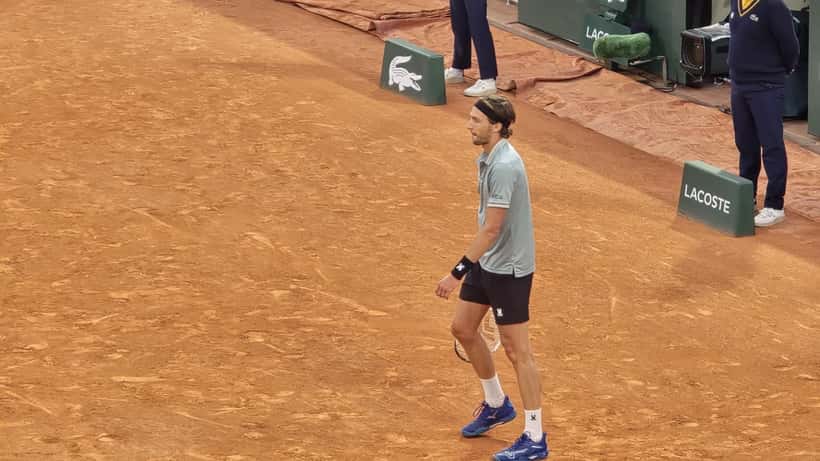
Jannik Sinner reached the Monte-Carlo Masters final this week, posting his 20th consecutive Masters 1000 win on 11 April 2026 — joining Roger Federer, Rafael Nadal, and Novak Djokovic as the only players in history to achieve this milestone. For Australian recreational athletes, his season raises a question worth taking seriously: what does it actually take to sustain peak physical performance, and when do you need professional help to get there?
Sinner's 2026 Season in Numbers
The figures are extraordinary. Sinner holds a 23-2 win-loss record through early April 2026, a 92% match win rate across the ATP Tour. He won the Paris Masters in November 2025, the Indian Wells Open and Miami Open in March 2026 — all without dropping a set — becoming the first player in history to win three consecutive Masters 1000 titles without a set loss.
At Monte-Carlo this week, he defeated Felix Auger-Aliassime in the quarter-final and destroyed Alexander Zverev 6-1, 6-4 in the semi-final to reach Sunday's final against Carlos Alcaraz. He is the only player alongside Federer, Nadal, and Djokovic to reach the final at the first three Masters 1000s of a season.
He achieved all of this at age 23, on three different surfaces, across 10+ weeks of sustained high-level competition.
What Elite Performance Requires — And What It Reveals
Sinner's dominance is not simply talent. It is the result of an integrated support system: a coaching team, a physiotherapy staff, sports medicine specialists, a nutritionist, and a mental performance consultant. At the elite level, no serious athlete trains without medical guidance. The reason is simple — the body adapts to load, but it also breaks under it.
For Australian recreational athletes — the 45-year-old who trains for triathlons, the weekend cricketer, the gym-goer pushing through an aching shoulder — the same principles apply, even if the scale is different.
The Australian Sports Commission research notes that more than 14 million Australians participate in sport or physical activity each week. Yet a significant portion train without any professional health oversight, managing pain themselves, self-diagnosing injuries from online forums, and returning to activity before tissue has properly healed.
The Most Common Mistakes Australian Athletes Make
Ignoring overuse injuries. Tendinopathy — inflammation of tendons from repetitive load — is the most common overuse injury in recreational sport. It affects the Achilles tendon, the patellar tendon, and the rotator cuff most frequently. The typical pattern is persistent soreness that "warms up" after 10 minutes of activity. Many athletes interpret this as the injury improving. It is usually the tendon becoming temporarily less painful as blood flow increases, while the underlying degeneration continues. A sports medicine doctor or physiotherapist can assess whether you need load modification, specific eccentric exercises, or imaging to rule out a partial tear.
Treating all muscle soreness the same. Delayed-onset muscle soreness (DOMS) — the familiar ache 24-48 hours after a hard session — is normal and self-resolving. A sharp pain that begins during exercise, especially in a joint, is not. The distinction matters because continuing to train through the wrong kind of pain can convert a manageable soft-tissue injury into one requiring surgery or months of rehabilitation.
Skipping recovery as a luxury. Sinner's team treats sleep, nutrition, and structured rest as non-negotiable training components — not optional extras. For recreational athletes, recovery is often the first thing removed when schedules get tight. According to the Australian Institute of Sport, inadequate sleep directly impairs muscle protein synthesis, reaction time, and injury risk — the same physiological processes that determine whether training improves or degrades performance.
Returning to sport too fast after illness or injury. The period after infection — even mild illness — requires careful return-to-activity protocols, particularly for cardiovascular load. Returning to training too fast post-illness is a known risk factor for cardiac complications in athletes.
When to Book an Appointment With a Sports Medicine Specialist
You do not need to be competing at the Monte-Carlo Masters to benefit from professional sports medicine advice. Consider booking an appointment if:
- You have joint or tendon pain that has persisted for more than two weeks despite rest
- You have had the same recurring injury three or more times
- Your performance has plateaued or declined despite consistent training
- You are returning to sport after more than six weeks of inactivity, illness, or injury
- You are over 40 and increasing training load significantly
- You are managing a long-term condition — diabetes, hypertension, asthma — and training without medical supervision
A general practitioner can refer you to a sports medicine physician, or you can self-refer to a registered physiotherapist. For complex cases involving imaging or rehabilitation, a sports medicine specialist with specific training in musculoskeletal medicine will provide the most targeted assessment.
Disclaimer: This article provides general health information only and is not a substitute for professional medical advice. Always consult a qualified health professional before beginning, modifying, or returning to a physical training program.
The Sinner Standard — Applied to Real Life
What makes Sinner's 2026 season remarkable is not just his talent — it is his consistency. Twenty consecutive Masters 1000 wins without a significant injury absence represents an extraordinary combination of athletic capability and professional management of his physical health.
Australian recreational athletes will not match his results. But the underlying principle — that physical performance is built and maintained with expert support, not guesswork — applies at every level. If something hurts, it is worth having it properly assessed. The earlier you seek help, the more options you have.
Carlos Alcaraz awaits in Sunday's final. Whoever wins, both players will be guided by medical teams who treat prevention as seriously as treatment. That approach is available to Australians too — through GPs, physiotherapists, and sports medicine specialists — regardless of your level or your sport.
