 Chloe Wilson
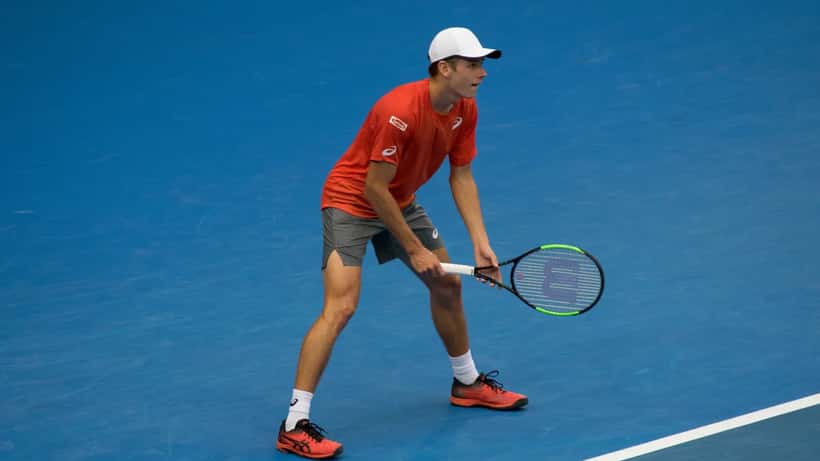
Alex de Minaur made history at the Monte Carlo Masters on April 9, 2026, defeating Belgium's Alexander Blockx 7-5, 7-6(4) to become the first Australian in the Open era to reach three Monte Carlo quarterfinals. Today, Friday April 10, he faces Monegasque wildcard Valentin Vacherot — and while Australia watches on, sports medicine specialists are asking a different question: how does a professional tennis player survive clay court season uninjured when so many Australians come home from their weekend game with a torn muscle?
Why Clay Courts Are a Minefield for Recreational Players
Clay courts slow the ball and create longer rallies. That sounds easier on the body — but the science tells a different story. The sliding action required on clay loads the hip flexors, adductors, and anterior knee structures in ways that hardcourt and grass play simply do not. According to Sports Medicine Australia, lower-limb injuries account for more than 65% of all tennis-related presentations in Australia, with the knee, ankle, and hip the most commonly affected joints.
De Minaur is protected by a professional training team that monitors his load, adjusts his recovery protocols, and screens for early signs of overuse. Weekend warriors playing social or pennant tennis rarely have that infrastructure — yet they're playing on the same surfaces, often without adequate warm-up, in mismatched footwear.
The Three Injuries Clay Season Brings Out
Sports medicine practitioners in Australia consistently see three injury patterns spike during the European clay season, when local players begin mimicking the high-volume, high-intensity game they see on TV:
1. Medial knee strain from lateral sliding. The instinctive slide on clay loads the medial collateral ligament (MCL) at full knee extension. Without strengthening work on the hip abductors and VMO (vastus medialis oblique), this becomes a chronic problem.
2. Hip flexor and groin tears. The serve-and-recovery pattern on clay — full hip extension on the serve, rapid hip flexion to return to position — creates significant eccentric load. Players who skip hip flexor work in their training are at particular risk.
3. Achilles tendinopathy. Clay play demands repeated explosive push-offs and rapid deceleration. If your Achilles hasn't been progressively loaded through calf raises and plyometric drills, the tendon fatigues over a clay season far faster than on hardcourt.
What the Professionals Know That You Don't
De Minaur's fitness staff track his Training Monotony (a measure of load variation) and his Acute:Chronic Workload Ratio — tools adopted from elite football and cricket that are now standard in professional tennis. The principle is simple: your injury risk spikes when you dramatically increase training volume or intensity without a corresponding increase in your fitness base.
For Australian recreational players, the practical lesson is to build clay-specific conditioning 4-6 weeks before a clay season begins. That means:
- Lateral lunge progressions (3 sets of 12 each side, twice weekly)
- Single-leg deadlifts for posterior chain strength
- Calf raise protocols with progressive overload — starting with both feet, advancing to single-leg, then weighted
- Hip flexor eccentric drills — the so-called "Copenhagen adductor" exercise has strong evidence behind it
An accredited sports physiotherapist can assess your movement patterns and identify the muscle imbalances most likely to cause injury on clay before you step onto the court.
The Footwear Question Nobody Asks
Clay court shoes have a herringbone outsole pattern that allows controlled sliding. Wearing hardcourt shoes on clay dramatically increases rotational knee stress because the foot grips instead of slides — the body absorbs the torque that should be released by the slide. Tennis Australia recommends surface-specific footwear as a primary injury prevention measure. If you're playing on clay this season, your shoes matter more than your racquet strings.
When to See a Sports Medicine Specialist
Most tennis injuries announce themselves before they become serious: a dull ache in the medial knee after play, a tightening in the hip after a long match, Achilles stiffness on the morning after a session. These are warning signs, not nuisances to push through.
Australian sports medicine clinics have adopted the "traffic light" model for musculoskeletal pain assessment. Green light: mild discomfort that resolves within 24 hours — modify load, continue playing. Orange light: pain that persists beyond 24 hours or affects your movement during play — reduce load significantly, seek assessment within 48 hours. Red light: acute sharp pain, swelling, or inability to weight-bear — stop immediately and present to a sports medicine practitioner or emergency department.
A sports medicine doctor or physiotherapist can order targeted ultrasound imaging, prescribe a load-management programme, and clear you to return to play safely. The cost of a consultation is trivial compared to the cost of six weeks on crutches.
De Minaur's Blueprint for Australian Recreational Players
The consistency that has taken de Minaur to three Monte Carlo quarterfinals is not accidental. It is the product of deliberate load management, sport-specific conditioning, and immediate access to expert medical support when warning signs emerge. Australian recreational players can apply the same principles at a fraction of the professional cost.
Book a pre-season movement screen with a sports physiotherapist. Invest in surface-appropriate footwear. Build your training load progressively across the clay season. And when your body signals distress — listen to it, then consult an expert.
Disclaimer: This article provides general health information only and does not constitute medical advice. Consult a qualified sports medicine practitioner before beginning a new training programme or if you experience musculoskeletal pain.
On Expert Zoom, you can connect with accredited health professionals — including sports physiotherapists and sports medicine doctors — who understand the specific demands of recreational tennis in Australia. Whether you're heading into the clay season or recovering from an existing injury, expert guidance makes the difference between a season cut short and one that lasts.
