 Olivia Thompson
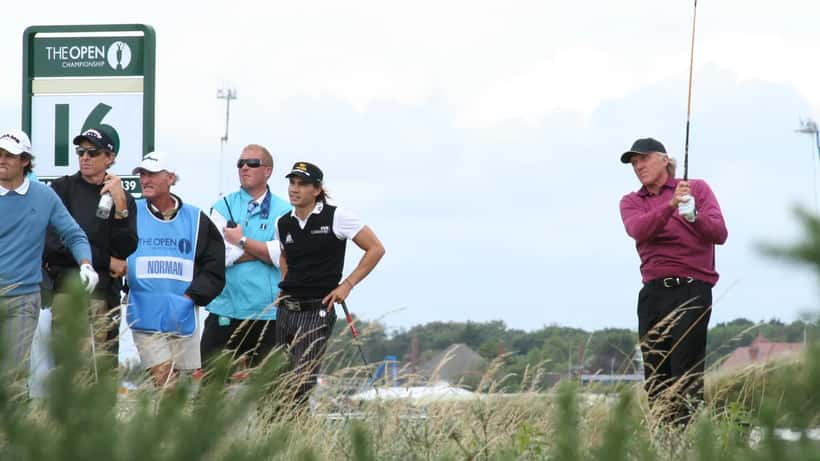
When Greg Norman officially closed out four years as LIV Golf's inaugural CEO in January 2025 — replaced by American sports executive Scott O'Neil — he did not retire quietly. The 71-year-old Queensland legend accepted a seat on the Brisbane 2032 Olympic and Paralympic Games Organising Committee (BOCOG) as an independent director, nominated by the Albanese government's then-Sports Minister Anika Wells. He traded one of the most contested boardroom chairs in world sport for a civic role shaping his home country's biggest moment in decades.
The move prompted a question that resonates with thousands of Australians every year. What happens to your financial plan when a high-income executive role ends and a part-time director position begins — and how do you protect the wealth you've spent decades building?
From LIV Golf to Brisbane 2032: The Facts
Greg Norman spent four years as LIV Golf's founding commissioner, the public face of a Saudi-backed tour that reshaped global golf economics. His total compensation was never publicly disclosed, but executives leading comparable international sports organisations typically earn between $3 million and $6 million annually in base salary, incentives and super contributions, according to Australian company remuneration surveys.
Norman's replacement, Scott O'Neil, takes the reins of a league with multi-billion-dollar broadcast commitments. Norman himself teased further announcements — "Stay tuned!" — suggesting his post-LIV business interests will keep him active. Those interests already span golf course design, wine, apparel, restaurants and real estate under the Shark brand.
His BOCOG board appointment connects him to a project with an estimated $7 billion budget and national significance. Norman grew up near Royal Queensland Golf Club, the riverside course slated to host the 2032 Olympic golf tournament. Independent director fees on Australian government-affiliated bodies of BOCOG's scale typically run between $80,000 and $150,000 per year — a fraction of a CEO's executive package.
For a figure with Norman's diversified income streams, the shift is manageable. For most Australians accepting a first board role after an executive career, the adjustment can be financially destabilising without early preparation. Other professionals navigating similar golf-sector wealth transitions have explored related strategies — including those examined in ExpertZoom's analysis of high-earning athletes and wealth management in Australia.
What a Wealth Management Expert Sees in This Transition
The shift from executive salary to director fees is one of the most overlooked wealth planning triggers in Australian financial life.
"Most high-income earners focus on accumulation for thirty years, then suddenly find themselves in a period where the salary tap turns off or substantially reduces," explains a Wealth Management specialist consulted for these transitions. "Without a plan in place twelve to twenty-four months before the change, people can face a tax spike, an unplanned superannuation gap, or a lifestyle shortfall that takes years to reverse."
Three mechanisms matter most at this stage.
Superannuation catch-up contributions allow Australians whose total super balance was below $500,000 on 30 June of the previous financial year to contribute unused concessional cap space accumulated over up to five prior years. From 2024–25, the annual concessional contribution cap is $30,000. For a professional earning $400,000 to $600,000 who contributed only the 11.5% Superannuation Guarantee, unused carry-forward space may support a lump-sum concessional contribution of $80,000 or more in the final high-income year — generating a tax deduction at the 47% marginal rate and moving funds into the 15% earnings environment of superannuation.
Transition-to-retirement income streams (TRIS) allow Australians who have reached their preservation age (60 for most people born after 1964) to draw from super while still working, either part-time or in a board capacity. Structuring TRIS drawdowns to supplement reduced director fees can prevent premature liquidation of growth assets outside super — assets that may trigger capital gains tax if sold under pressure.
Portfolio rebalancing for income generation is the third lever. A capital-growth-weighted share portfolio built during a $500,000-plus salary phase may not generate sufficient income in retirement. Shifting weight toward dividend-paying Australian equities, listed real estate investment trusts (LREITs), and term deposits can fund living costs without eroding the asset base — provided the rebalancing occurs in a tax-efficient sequence.
Concrete Case: From CMO to Independent Director in Brisbane
Consider Marcus, 63, a Chief Marketing Officer at a Brisbane-based infrastructure company earning $420,000 per year in total salary and super. In mid-2026, he accepts an independent director position on a state-funded sporting body — annual director fee of $95,000 — and steps down from his executive role.
The income reduction is immediate and steep: $420,000 falls to $95,000, a 77% drop.
Scenario A — Marcus planned ahead (24 months before transition):
Marcus reviewed his carry-forward super balance and found he had four years of unused concessional cap space totalling $68,000. In his final year of full executive earnings, he made a personal concessional super contribution of $68,000 (on top of his employer's $30,000 Superannuation Guarantee contribution, staying within the carry-forward entitlement). At his 47% marginal tax rate, the deduction generated approximately $31,960 in immediate tax savings.
He also restructured his salary sacrifice arrangements to ensure the full $30,000 annual concessional cap was used in his last three years.
From age 60, Marcus opened a TRIS, drawing $40,000 per year tax-free from super to supplement his after-tax salary. This reduced the amount he needed to draw as taxable salary, keeping his taxable income below the $190,000 threshold where the top rate applies.
Net result in year one of the director role: Marcus maintained his living expenses, avoided CGT on growth assets, and entered the transition with a super balance $115,000 higher than it would have been without the carry-forward contribution. Estimated total benefit in year one: approximately $62,000 preserved or saved compared to doing nothing.
Scenario B — Marcus did not plan:
Marcus accepted the board role without reviewing his super position. He drew down on his share portfolio to cover living expenses in month three of the transition, realising $52,000 in gains on assets held for less than twelve months — CGT liability of approximately $24,440 at his now-reduced but still significant marginal rate.
He also missed the carry-forward window: his total super balance crossed $500,000 in the year he finally reviewed his position, making him ineligible for catch-up contributions.
Net cost of not planning: approximately $86,000 in the first year of the board role, before ongoing compounding effects are considered. The lifetime impact of a delayed super maximisation strategy typically runs to several hundred thousand dollars in final balance terms.
Practical Implications for Executives Approaching a Similar Shift
Norman's transition illustrates a structural truth about late-career finance in Australia: diversified income streams provide the buffer that a single employment contract cannot.
Independent directors in Australia must also account for practical obligations that many first-time board members underestimate. Director fees above the GST registration threshold ($75,000 annually from a single or combined source) may require ABN registration and quarterly BAS lodgement. Directors and Officers (D&O) insurance is typically provided by the organisation, but personal liability under the Corporations Act 2001 remains a real exposure — particularly on boards with large budgets, public accountability obligations, or government oversight.
BOCOG, with its estimated $7 billion budget and status as a Commonwealth-supported body, represents exactly the kind of environment where governance obligations are substantive. An independent director who does not understand those duties before accepting the role carries personal risk that no director fee can offset. For coverage of a parallel LIV Golf transition — Cameron Smith's career management decisions as the tour evolved — ExpertZoom's analysis of Smith's coaching change and career strategy outlines the professional framing considerations that apply to any high-profile Australian athlete or executive in transition.
The Australian Taxation Office provides detailed guidance on carry-forward concessional contributions eligibility — including the $500,000 total balance threshold — via its official super contributions page.
What to Do Before You Hand Over Your Access Pass
If you are within three years of a similar executive-to-board transition, the planning window is now — not when the resignation letter is signed.
A licensed independent Wealth Management adviser can model your carry-forward super entitlement, TRIS drawdown capacity, and income replacement strategy before the transition date. A lawyer specialising in corporate governance can brief you on director duties under the Corporations Act before you accept the board seat. The cost of that advice is typically measured in hundreds of dollars per hour. The cost of not getting it can be measured in six figures over the first year alone.
Greg Norman's career move to Brisbane 2032 is one of the highest-profile examples of an Australian executive reinventing their professional chapter after sixty. For those navigating the same shift with fewer Shark brand royalties to fall back on, the quality of the wealth plan determines whether that chapter is comfortable or constrained.
This article contains general information only and does not constitute financial or legal advice. Consult a licensed financial adviser or solicitor for personalised advice relevant to your circumstances.
