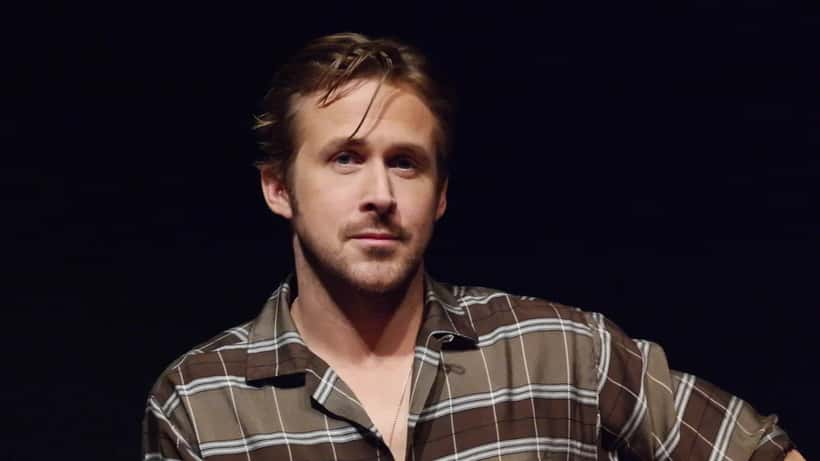
 Jess Johnson
When Marvel Studios head Kevin Feige walked onto the Hall H stage with Ryan Gosling at San Diego Comic-Con on 25 July 2026, the announcement reverberated well beyond superhero cinema. Gosling — confirmed as Johnny Blaze, the flame-skulled Ghost Rider — will headline a 2028 MCU film directed by Shawn Levy. For Australian creatives watching the livestream, the real story was not the character: it was what a multi-picture studio contract actually obligates you to, and why so many professionals sign these instruments without fully understanding what they are agreeing to.
Legal disclaimer: This article is for informational purposes only and does not constitute legal advice. For advice specific to your situation, consult a qualified entertainment lawyer.
The Hall H Announcement
Marvel officially unveiled Ghost Rider as part of its San Diego Comic-Con 2026 panel on 25 July. Gosling, who confirmed he had been in discussions with Marvel for an extended period, will portray Johnny Blaze — a motorcycle stuntman who sells his soul to the demon Mephisto and transforms into a supernatural vigilante. Principal photography is scheduled to begin in early 2027, with a 2028 theatrical release window confirmed.
Shawn Levy, director of Deadpool & Wolverine — the highest-grossing R-rated film in history — will helm the project. The pairing of Levy, Gosling, and Marvel's machine immediately generated speculation about a darker, more tonally distinct corner of the MCU.
Ghost Rider has a complicated screen history. Nicolas Cage played the character in two Sony-produced films — Ghost Rider (2007) and Ghost Rider: Spirit of Vengeance (2011) — both of which fell outside the MCU's interconnected continuity. The Gosling casting represents Marvel's first attempt to bring the character inside the universe.
According to Variety, industry analysts estimate the total value of Gosling's multi-picture arrangement — across a standalone film and expected Avengers crossover appearances — at upwards of USD $50 million. That figure reflects not just one film but a multi-year contractual commitment with consequences that extend well beyond the premiere.
What a Multi-Picture Deal Actually Involves
MCU contracts are not straightforward one-film agreements. When an actor joins the Marvel universe, they typically commit to multiple projects — a standalone film, ensemble crossovers, and potentially Disney+ streaming appearances — over a five-to-ten year horizon.
These agreements carry several interlocking obligations. First, fee structures are set at the time of signing, regardless of how significantly the actor's market position changes. An actor whose career accelerates between their first and third MCU appearance — say, through an Oscar win or a globally successful independent film — remains bound to the originally negotiated fee schedule unless renegotiation is separately agreed.
Second, studios retain option rights over the actor's availability, not the other way around. If the studio exercises its option for an Avengers crossover, the actor must make themselves available within specified production windows. The actor's own scheduling preferences are subordinate to the studio's production calendar.
Third, exclusivity clauses limit the actor's ability to portray similar characters for competing studios. Taking on Ghost Rider for Marvel would almost certainly prevent Gosling from appearing in any DC Comics adaptation for the duration of the contract — and in some cases, beyond it.
Finally — and increasingly significant in 2026 — broad digital likeness clauses grant studios rights to use an actor's appearance across promotional material, games, interactive experiences, and AI-generated content. This has become one of the most actively contested areas of studio negotiating in both the US and Australia.
How Australian Entertainment Law Frames These Agreements
Australian creatives often assume their contracts will be governed by familiar employment law standards. In practice, most screen industry agreements are structured as independent contractor or service agreements — not employment contracts — which places the performer outside the core protections of the Fair Work Act 2009.
This distinction has tangible consequences. Under Australian contract law, parties are free to negotiate virtually any terms they agree to, including provisions that would be considered restrictive in a standard employment setting. A morality clause, an AI likeness provision, or a five-year exclusivity restriction is entirely enforceable if agreed in writing, and Australian courts will generally hold parties to what they signed.
Screen Australia, the federal government agency supporting Australian screen production, notes that Australian productions increasingly adopt US-style contract templates — particularly in co-productions with American studios. This means Australian actors working on internationally co-produced projects may find themselves subject to contractual expectations originally designed for the US market, without the SAG-AFTRA union protections that American performers have negotiated.
The Australian counterpart, the Media, Entertainment & Arts Alliance (MEAA), provides member resources and specialist legal referrals — but accessing those resources, and retaining an independent entertainment lawyer, remains the individual creative's responsibility.
The Four Clauses Most Australian Creatives Miss
Entertainment lawyers who work with Australian actors and content creators consistently identify four provisions that clients overlook or misunderstand before signing.
Right of first negotiation vs. right of first refusal. These terms appear similar but create very different power dynamics. A right of first negotiation obliges the studio to open discussions with you before approaching other talent — but does not guarantee a deal. A right of first refusal, more common in Australian streaming contracts, lets the studio match any competing offer you receive. Signing away a right of first refusal can permanently suppress your bargaining power on subsequent projects.
Option escalation rates. Most contracts specify a percentage uplift per option period — the increase in fees across additional seasons or films. A 10% escalation sounds reasonable until you compare it to open-market movement. An actor earning $10,000 per episode who becomes a breakout performer may find their contracted escalation to $11,000 for the next series sits far below their new market rate of $30,000 or more per episode on competing productions.
Sequel obligations at fixed rates. First-film contracts often include pre-agreed fees for sequels, set at the time of the original negotiation. If the film succeeds and the actor's profile rises, they remain bound to the originally contracted sequel rate. This is how a performer who commands $2 million for an independent role may be contractually obligated to reprise a franchise character for $400,000.
AI and digital likeness provisions. In 2026, this has become the most contested territory in entertainment contracting. Studios routinely seek broad, perpetual rights to use an actor's digital likeness — including AI-generated versions — for promotional material, games, and ancillary content. Australian contract law does not provide automatic protections: each specific use must be explicitly negotiated, or the broad grant will stand.
As reported in related Australian entertainment law coverage on ExpertZoom, the rise of streaming platforms has created comparable contract complexity for Australian performers in television — and the same principle applies to any production with a US studio partner.
What If You Were the One Signing?
Consider a composite scenario representative of what entertainment lawyers handle regularly in Sydney and Melbourne. A 30-year-old Australian actor — call them Jordan — secures a lead role in a US-backed streaming series, partly shot in Queensland under a co-production arrangement. The deal is structured as an independent contractor agreement:
- Season 1: 8 episodes at $10,000 per episode ($80,000 total)
- Option for Season 2: 10% uplift ($88,000)
- Option for Season 3: further 10% ($96,800)
- Exclusivity: no lead roles for competing streaming services during production windows
- AI likeness: "perpetual, non-exclusive licence to Jordan's likeness for promotional and ancillary content"
If the studio exercises both options, Jordan earns $264,800 across three seasons. That sounds workable — until the series becomes a hit and Jordan's open-market rate climbs to $30,000 per episode after Season 1.
If the exclusivity clause is enforced and the studio exercises both options, Jordan is contractually locked into the capped rate. The opportunity cost — the difference between contracted income and market-rate income for Seasons 2 and 3 — exceeds $450,000. The AI likeness clause, granted perpetually without a separate fee, may then be used in promotional campaigns for years after Jordan's on-screen involvement ends.
A specialist entertainment lawyer reviewing that contract before signing could have negotiated: a 25-30% escalation per season, a cap on the exclusivity clause's scope (specific competitor categories rather than all streaming), and an AI likeness clause requiring separate written consent and a per-use fee for each new application.
The math is clear: specialist legal review before signing costs a fraction of what a poorly negotiated contract costs over its full term.
Before You Sign: What Australian Creatives Should Do
Ryan Gosling's Ghost Rider announcement is a reminder that studio contracts are multi-year instruments — even when they are signed in a room full of excitement. For Australian creatives at any career stage, the process is the same:
Engage an entertainment lawyer before signing, not after. General solicitors are rarely equipped to identify screen industry–specific traps. Look for practitioners with direct experience in screen, music, or digital content licensing.
Negotiate escalation clauses to reflect market movement. Push for at least 20–30% per option period, not a flat template rate. Seek language that allows renegotiation if your market rate demonstrably increases.
Define AI likeness rights explicitly and narrowly. Any provision granting rights to your digital likeness should specify the exact permitted uses, require separate written consent for each new application, and include a per-use compensation schedule.
Limit exclusivity scope. Request that exclusivity clauses be defined by character type, genre, or named competitors — not as a blanket restriction across the entire screen industry.
ExpertZoom connects Australian creatives directly with entertainment lawyers who specialise in reviewing studio contracts, option agreements, and IP licences — so the deal you sign reflects your interests, not just the studio's standard template.
