 Olivia Thompson
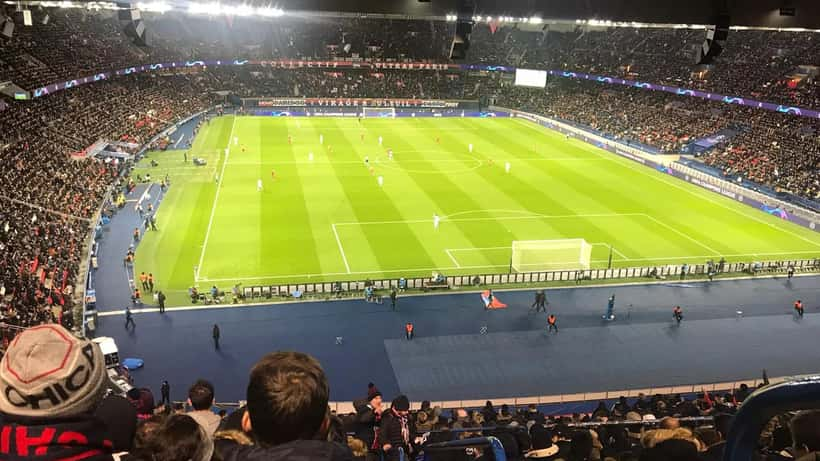
With Galatasaray hosting FC Barcelona tonight at Rams Park in Istanbul, UEFA Champions League standings have pushed the Turkish club into the spotlight for a very different audience: Australian investors tracking Borsa Istanbul's GSRAY. But here is the number a wealth adviser would want you to see first — GSRAY has fallen approximately 31% in 2026, dropping from ₺1.18 in January to ₺0.81 by September, according to price history data published by Digrin.com — even as the club secured its spot in Europe's elite competition.
That gap between sporting success and share price performance is exactly the detail that separates informed SMSF trustees from those chasing a trend.
What the UCL Standings Tell Investors About Galatasaray's Season
Galatasaray entered Tuesday's match at the foot of their Champions League sub-group, with zero points after a 3-1 loss to Sporting CP on matchday one. Barcelona, by contrast, sit at the top with three points following a 5-1 demolition of Feyenoord.
For investors, this standings gap matters because Galatasaray's listed entity — Galatasaray Sportif Sinai ve Ticari Yatirimlar A.Ş. (GSRAY) — generates revenue primarily from media rights, sponsorships, and naming rights tied directly to the club's performance. According to the company's own listing description on Borsa Istanbul, GSRAY manages all broadcasting, advertising, sponsorship, and naming rights for the Galatasaray Football Team.
A deep UCL run means more television revenue, higher matchday earnings, and stronger sponsorship leverage. An early exit — which a 0-points start after matchday one can foreshadow — compresses those revenue lines sharply. UEFA's Champions League prize distribution in the 2025-26 season rewards progression at each round, meaning clubs that exit in the league phase miss later-round payments that can reach tens of millions of euros. Earlier analysis of how UCL prize money impacts Australian investors' portfolios — specifically around Atlético Madrid's campaign — explored the same mechanism: What the UCL's €2.5B prize pool means for Australian equity investors.
For an Australian wealth adviser tracking a client's exposure, this creates an analytical frame in which the stock is not simply responding to last night's result but pricing in multi-year revenue scenarios across a full European season.
GSRAY's 2026 Price Slide: What the Data Shows
The numbers are not encouraging for short-term traders. GSRAY opened 2026 at ₺1.18, dipped to ₺1.05 in March, recovered briefly to ₺1.17 in April, and then fell to ₺0.81 in September — a decline of approximately 31% over nine months, per Digrin.com's price history. Against that backdrop, GSRAY's price-to-earnings ratio stood at approximately 24.8 as of August 2026, with a price-to-book ratio of 0.89, according to Turkish analyst platform bullsyatirim.com. A P/B below 1.0 means the market values the company at less than its book value — a signal that can indicate undervaluation, structural revenue uncertainty, or both.
Three compounding risks stand out for an Australian investor considering this stock.
Currency risk: GSRAY trades in Turkish lira. The lira has faced persistent inflationary pressure, meaning that even if the stock rises in local-currency terms, those gains can evaporate when converted to Australian dollars. A 15% nominal rise in GSRAY that coincides with a 15% lira depreciation against the AUD leaves you flat — before brokerage costs and currency conversion fees.
Liquidity risk: Data from multiple sources shows inconsistency on GSRAY's free float, with figures ranging from approximately 3.2% to 40% depending on the reporting date and methodology. Thin free floats make it difficult to exit large positions without moving the price, particularly for an investor operating in an overseas timezone where local market hours do not align with Australian trading hours.
Disclosure risk: GSRAY reports via Turkey's KAP regulatory platform, not via ASX or ASIC-regulated exchanges. An Australian SMSF trustee would need to assess the stock using Turkish-language filings, adding a compliance and due-diligence burden that most fund administrators are not set up to handle routinely.
Why Australian SMSF Trustees Face Specific Compliance Hurdles
For the roughly 600,000 Australians who operate self-managed superannuation funds, adding an overseas-listed stock like GSRAY is not a simple brokerage decision. It triggers a specific compliance chain under the Superannuation Industry (Supervision) Act 1993 (Cth) and guidance published by the Australian Taxation Office.
According to the ATO's SMSF annual return instructions, any shares or financial contracts traded on an overseas exchange must be disclosed and valued in Australian dollars at 30 June each year. More critically, the investment must satisfy three overlapping tests before the trade is placed.
The Sole Purpose Test requires that every SMSF investment serve the retirement benefit of fund members. The ATO applies closer scrutiny to assets that appear to be personal-interest purchases. A football stock chosen primarily because a trustee supports Galatasaray would attract more questions than a diversified emerging-market ETF providing similar geographic exposure.
The Trust Deed Authorisation test requires that the fund's trust deed explicitly permit investment in overseas-listed equities. Many deeds drafted before 2015 limit holdings to ASX-listed securities or require formal amendment before overseas purchases are valid. An amendment typically requires a specialist SMSF legal firm and costs between A$500 and A$1,500, and it must be executed before the trade is placed, not retrospectively.
The Investment Strategy Alignment requirement obliges every SMSF trustee to maintain a documented investment strategy and review it annually. Adding a single Turkish football stock to a predominantly domestic equity fund would typically require a formal strategy revision and supporting trustee minutes explaining how the holding serves the fund's risk and return objectives.
A licensed financial adviser — ideally one holding an Australian Financial Services Licence with SMSF and international equities experience — can assess whether a specific fund's deed and strategy already accommodate this type of purchase or whether amendments are necessary first.
When the Champions League Creates an SMSF Temptation
Consider a trustee of a two-member SMSF in Brisbane who follows European football and noticed GSRAY's sharp decline in 2026. Seeing the stock at ₺0.81 — down 31% from its January high — and knowing that a strong UCL run could lift media rights revenue, she asks her financial adviser: "Is this a buying opportunity for our super?"
Her fund holds A$850,000 in total assets, split roughly 70% Australian equities, 20% international ETFs, and 10% cash. The trust deed was drafted in 2019 and permits investment in "listed securities on recognised exchanges."
Here is how the compliance gate plays out step by step.
If Borsa Istanbul qualifies as a "recognised exchange" under the fund's deed definition — a question for the SMSF administrator or a specialist legal adviser — then the purchase may be permissible without a deed amendment. But the trustee would still need to update the investment strategy to reflect the new asset class, document the rationale in trustee minutes, value the holding in Australian dollars at 30 June 2027, and disclose it in the annual return.
If the deed restricts holdings to exchanges explicitly listed in an original schedule — which often means ASX, NYSE, LSE, and similar major markets but not Borsa Istanbul — then a deed amendment costing A$500 to A$1,500 is required before a single share is purchased.
At current prices, a A$5,000 position in GSRAY would represent approximately 0.6% of an A$850,000 fund — small enough to fall within reasonable diversification parameters on its face. But that 0.6% position would trigger the full compliance chain above: deed review, strategy revision, KAP disclosure assessment, annual lira-to-AUD conversion, and ongoing monitoring of a stock that reports in a language most Australian advisers do not read.
The adviser's likely conclusion: the compliance overhead and currency risk almost certainly outweigh the speculative upside from a UCL run, particularly given that GSRAY's 31% decline in 2026 occurred during the period the club was actively qualifying for the Champions League — suggesting the market had already priced in the positive scenario before the season began.
What to Do Before Acting
If you are an Australian investor or SMSF trustee who noticed Galatasaray trending during tonight's Champions League match and are weighing whether a football club stock belongs in your retirement savings, the ATO's dedicated SMSF guidance — available at ato.gov.au — sets out the Sole Purpose Test, investment strategy requirements, and overseas asset reporting obligations in plain language.
More practically, arrange a review with a licensed financial adviser before executing any trade. SMSF compliance failures can result in a fund losing its concessional tax status, a cost that would dwarf any short-term gain from a football stock rally. The question "should Galatasaray be in my super?" is more interesting than it sounds — but the compliance trail runs considerably longer than tonight's 90 minutes at Rams Park.
This article is general information only and does not constitute financial, tax, or legal advice. Readers should seek advice from a licensed Australian financial adviser before making investment decisions involving self-managed superannuation funds.
format_used: Data deep-dive
