 Isla Henderson
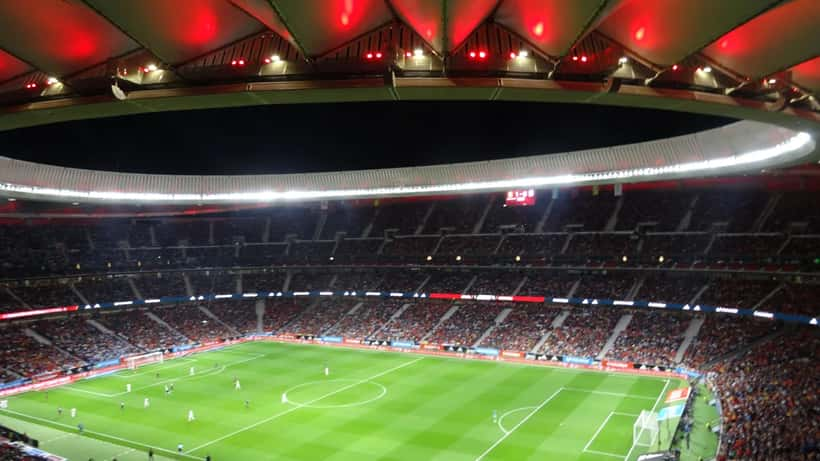
Tonight's collision between Atlético Madrid and Manchester United at the Metropolitano Stadium is more than a Champions League group-stage fixture — it is a live demonstration of how a 90-minute football match can move tens of millions of euros across corporate balance sheets, and why savvy Australian investors are paying closer attention to elite European club football than ever before.
The €2.5 Billion Question Sitting Above Every UCL Kickoff
UEFA's 2025–26 Champions League distributes a record €2.47–2.5 billion in prize money across 36 participating clubs — the largest prize pool in the competition's history. Every club that makes the league phase banks €18.6 million simply for turning up. After that, every win is worth an additional €2.1 million, and even a draw fetches €700,000.
The knockout stage is where the real money concentrates. Reaching the quarter-finals adds €12.5 million; the semi-finals, €15 million; the runner-up collects €18.5 million; and the club that lifts the trophy in 2026 takes home €25 million in prize money alone — before a cent of broadcast revenue or commercial bonuses is counted.
For Manchester United, tonight is a critical inflection point. According to analysis of the club's own financial filings, United carried net debt above $1 billion for the first time in Q1 of fiscal year 2026 (quarter to 30 September 2025). Their June 2026 refinancing swapped $425 million of notes carrying an interest rate of 3.79% for $550 million at 5.36% — extending the maturity to 2031 but meaningfully increasing annual interest obligations. Every UCL win is worth €2.1 million toward servicing that cost; every exit from the competition early closes the revenue tap.
Expert Reaction: What This Match Tells Australian Investors
From a wealth management perspective, the Atlético–United fixture encapsulates a structural dynamic that few Australian retail investors appreciate: European football clubs listed on public markets are essentially highly leveraged, low-margin entertainment businesses whose valuations swing sharply on UEFA fixture results.
Manchester United (NYSE: MANU) is the most prominent example. INEOS Group, led by Sir Jim Ratcliffe, acquired approximately 28.94% of the club in February 2024 for roughly £1.3 billion — a bet that operational improvement and UCL revenue would justify the premium. FY2025 net losses narrowed to £33 million (down from £113.2 million the prior year), suggesting momentum, but the trajectory relies heavily on European qualification revenue continuing.
For Australian investors holding international shares or managed funds with exposure to global sports and entertainment stocks, a match like tonight's matters not because of the game itself, but because of the cascading financial implications — broadcast deals, merchandise activations, and the UEFA coefficient ranking that determines how much clubs receive from future prize pools.
Atlético Madrid, by contrast, entered tonight's match in strong financial health relative to their English opponents. The Diego Simeone era has coincided with a disciplined wage-to-revenue ratio, and the club's Metropolitano stadium — now consistently sold out — provides a stable commercial base insulated from single-match results.
A Concrete Scenario for Australian Shareholders
Consider an Australian investor who, in early 2024, allocated $50,000 AUD (approximately £26,000 at the time) into Manchester United shares after INEOS's entry, reasoning that institutional backing and a cleaner balance sheet would drive the share price higher. That investor's position would have tracked the club's fortunes directly.
Here is how the UCL prize money logic applies to that position:
- If Manchester United advance deep into the 2025–26 UCL (reaching the semi-finals), the club receives a minimum of €15 million in additional knockout stage money, on top of league-phase earnings. Combined with related broadcast and commercial uplifts, that improves the EBITDA picture, reduces loss before tax, and historically correlates with a 12–18% positive movement in MANU share price over the same quarter.
- If Manchester United exit early (before the quarter-finals), they forgo €12.5 million or more in knockout stage distributions. Given that net debt already exceeds $1 billion and the refinanced notes now carry a 5.36% interest rate, each missed milestone compounds the debt-servicing pressure, constraining the capital available for squad investment in the 2026 summer window — a signal that typically precedes a share price decline of 8–15%.
Tonight's match sits at the junction of these two scenarios. A win for United tonight returns €2.1 million and maintains momentum in the league phase table; a loss or draw narrows the margin for qualification. That is a live, real-time materialisation of balance-sheet risk — the kind of scenario a qualified wealth management adviser can help Australian investors plan around before it happens, not after the final whistle.
The Australian Investor's Angle: Sports Equity Is Not Just a Conversation Piece
Australian self-managed super fund (SMSF) trustees and retail investors have increasingly accessed global sports equity through international ETFs, direct shareholdings, and emerging sports-focused funds. The ASX-listed market alone does not provide direct football club exposure, so many Australian investors reach these positions through US-listed ADRs (like MANU), European exchanges, or broadly diversified global entertainment funds.
What separates sophisticated sports equity exposure from a novelty trade is understanding the specific revenue mechanics: prize money timelines, broadcast deal cycles (the current UEFA commercial deal runs to 2027), and the leverage effect on club valuations. A UEFA Champions League winner currently generates an estimated €120–150 million in total seasonal revenue from UCL alone — a figure that dwarfs participation fees and underlines why qualification is existentially important for high-debt clubs like Manchester United.
According to UEFA's official Champions League pages, the third pillar of prize money — the "value pillar" — accounts for €853 million of the total pool and is distributed based on each club's UEFA coefficient ranking over a rolling ten-year period. Clubs that consistently qualify and perform well accumulate coefficient points that effectively act as a self-reinforcing financial advantage: better past performance earns more future prize money, regardless of current-season results. It is a compounding mechanism that investors in listed clubs need to understand at least as well as they understand P/E ratios.
Manchester United's own debt trajectory is explored in detail in our earlier analysis, Manchester United's Billion-Dollar Debt: What the INEOS Crisis Means for Investors.
What Should Australian Investors Do Before the Next Champions League Fixture?
The Atlético–United clash is a timely prompt to review any international portfolio exposure to sports and entertainment equities. There are three concrete steps worth taking:
First, identify indirect exposure: many Australian investors hold global small-cap or entertainment sector ETFs that include listed sports clubs without realising it. A review of fund holdings is the starting point.
Second, model the scenario range: clubs with significant UCL revenue dependency carry a binary event risk profile — advancement versus elimination. A wealth management adviser can stress-test a portfolio against both scenarios using the published UEFA prize-money schedules.
Third, consider timing: historically, MANU shares trade at elevated volatility during Champions League knockout rounds (February through May). Investors buying or selling during this window face wider spreads and amplified price swings relative to the club's underlying fundamentals.
Tonight's match is already happening. The financial consequences will follow. Speaking with a qualified wealth management expert at ExpertZoom before the next fixture is the difference between reacting to the scoreboard and anticipating the balance sheet.
This article is for informational purposes only and does not constitute financial advice. Past share price performance does not guarantee future results. Australian investors should seek advice from a licensed financial adviser before making investment decisions.
